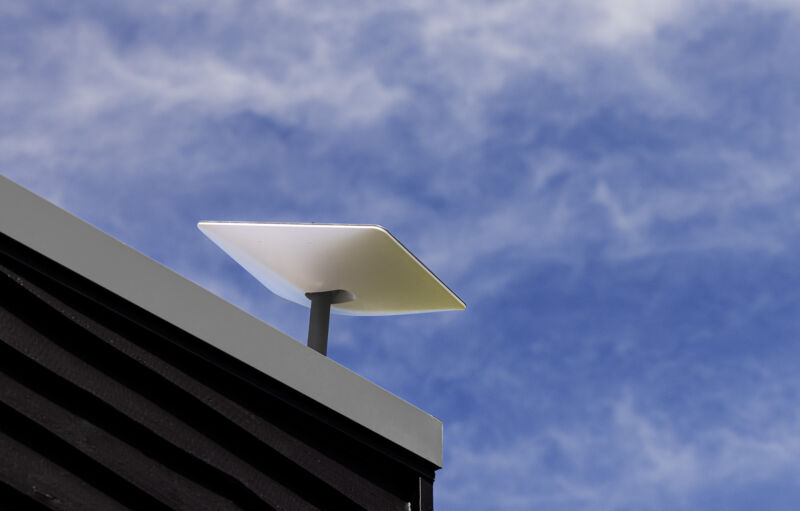
Satellite connectivity won't replace traditional cell towers anytime soon, and wireless carriers are eager to tell you why.
If you listened to the loudest headlines over the past year, you would think low Earth orbit constellations were about to bankrupt every major terrestrial network on the planet. Space-based messaging and voice capabilities sound like magic. You point a phone at the sky, text a friend from the middle of a desert, and forget that cell towers even exist.
T-Mobile's leadership doesn't buy the panic. They look at the physics, the economics, and the actual consumer demand, and they see a different reality. The panic is overdone.
The Physics Problem of Space Cellular
Space is far away. Roughly 300 to 1,000 miles away, depending on the constellation. Terrestrial cell towers sit just a few miles from your phone. That distance dictates everything about how these systems perform.
When your phone connects to a satellite, it is trying to talk to a tiny moving target orbiting at thousands of miles per hour using a tiny battery and an antenna designed for local signals. Power limits are brutal. You get low bandwidth. You get high latency compared to fiber or local wireless.
Executives at major telecom firms point out that satellites make great safety nets. They fill coverage holes where nobody builds towers. They rescue hikers and keep emergency services online during hurricanes. But they cannot handle the heavy lifting of modern mobile data consumption.
Streaming video, handling crowded stadium traffic, and processing heavy cloud computing tasks require massive spectral efficiency. Ground infrastructure does that efficiently. Satellites do not.
Spectrum Realities and Capacity Limits
People forget that spectrum is finite. You can't just beam infinite data down from orbit without running into massive interference issues.
Ground networks reuse the same frequencies over and over across small geographic areas. A single cell tower in downtown Chicago handles thousands of simultaneous connections because its signal doesn't travel past a few blocks. A satellite footprint covers entire states or countries at once.
Sharing that massive coverage area among millions of users creates a massive bottleneck. Speeds drop to a crawl the moment too many devices log on.
That is why telecom leadership views direct-to-cell satellite tech as a complementary tool rather than a replacement. It handles emergency SOS messages and low-bitrate text messages brilliantly. It fails completely when you try to replace a dense urban fiber-backed network.
What Partnerships Actually Tell Us
Look at what carriers are doing, not what tech evangelists are hyping. T-Mobile partnered with Starlink to solve dead zones, not to outsource their entire business model.
The strategy is about eliminating churn caused by dead zones. If you lose service every time you drive through a rural canyon, you might switch carriers. If your phone automatically kicks over to a satellite text service, you stay happy.
Carriers view this as an insurance policy for customer retention. They aren't preparing for mass migration to space-based internet. They are buying peace of mind for subscribers who wander off the grid.
The Cost Equation
Building and launching rockets costs billions of dollars. Replacing thousands of satellites every five years because of atmospheric drag adds up quickly.
Terrestrial networks require maintenance, fiber backhaul, and electricity, but the sunk costs in populated areas are already paid off. The capital expenditure required to scale satellite constellations to match the capacity of a standard suburban cell grid is staggering.
Consumers won't pay hundreds of dollars a month for a phone plan just to get satellite data everywhere unless terrestrial coverage is completely unavailable. And for 99 percent of the population, terrestrial coverage is already there.
Where the Market Actually Goes
The noise around satellite threats comes from people who don't understand network engineering. They see a cool tech demo and assume it scales infinitely overnight.
Real network engineers know that terrestrial and celestial systems will merge into a single seamless user experience behind the scenes. Your phone will pick the best available pipe—Wi-Fi, cell tower, or satellite—without you ever thinking about it.
T-Mobile's CEO is right to call out the exaggeration. Satellites are saving lives and filling gaps, but cell towers are staying put.
Check your current phone plan for satellite emergency features, test them out where you have zero bars, and stop worrying about your local cell tower becoming obsolete. The ground game is here to stay.