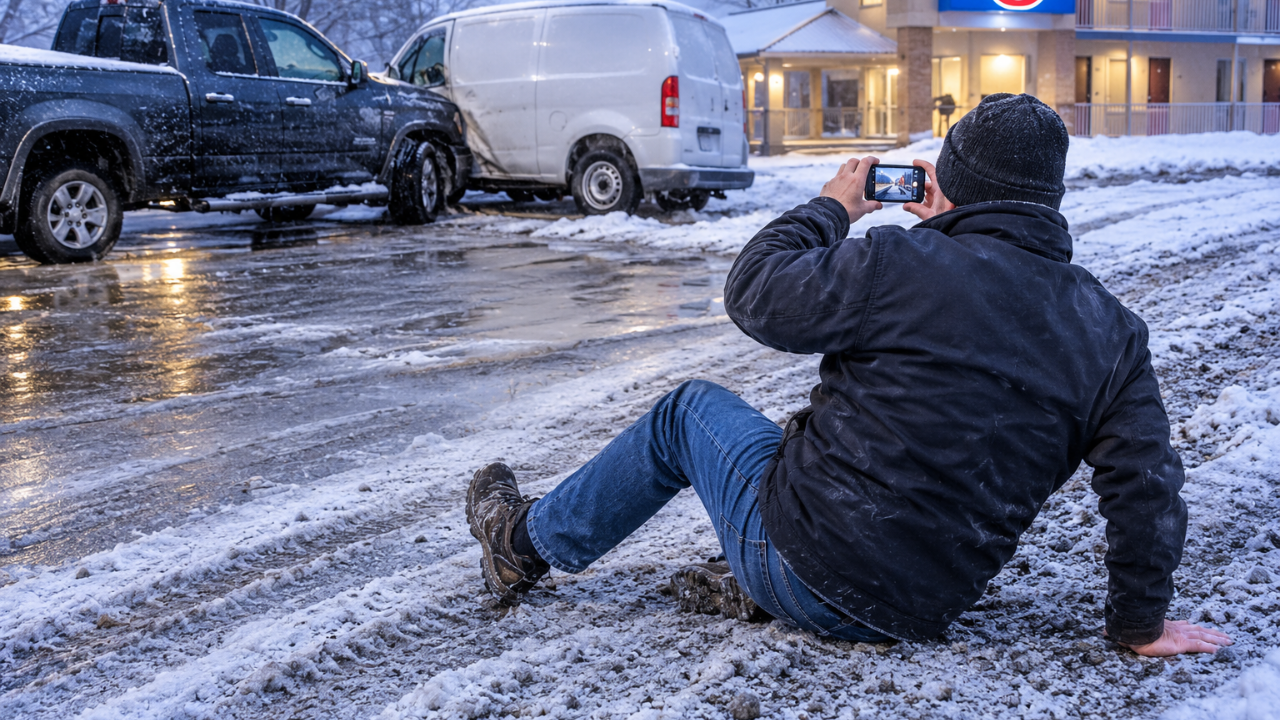
Winter weather brings frozen ground, slick concrete, and automatic legal defenses for property owners. When Jeff Woosley walked out of a Kingdom City Motel 6 on a frigid January morning in 2024, his truck slid on an icy slope and clipped a parked van. What followed was a minor fender bender that morphed into a complex personal injury battle. After a lower court tossed his lawsuit out, a Missouri appeals court just breathed new life into his claim.
Slip and fall litigation during winter storms usually ends quickly for property owners. Courts often default to established common-law doctrines protecting businesses from nature's worst moods. But this specific ruling highlights why courts are drawing harder lines between natural weather elements and hazards worsened by human intervention or neglected property maintenance.
The Morning Routine That Triggered a Court Battle
The incident started like any standard winter mishap. Woosley was staying at the Motel 6 on Jade Road while working as a maintenance training instructor at a nearby nuclear power plant. On the night of January 21-22, freezing rain and sleet moved into the area.
Around 6:00 AM, Woosley headed out to warm up his truck. He walked across the motel's concrete parking section, started the vehicle, and went back inside to let the engine idle. Twenty minutes later, he returned to check out and leave.
When he put his truck in motion, gravity and ice took over. The inclined concrete driveway caused his vehicle to slide downward until it struck a white work van parked near the boundary line between the concrete passenger vehicle spaces and an adjoining gravel truck lot.
Instead of driving off, Woosley stepped out to assess the damage. He went back inside to contact the Highway Patrol and ask the front desk clerk for the owner's vehicle information. Between 6:30 AM and 7:00 AM, he stepped back outside into the dark to photograph the damage and grab the van's license plate number.
That is when things turned painful. While tracking the accident scene on his phone, he stepped off the cleared concrete section onto the adjacent gravel lot. His foot caught on an uneven, ice-covered tire rut. He slammed hard into the frozen ground, severely injuring his left shoulder. He drove three hours to an emergency room in St. Joseph later that day for medical attention, which eventually led to a premises liability lawsuit against Super 6 Inn, LLC, the company operating the motel.
The Defense Strategy and the Massachusetts Rule
Hotels and commercial property owners facing winter injury claims lean heavily on traditional liability shields. In this case, Motel 6 deployed the Massachusetts Rule. This legal principle widely recognized across Missouri states that property owners do not hold legal liability for injuries caused by natural accumulations of snow and ice during an active winter storm.
The rationale is simple. Landlords cannot control the weather, and imposing a duty to clear parking lots while sleet or snow is actively falling is practically impossible.
The defense also argued the open and obvious doctrine. Since Woosley had already walked across the slippery parking lot earlier that morning, the hotel claimed he knew the risks. They argued he should have seen the danger before stepping onto the gravel patch.
In August 2025, the Callaway County Circuit Court agreed. The judge granted summary judgment to the motel, dismissing Woosley's lawsuit entirely before it ever reached a jury.
Why the Appeals Court Intervened
Lower courts love summary judgments in weather cases because the rules seem straightforward. But the Missouri Court of Appeals, Western District, saw critical flaws in how the lower court handled the facts.
In an opinion issued on November 10, 2026, the appellate court reversed the dismissal and sent the case back for trial. The panel of judges focused heavily on the distinction between different zones of the parking lot and how the property owner handled earlier snow removal.
Evidence showed the motel had cleared the concrete section of the parking lot following a previous winter storm. However, they pushed the plowed snow right onto the boundary line separating the concrete spaces from the gravel area. Heavy trucks using the gravel section subsequently carved deep ruts into that accumulated snow and ice.
The appeals court noted that Woosley's earlier morning walks had been restricted entirely to the cleared concrete section. He had no prior exposure to the rough, rutted, ice-packed gravel where he actually fell. General awareness of slippery weather does not automatically mean a guest assumes the risk of a localized, man-made hazard.
Furthermore, the judges ruled that the Massachusetts Rule has limits. When a property owner shifts snow piles, alters natural drainage, or leaves untreated ruts that create distinct, hidden dangers separate from the ongoing weather event, the traditional liability shield starts to crack.
What This Means for Premises Liability Claims
Property managers often assume winter weather gives them absolute immunity from slip and fall lawsuits. This ruling proves otherwise.
Commercial operators must maintain all parts of their property consistently. Plowing snow into piles that create secondary hazards or treating one parking zone while ignoring an adjacent area introduces legal exposure. If a business creates an artificial trap through poor maintenance during winter conditions, courts may allow injured plaintiffs to present their case to a jury rather than tossing it out early.
Review your facility maintenance protocols before the next freeze hits. Ensure snow removal operations cover secondary parking zones and walkways equally, rather than moving hazards from one guest path to another.