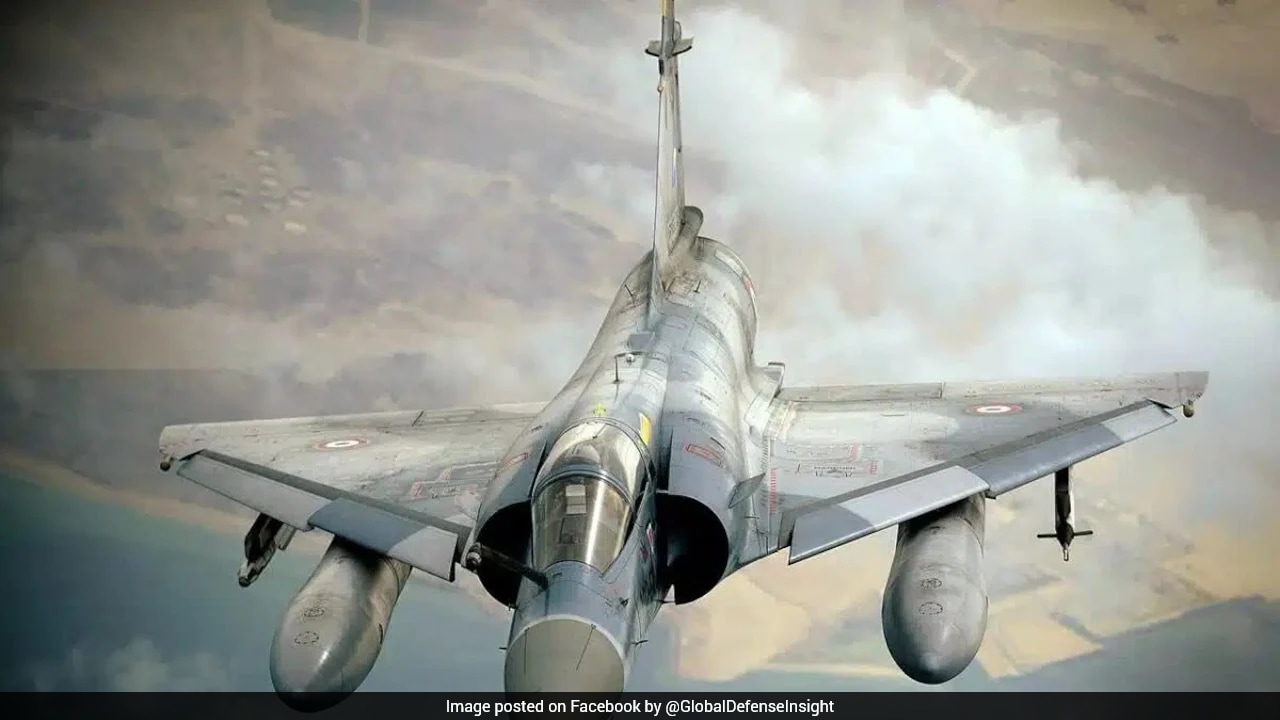
Military aviation is not for the faint of heart. When a French Mirage 2000D fighter jet goes down during a routine training flight in north-east France, killing one crew member and prompting an intensive search for another, it serves as a stark reminder of the hidden costs behind modern air defense.
Training accidents happen. People forget that peacetime military flying carries nearly as much risk as active combat. Pilots push supersonic aircraft to absolute limits in low-altitude navigation, night operations, and complex tactical maneuvers. Every single hour logged in a cockpit like the Mirage 2000D is a calculated gamble with physics.
The Reality Behind Routine Air Force Training
Most civilians assume military jets crash mostly during wartime or hostile engagements. Statistically, that is flat-out wrong. The vast majority of military aviation mishaps occur during routine training missions, routine maintenance checks, or local proficiency flights.
Why? Because training is where pilots practice the worst-case scenarios.
- Simulating engine flameouts at low altitudes.
- Flying through severe weather to test radar tracking.
- Pushing G-forces until vision greys out.
- Executing tactical intercepts milliseconds apart from mid-air collisions.
When you train the way you fight, the margin for error shrinks to absolute zero. If a mechanical failure hits or spatial disorientation creeps in at 500 knots, seconds dictate whether a crew survives.
Understanding the Mirage 2000D
The aircraft involved in the incident near Nancy, France, is the Dassault Mirage 2000D. This is a twin-seat, dual-control combat aircraft optimized for long-range conventional attack and precision ground support. It is a workhorse of the French Air and Space Force, known for its delta wing design and sheer agility.
Yet, age and high operational tempo take a toll on any airframe. Even with rigorous maintenance schedules managed by military technicians, complex hydraulic lines, avionics suites, and turbofan engines experience metal fatigue and component wear. Air forces across Europe and NATO are currently juggling aging fleets while waiting for newer generation fighters like the Rafale or next-generation air systems to fully take over. That transition period is messy, expensive, and sometimes tragic.
What Happens After the Crash
When a tragedy like this strikes near an air base like Nancy, the protocol kicks in immediately, though it is rarely clean-cut.
Search and rescue teams scour crash perimeters overnight. Investigators pull flight data recorders—the classic black boxes—to piece together telemetry, cockpit voice recordings, and engine status parameters. The French military safety offices launch comprehensive inquiries into mechanical failure, human factors, weather anomalies, or air traffic control communications.
Answers do not come overnight. Thorough accident investigations take months. They require metallurgists to analyze fractured turbine blades, aerodynamicists to model flight paths, and psychologists to evaluate crew rest schedules.
Military aviation demands constant vigilance. Every crash forces an immediate pause, a re-evaluation of safety parameters, and painful lessons written in blood. The next time you look up and see a fighter jet streak across the sky, remember the invisible weight resting on the shoulders of the crew inside. Stop taking air supremacy for granted. Safety in military aviation is bought with relentless discipline, and sometimes, heartbreaking loss.