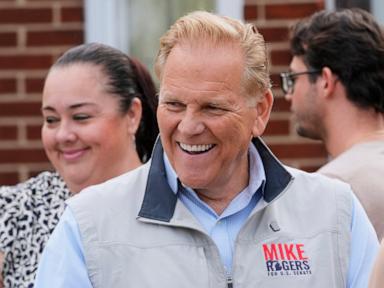
Elections in the Great Lakes state rarely follow a predictable script. When campaigns stretch across rust-belt cities and suburban housing tracts, the candidate who sticks rigidly to a single demographic playbook usually loses. That reality explains why Republican Mike Rogers is making an aggressive push far beyond his party's traditional base, actively hunting for crossover support among moderate Democrats and disaffected voters as the battle for control of Congress heats up.
If you look closely at the math behind modern Michigan politics, the traditional boundaries are blurring. After a razor-thin defeat in a previous Senate bid, Rogers is taking a different route this time around. Instead of just rallying the core conservative factions, his campaign is rolling out high-profile overtures to voters who normally pull the lever for the left. It's a calculated gamble designed to capture the middle ground.
The Strategy Behind the Crossover Pitch
Campaigns live and die by addition, not subtraction. Realizing that party lines can act as an artificial ceiling, Rogers has tried to frame his platform around bread-and-butter economic issues rather than fiery partisan grievances. By emphasizing local manufacturing revitalization, workforce readiness, and housing affordability, he's betting that pocketbook concerns matter more to working-class families than national brand loyalty.
We saw this approach unfold recently when the campaign highlighted endorsements from self-professed Democrats in urban centers like Detroit. Figures like Rabbi Asher Lopatin stepped forward to back the Republican hopeful, arguing that long-term stability requires crossing traditional aisles. Of course, critics from the state Democratic party are quick to point out the candidate's tight alignment with national conservative leaders, warning voters not to look past broader policy disagreements.
Navigating the Trump Factor and Party Dynamics
Balancing a national party leader's immense popularity with the independent streak of Midwestern swing voters is a high-wire act. On one hand, keeping the base energized requires staying close to the administration's agenda. On the other hand, winning over suburban moderates often demands a more independent posture.
When you examine how the race is shaping up against Democratic nominee Abdul El-Sayed, the tactical split becomes crystal clear. El-Sayed is running to consolidate progressive energy, leaning into health care and labor support, while Rogers targets disaffected moderates who feel left behind by progressive policy shifts. Independent voters sitting in places like Kent County or Macomb County will ultimately decide which narrative wins out.
If you are tracking how these high-stakes legislative battles unfold, you can follow updates through local outlets like Michigan Public or track independent analysis at Bridge Michigan. Watch the polling shifts in suburban counties over the final weeks to see if these crossover appeals actually move the needle, or if polarized party loyalties snap everything back into place.