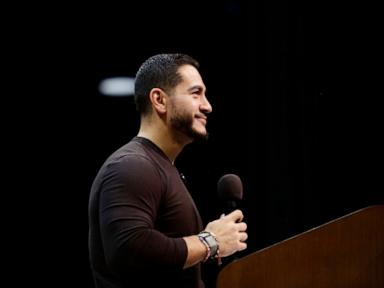
Democrats are running out of time to patch up internal divides in Michigan. Just days before the 2026 midterm election, Abdul El-Sayed and U.S. Representative Haley Stevens are staging a rare joint campaign appearance in Detroit.
It looks like a classic unity event on paper. Beneath the surface, it highlights the intense friction tearing at the Democratic coalition in one of the nation's most crucial battleground states.
If you're tracking the balance of power in the U.S. Senate, Michigan is ground zero. Following the retirement of Democratic Senator Gary Peters, the open seat attracted a bruising August 4 primary between El-Sayed, a progressive former Wayne County health director backed by Bernie Sanders, and Stevens, a moderate congresswoman representing suburban Oakland County.
El-Sayed won by a razor-thin margin with 48.5% of the vote. The wounds from that primary haven't healed.
Former Representative Mike Rogers, the Republican nominee who barely lost a 2024 Senate run, is capitalising on every fracture. With Donald Trump and Ted Cruz campaigning alongside Rogers across the state, Democrats can't afford a fractured voter base.
What Really Kept El-Sayed and Stevens Apart After August
Why did it take until the final weekend before Election Day for the two primary rivals to share a platform?
The short answer is deep policy disagreement and lingering personal resentment.
During the primary, outside groups poured roughly $100 million into the race. More than $60 million went to supporting Stevens, driven largely by moderate Democratic donors and pro-Israel political action committees.
El-Sayed ran as a progressive, making his identity and opposition to foreign policy approaches central to his message. That race deeply divided key voter blocks, particularly in Metro Detroit, where sizeable Jewish and Arab American communities reside side-by-side.
Since August, unity has mostly been an illusion. While Stevens endorsed El-Sayed following her primary loss, she spent weeks avoiding public events with him.
Other high-profile state Democrats have kept their distance. State Senator Jeremy Moss, who represents a heavily Jewish district in Oakland County, declined to issue an endorsement.
The divide reached a breaking point when Stevens' fiance, Jason Turkish, announced publicly that he intended to vote for Republican Mike Rogers.
Stevens went on national television hours later to reaffirm her own vote for El-Sayed, but her message wasn't pure support. She explicitly called on El-Sayed's campaign to "shut out the hate" and make members of her suburban, moderate coalition feel safe coming to the polls.
When pressed by reporters on why a joint event took nearly three months to pull together, El-Sayed brushed off the internal drama, claiming voters care far more about the rising cost of living than party mechanics.
That dismissive tone misses a crucial reality: candidates who can't hold their own base rarely win competitive statewide races in Michigan.
The Math Behind the Coalition Gap
Winning Michigan isn't complicated, but it is extremely difficult.
A successful statewide Democratic campaign requires high turnout across three primary pillars:
- Black voters in Wayne County (Detroit)
- Progressive and Arab American voters in Wayne and Washtenaw counties
- Moderate, suburban voters in Oakland and Macomb counties
El-Sayed built his primary victory by dominating progressive precincts and turnout among Arab American voters, positioning himself to become the first Muslim elected to the U.S. Senate.
However, his primary victory left notable gaps in suburban Oakland County, where Stevens drew heavy support from moderate and Jewish voters.
Democratic Primary Splinter vs. General Election Needs
+---------------------+-------------------------------+-------------------------------+
| Region / Voter Group | El-Sayed Primary Strength    | Stevens Primary Strength     |
+---------------------+-------------------------------+-------------------------------+
| Wayne County        | Heavy support (Arab/Progressive)| Moderate Black/Suburban voters|
| Oakland County      | Lower turnout                 | High support (Jewish/Moderate)|
| Washtenaw County    | Strong progressive turnout    | Moderate edge                 |
+---------------------+-------------------------------+-------------------------------+
If suburban voters in Oakland County sit out the election or cross over to support Mike Rogers, El-Sayed's path to 50% plus one becomes almost non-existent.
Rogers has actively campaigned in Oakland County alongside Ted Cruz, pitching a national security platform designed to peel away center-left voters alienated by the primary.
Republican Strategy in the Closing Stretch
While Democrats struggle to present a unified front, Republicans are running a focused campaign targeting working-class and suburban voters.
Mike Rogers has framed his bid around economic pressure, inflation, and public safety. Supported by national party leadership including Senate Majority Leader John Thune, Rogers has kept his campaign disciplined.
At the same time, top national figures are pouring energy into Michigan. Donald Trump held late-October rallies in Macomb and St. Clair counties, hammering El-Sayed's background and policy positions in an attempt to drive conservative turnout to maximum levels.
The Republican playbook relies on two factors:
- Maximize turnout in rural and outer-suburban counties.
- Keep Democratic turnout soft in Oakland County by emphasizing ideological divides.
Every day Democrats spend addressing internal ad disputes or coalition squabbles is a day Republicans spend consolidating undecided voters.
What Voters Should Watch on Election Day
As voters head to the polls or return their absentee ballots, a few key metrics will signal whether this late photo-op between El-Sayed and Stevens actually worked.
Key Indicators to Monitor
- Oakland County Turnout Totals: Compare total turnout in Oakland County against previous midterm elections. A drop in Democratic precinct volume signals lingering hesitation among moderate voters.
- Detroit Processing Speeds and Margins: El-Sayed needs high margins out of Wayne County to offset Republican gains in outer counties.
- Ticket-Splitting Trends: Watch whether suburban voters support down-ballot Democrats while leaving the Senate line blank or voting for Rogers.
Actionable Steps for Campaign Observers and Voters
If you want to track or participate in the outcome of Michigan's Senate contest effectively, focus on these steps:
- Verify Your Voting Status: Check your registration status and local polling location through the official Michigan Voter Information Center to ensure your vote counts properly.
- Track County-Level Returns First: On election night, don't focus solely on statewide percentages. Monitor returns from Oakland and Macomb counties specifically to gauge whether moderate suburban voters turned out.
- Look at Down-Ballot Variance: Compare the Senate vote total against local congressional or state legislative races. Significant variance indicates ticket-splitting driven by party division.