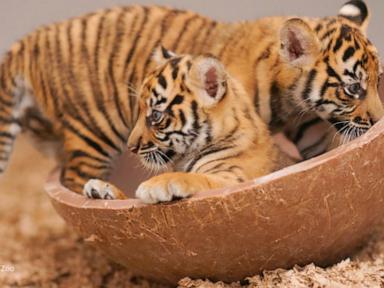
Two tiny paws changed conservation history in Texas this summer. When twin Sumatran tiger cubs arrived at the Fort Worth Zoo, they marked a first in the institution's history.
For animal lovers tracking the daily milestones of rare wildlife, these two cubs represent a massive victory. David Muir recently spotlighted their incredible growth on national television, giving millions a front-row seat to their development. But behind the adorable broadcast clips lies a tense reality. There are fewer than 650 Sumatran tigers left in the wild. Every single birth matters.
Growing Up Fast Behind the Scenes
Born on July 1 to first-time mother Ndari and father Rakan, the twin sisters have captured global attention. At birth, they weighed between three and four pounds each. They looked like oversized stuffed animals, barely measuring a foot long.
Now, at roughly twelve to thirteen weeks old, everything has changed. The sisters tip the scales between 18 and 20 pounds, hitting milestones that leave veterinary teams breathing a sigh of relief. They weigh about the same as a large pumpkin. Their lengths have stretched out to nearly thirty inches.
Zoo keepers gave them names that match their distinct personalities. The smaller sister is Barani, an Indonesian word meaning brave. Keepers call her a total spitfire. She starts play-fights and has endless energy. Her sister is Malu, which translates to shy or reserved. Malu prefers independence, often sneaking away to a quiet barn stall when she needs a nap away from her energetic sibling.
Why These Fort Worth Cubs Matter So Much
You might wonder why a zoo birth in Texas makes headlines across the country. The answer is straightforward. Sumatran tigers are critically endangered. Native strictly to the Indonesian island of Sumatra, these animals face relentless threats from habitat loss and poaching.
Commercial agriculture and logging continue to carve up their native forests. Modern conservation programs rely heavily on accredited zoos to maintain healthy, genetically diverse insurance populations. The Fort Worth Zoo's Predators of Asia and Africa habitat, which opened recently, was specifically designed to house and breed these vulnerable species under optimal conditions.
When Ndari gave birth, the veterinary staff monitored the new family closely via remote cameras to minimize stress. First-time tiger mothers can be unpredictable, but Ndari has proven to be attentive and protective.
What Comes Next for the Famous Sisters
As Barani and Malu continue to grow out of their awkward, clumsy toddler phase, their public debut draws closer. Watching tiger cubs transition from helpless newborns to confident hunters-in-training reminds us what is at stake for wild populations.
Conservation isn't just about numbers on a spreadsheet. It's about individual lives, dedicated keepers, and the public paying attention when rare species get a fighting chance.
Plan a visit to the Fort Worth Zoo to check out their newly renovated Asian habitats, or support accredited wildlife conservation programs working on the front lines to protect remaining tiger habitats in Indonesia.