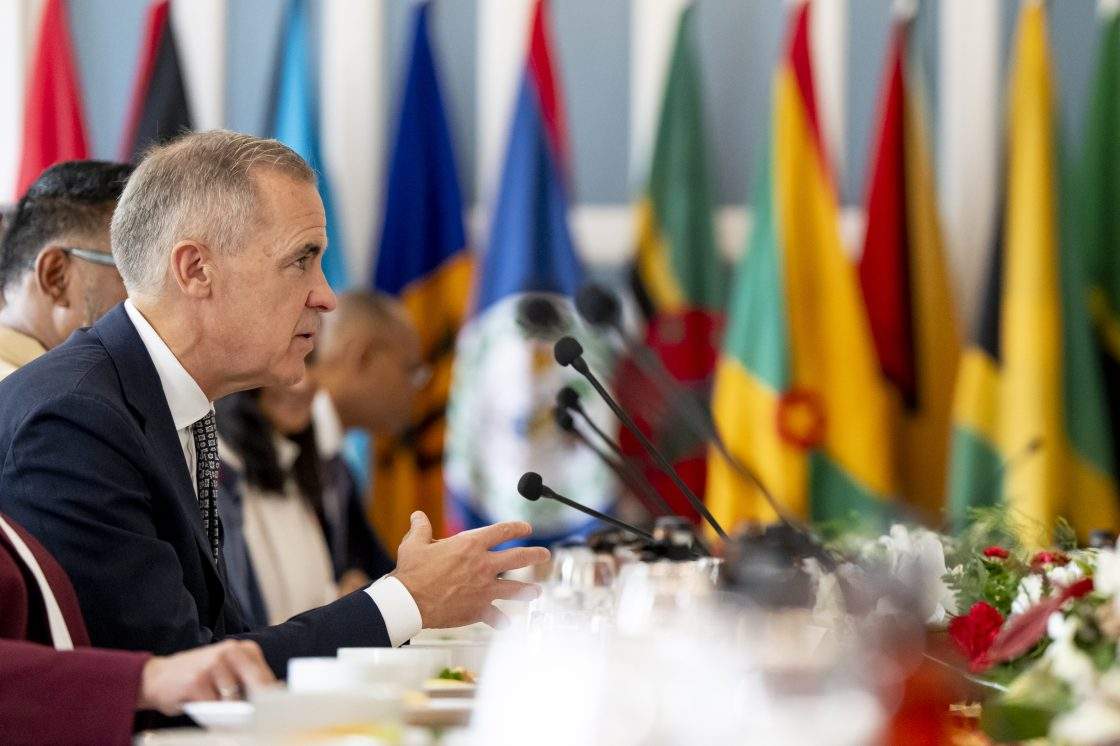
Prime Minister Mark Carney stepped off his flight into the Caribbean heat with a singular mission. He didn't fly to Antigua and Barbuda just for the scenery. He landed to secure trade ties, charm skeptical allies, and position Canada in a fracturing global economy.
The Commonwealth Heads of Government Meeting brought leaders from 56 member countries to St. John's. For Carney, making his debut at the summit, the stakes are clear. Traditional global alliances face unprecedented pressure. Old trade routes are breaking down. Middle powers like Canada need new lifelines, and the Commonwealth offers an existing network that most policymakers have ignored for decades. You might also find this related story interesting: What The White House Is Hiding About The Qeshm Island Bombings.
Beyond the Photo Ops in St. John's
Let's be honest. Summits get written off as expensive talking shops. Leaders pose in linen shirts, shake hands, issue vague communiques, and fly home. But Carney's itinerary told a different story.
His day started early with a sit-down alongside Antigua and Barbuda's Prime Minister Gaston Browne. Browne didn't waste time with diplomatic fluff. He pitched a direct bilateral framework focused on joint ventures and commercial opportunities for Canadian firms. From there, Carney hosted a working breakfast tailored specifically for Caribbean leaders. As reported in detailed reports by USA Today, the effects are worth noting.
He didn't mince words about the numbers. Canada trades roughly $4 billion a year with the broader region. To Carney, that figure is pocket change. He told the gathered leaders that this volume barely scratches the surface of what's possible, pointing directly to the million-plus Canadians who trace their roots back to the Caribbean. Diaspora connections equal economic leverage. If you ignore that pipeline, you're leaving money on the table.
Why the Commonwealth Matters Right Now
You might wonder why Ottawa cares about a 56-nation bloc spanning disparate continents. The answer comes down to risk mitigation. Protectionism is on the rise. Supply chains are weaponized. Relying too heavily on a single economic partner is a rookie mistake for any nation.
Commonwealth Secretary-General Shirley Botchwey has spent her tenure pushing the organization to act less like a historical club and more like an economic bloc. Under her guidance, the summit's central theme focuses squarely on accelerating partnerships and investment.
For Canada, diversifying trade isn't a nice-to-do policy objective anymore. It's an urgent survival tactic. When major economic superpowers turn inward, middle powers have to find alternative corridors. Antigua provided Carney an ideal backdrop to court fast-growing markets that western capitals often overlook.
The Climate Resilience Factor
You cannot talk about the Caribbean without talking about climate change. For small island states, rising sea levels and intense hurricanes aren't future hypotheticals. They're immediate economic threats that wipe out entire GDPs overnight.
Carney knows finance. He understands that climate resilience in the Global South requires massive capital mobilization, not empty sympathy. During executive sessions, discussions centered on practical financing mechanisms and investment structures to protect vulnerable economies. When island nations face ruin, their debt burdens skyrocket. Building sustainable infrastructure requires private capital matched with institutional guarantees. Carney's background gives him immediate credibility in these rooms, where leaders are tired of lectures and desperate for bankable solutions.
Behind Closed Doors with Global Players
Beyond the regional Caribbean focus, Carney squeezed in critical one-on-one meetings. He sat down with leaders from Australia, Guyana, and Ghana. Guyana, in particular, represents a massive economic hotspot in South America with exploding oil revenues and infrastructure needs. Ghana remains a critical anchor for Canadian mining and commercial interests in West Africa.
Later, King Charles hosted both a working lunch and a formal evening dinner for incoming leaders. While the optics looked traditional, the real work happened in the margins. Bilateral diplomacy is built on these high-speed, high-stakes sprints. You test the waters, align interests, and lay the groundwork for formal trade missions later down the line.
What Happens Next
Carney flew back to Ottawa with a packed notebook and no shortage of follow-up tasks for his trade ministers. Critics will point out that summits rarely produce instant signatures on multi-billion-dollar trade pacts. They're right. That's not how modern trade architecture gets built.
Instead, trips like this reset the baseline. They open doors that closed decades ago. If Canada wants to insulate its economy from external shocks, building tighter bridges across the Commonwealth isn't a nostalgic throwback. It's a calculated bet on the future. Watch for upcoming trade delegations heading south before the year ends.