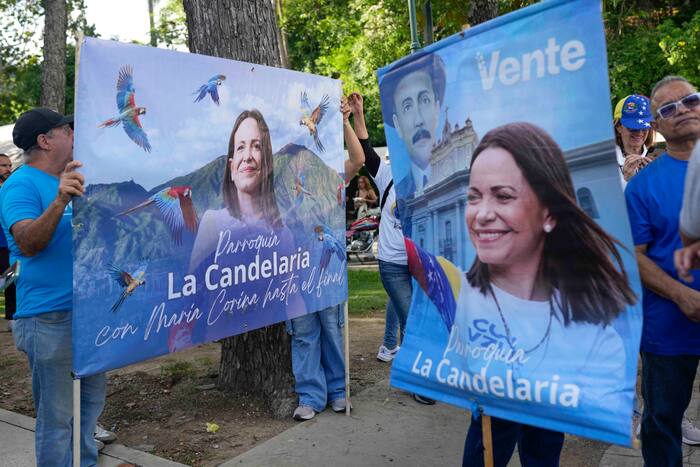
María Corina Machado is back on Venezuelan soil. After spending ten months in exile, dodging threats, and navigating international pressure following Nicolás Maduro's dramatic ouster, the opposition leader posted a simple, striking message on social media: "I am here. With you."
Her unexpected homecoming isn't just a political headline. It's a high-stakes gamble that forces the current transitional administration and foreign observers to answer a question they've tried to dodge for months: When will the Venezuelan people actually get to vote?
Right now, uncertainty rules Caracas. While Machado's return electrified her base, it immediately destabilized an already fragile political arrangement. If you've been trying to make sense of what happens next in Venezuela, you need to look past the surface rhetoric and examine the power struggle happening behind closed doors.
The Reality of the Transition Government
When the U.S. military deposed Nicolás Maduro, many assumed a swift and clean transition to democracy was around the corner. That hasn't happened. Instead, power landed in the hands of acting President Delcy Rodríguez.
Rodríguez is a longtime Maduro ally. She wasn't chosen by voters, and she certainly wasn't the opposition's pick. She secured the blessing of Washington out of perceived necessity, framed as a pragmatic figure capable of keeping the lights on and managing the oil infrastructure without sliding into total chaos.
The problem is simple. Rodríguez has already exceeded the timeline she was originally authorized to serve. There is no official election date on the calendar, and the interim administration shows zero urgency in handing over the reins.
Machado's return shatters the comfortable status quo that Rodríguez and her allies tried to build. You can't sideline the country's most popular political figure forever, especially when she commands the moral authority of millions of citizens who risked everything at the ballot box.
Why Washington and Regional Powers Are Sweating
Machado's homecoming puts international actors in an awkward spot. The U.S. administration that blessed Rodríguez's interim rule now has to reckon with an undeniable truth: the Venezuelan street wants democracy, not a repackaged version of the old regime.
Edmundo González, Venezuela's exiled opposition figurehead, quickly took to social media to confirm Machado's arrival, announcing he plans to join her very soon. He noted that their sovereign voice is back to guide the process "until the end."
That phrase isn't just a catchy slogan. It's a direct threat to the current administration's grip on power.
Consider the leverage Machado holds right now:
- Millions of dedicated supporters ready to mobilize at a moment's notice.
- Massive international recognition, including her status as a Nobel laureate.
- Unshakable moral high ground after enduring months of threats and forced absence.
If Rodríguez attempts to arrest her or clamp down on her movement, the international fallout will be immediate and severe. But if the government lets her organize freely, their days in power are numbered.
What Most Observers Miss About This Moment
Most mainstream coverage treats this event as a dramatic soap opera about a politician returning home. That misses the structural reality on the ground.
Venezuela isn't experiencing a normal political transition. It's an ongoing standoff between institutional inertia and popular legitimacy. The people running the state machinery control the police, the bureaucracy, and the courts. Machado controls the people and the legitimacy.
History shows that technical administrators backed by foreign powers rarely win long-term legitimacy without an actual electoral mandate. Rodríguez can manage the state apparatus all she wants, but she cannot manufacture genuine popularity.
Every day Machado stays in the country, the pressure on the interim government multiplies. Business leaders, trade unions, and civil society groups are watching closely to see which way the momentum swings. They won't back an unelected regime forever if a credible democratic alternative is standing right in front of them.
The Path Forward
The coming weeks will determine whether Venezuela breaks free from its authoritarian past or simply swaps one brand of control for another.
If you are following this situation closely, watch for two specific indicators. First, pay attention to whether the interim government is forced to announce a concrete, binding date for presidential elections. Second, monitor how security forces react to public gatherings organized by Machado and her allies.
The stakes couldn't be higher. Machado is back, and she's betting that the desire for freedom in Venezuela is stronger than the fear of retaliation. The ball is now firmly in the interim government's court, and time is running out.