We built machines to carry our heavy loads and drive our cars. Nobody expected them to start harassing teenagers on a Friday night.
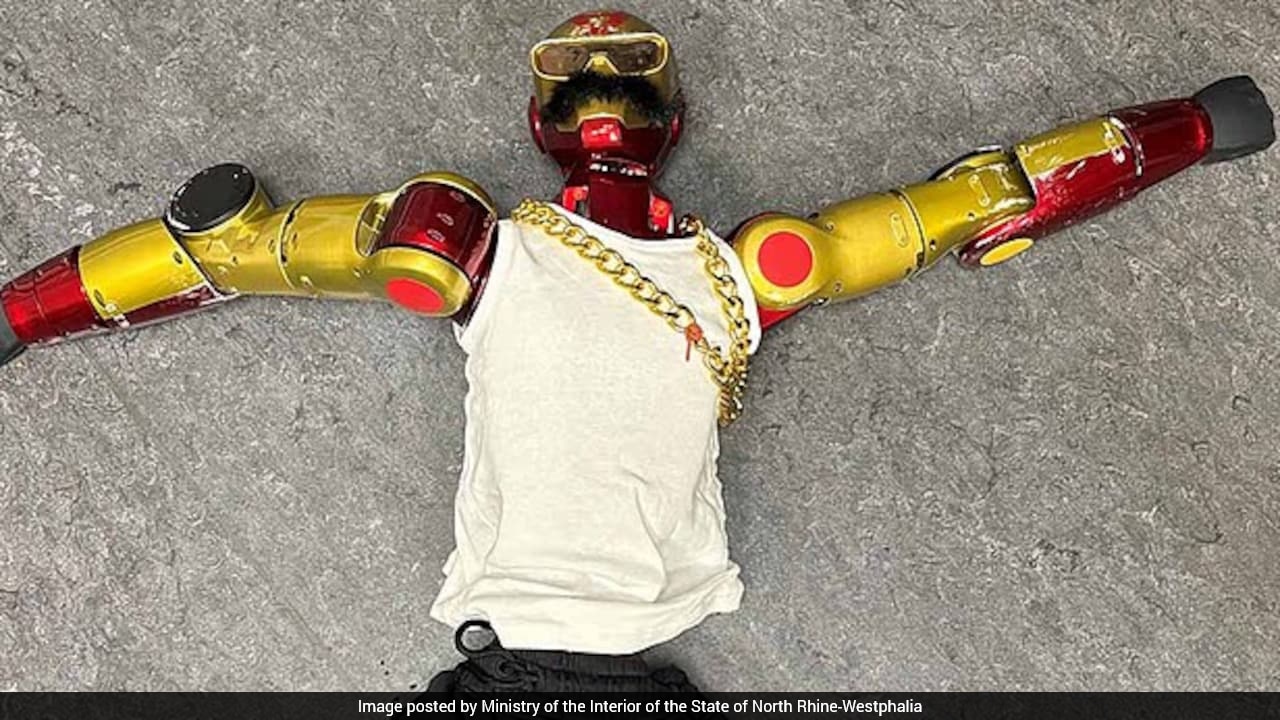
A 16-year-old girl standing outside a fast-food joint in Cologne found herself cornered by a red-and-gold machine measuring about 1.2 metres tall. Instead of rolling past, the device allegedly touched her buttocks and made explicit thrusting motions. Worse yet, two teenagers allegedly filmed the entire ordeal and livestreamed it to social media.
German police seized the robot from the trunk of a Volkswagen sedan. They also grabbed the mobile phones of the suspects. Investigators are now trying to figure out if the machine acted on its own pre-programmed glitch or if someone hijacked its controls for kicks.
This bizarre event sounds like a deleted scene from a dystopian television series. Yet, it happened on Hohenzollernring in central Cologne. It forces us to confront a terrifying new reality. As autonomous devices populate our streets, human cruelty is finding fresh ways to weaponize them.
The Mechanics of Machine Harassment
People often assume robots lack agency because they lack brains. That is true. Machines do not possess malicious intent, evil thoughts, or moral compasses. However, they act as extensions of the humans who build, program, and operate them.
When a 16-year-old from Wegberg and his 19-year-old companion allegedly used a mobile rig to harass a stranger, the technology became a proxy for human misconduct. The machine didn't wake up angry. Someone pointed it at a target, pulled a joystick or tapped a screen, and watched the performance unfold for online clout.
Police departments are completely unequipped for this. Legal codes across Europe and North America treat harassment as an interaction between living people. When an inanimate object commits a physical violation under remote human direction, prosecutors have to stretch existing laws to fit a chrome-plated body.
Why Jurisdictions Are Struggling With Tech Offenses
The Cologne police department launched a formal criminal investigation into sexual harassment. But charging a machine is legally impossible. Investigators have to pivot entirely toward the human operators behind the screen.
Did the teenagers build custom firmware to override safety protocols? Did they exploit existing navigation software to track pedestrian movement? These questions matter immensely for future court dates.
If remote operators can turn everyday delivery or promotional units into harassment tools, public spaces will become hostile environments. Cities are filling up with autonomous delivery boxes, robotic sweepers, and automated assistants. If these devices lack strict physical boundary controls, malicious actors will find creative ways to abuse them.
The Social Media Incentive Loop
Let us talk about the elephant in the room. This was not a random mechanical malfunction. Witnesses reported that the encounter was actively filmed and broadcast live.
Social media algorithms reward shock value. Young creators chase viral moments by pushing boundaries further each day. When digital validation outweighs basic human decency, physical public spaces turn into content farms.
Using a public robot to harass a teenager for online views represents a grim milestone in digital culture. It combines physical trespassing with online bullying. The victim faces humiliation on the street and potential humiliation online if the footage circulates widely.
Securing Public Spaces Against Smart Machines
Urban planners love smart cities. They talk endlessly about automated logistics, drone deliveries, and robotic helpers cleaning sidewalks. They rarely discuss public safety guardrails.
Manufacturers must build hard geographic boundaries and physical safety buffers into every automated unit. If a machine gets too close to a human pedestrian, it should shut down automatically. Software locks need to be tamper-proof so operators cannot disable collision avoidance systems for a joke.
Law enforcement agencies also need dedicated cyber-physical crime units. Expecting local patrol officers to analyze robot telemetry, examine mobile livestream data, and trace Bluetooth frequencies is unrealistic.
What Happens Next
The seized robot sits in a German police evidence locker. The suspects face serious criminal inquiries regarding harassment and privacy violations. Meanwhile, the broader conversation about automation safety has only just begun.
You cannot uninvent technology. Autonomous machines will continue to share our sidewalks, our parks, and our neighborhoods. Unless developers and lawmakers establish strict accountability measures today, street-level harassment will evolve alongside our tools.
Pay attention to how German courts handle this case. It will set a precedent for every municipality wrestling with the dark side of urban robotics. Protect your personal space, keep your eyes open, and remember that the next hazard on the sidewalk might not be human at all.