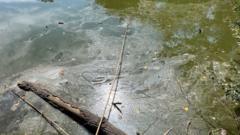
You walk past your local park pond every morning. The water’s murky, the edges are crumbling, and it basically looks like a forgotten relic. You wonder why the council doesn't just fix it. It seems simple, right? Dig it out, repair the bank, fill it back up. But the reality is a messy web of budget wars and competing priorities that nobody in local government wants to explain to your face.
The Budget Reality Check
When a local authority claims that fixing a park pond would "impact other services," they aren't just blowing smoke. They’re usually staring down a massive, immovable budget deficit. Local government funding is often a zero-sum game. Every dollar, pound, or euro spent on environmental aesthetics is a unit of currency pulled away from social care, road repairs, or waste management. Recently making headlines recently: Why The Jordan Church Attack Shatters A Dangerous Illusion.
I’ve seen this play out in community meetings more times than I can count. Residents demand a beautiful, clear pond for wildlife and recreation. Meanwhile, the finance officer is looking at a spreadsheet where the "discretionary spending" column is already bleeding red. It's not that they don't want the pond to be pretty. It’s that they are forced to prioritize keeping the library open or ensuring the elderly get their home care visits.
Why Maintenance Backlogs Are Killing Our Parks
The problem isn't just one broken dam or a silted-up pond. It’s the deferred maintenance backlog that plagues public infrastructure across the board. Whether it's national parks facing a $24 billion repair deficit or a neighborhood pond losing its liner, the strategy is almost always the same: ignore the small stuff until it becomes a catastrophic failure. Additional details on this are covered by NPR.
It’s expensive to maintain a pond. You’ve got dredging costs, sediment disposal, aquatic plant management, and the constant battle against invasive species. When councils cut corners for years, the pond doesn't just look bad—it becomes a public health risk or an engineering nightmare. By the time it actually needs a major overhaul, the cost is so high that it feels like a luxury project compared to essential services.
The Problem With Quick Fixes
You’ll often hear local politicians promise a "community-led" restoration. They talk about grants, volunteer clean-up days, and partnerships. These are nice in theory. In practice, they rarely solve the underlying issue. A volunteer group can pick up litter, but they can't engineer a new storm-drainage system or handle the heavy-duty remediation required for a polluted waterway.
Look at the big-picture trends. Even at the federal level, funds like the Legacy Restoration Fund have to be fought for repeatedly. If national parks—the crown jewels of the country—are struggling to secure consistent funding to fix roads and bridges, what chance does a suburban pond have? It’s basically the same fight, just scaled down to a level where people actually notice it in their daily lives.
What You Can Actually Do
If you’re tired of the excuses, stop asking for a "fix" and start looking for the money. If you want a pond restored, you need to understand the council’s specific budget cycle.
- Track the Capital Projects List: Councils usually have a document outlining planned infrastructure spending. If your pond isn't on there, it doesn't exist for them.
- Push for External Funding: Don't rely on general tax revenue. Look for state, regional, or environmental grants. Sometimes, you need to find a way to tie the pond’s health to a bigger project, like flood mitigation or stormwater management. That’s how you get real funding.
- Be the Squeaky Wheel: It’s annoying, but it works. Show up at budget hearings. Ask pointed questions about why maintenance was deferred in the first place. When they realize that ignoring the problem is more politically expensive than fixing it, things start to move.
Honestly, don’t expect a perfect, shimmering lake overnight. It’s a grind. But if you’re actually invested in the space, you have to play the game on their terms. Understand the constraints, identify the alternative funding streams, and stop letting "impact on other services" be the final word.
America's national parks are facing a $24 billion repair crisis
This video provides important context on how massive maintenance backlogs are currently impacting public spaces and infrastructure.
http://googleusercontent.com/youtube_content/1