Diplomatic announcements mean very little when warplanes are still active overhead. US President Donald Trump claimed a major breakthrough after Hamas agreed to disarm under a Washington-backed initiative, but reality on the ground told an entirely different story.
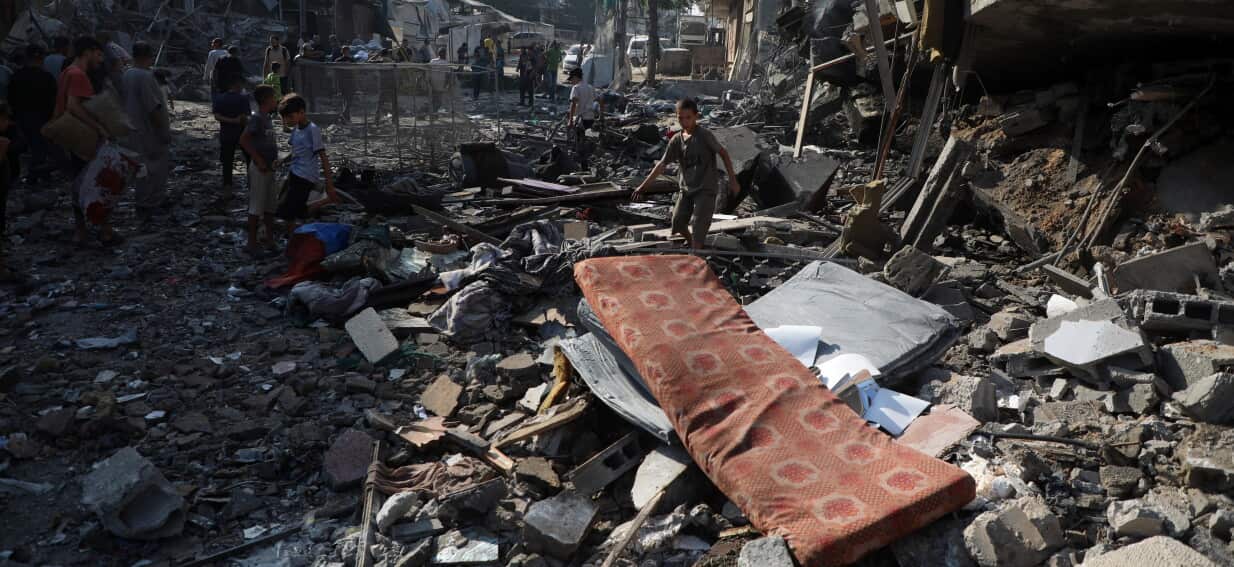
Israeli airstrikes continued across the Gaza Strip for a second straight day, killing at least 18 Palestinians. Medics confirmed that targets spanned Gaza City in the north, Deir al-Balah in the center, and Khan Younis in the south, pushing the daily death toll to its highest point in weeks. In other developments, take a look at: Why Targeting The Medina Power Station Crossed A Dangerous Line.
The Disarmament Disconnect
The core dispute centers on a fundamental sequence of events that neither side agrees on. Washington and international mediators point to a 15-point roadmap published by Trump's Board of Peace, asserting that Hamas agreed to hand over its weapons.
Hamas maintains that its willingness to store its arms is conditional. The group insists that Israel must first halt all military operations and withdraw its forces from the enclave. Al Jazeera has provided coverage on this critical topic in great detail.
Israel sees the timeline completely differently. Israeli Energy Minister Eli Cohen, a member of Prime Minister Benjamin Netanyahu’s security cabinet, stated clearly on Army Radio that there is no deal to halt attacks. Cohen expressed deep skepticism about Hamas following through on disarmament and argued that Israel, which already controls roughly 70 percent of the enclave, might need to take full control if the militant group keeps its weapons.
"In the deal we signed with the United States, our stance is that Hamas must be dismantled. This is the first thing that must happen," Cohen said.
💡 You might also like: express bus from brooklyn to manhattan
What Real Implementation Looks Like
Talks in international capitals often ignore the logistical nightmare of verifying disarmament while active combat continues. Israeli officials have communicated strong concerns to Washington about the proposed roadmap, demanding strict, verifiable proof of genuine disarmament before any military withdrawal begins.
Meanwhile, families trapped in Gaza City and Deir al-Balah carry the immediate cost of the diplomatic deadlock. Every fresh strike makes an already fragile ceasefire framework harder to rescue.
If international mediators want this agreement to stick, they have to bridge the unbridgeable gap between immediate military cessation and total structural dismantlement. Until those baseline terms align, announcements from Washington will keep crashing against the sound of explosions on the ground.