History isn't just written by the victors. It’s filmed, edited, and projected onto the silver screen to shape how entire populations view themselves. Long before social media algorithms dictated national narratives, African leaders understood that controlling the camera meant controlling the future.
Look at Ghana in the mid-twentieth century. Colonial powers didn't just extract resources; they weaponized media. They produced films depicting indigenous populations as savages to justify foreign rule. When Kwame Nkrumah stepped up as Ghana's first president, he recognized an urgent truth. You cannot build a sovereign nation on a foundation built by your oppressors. He knew that visual sovereignty was just as critical as political independence.
The Camera As a Tool For Liberation
Nkrumah brought in filmmakers and photographers to document the birth of a new nation. Among them was Chris Tsui Hesse, his personal cameraman. Hesse became an eyewitness to the tumultuous liberation movement sweeping across West Africa during the 1950s and 1960s. Every reel captured a society breaking free from British colonial chains, establishing its own identity, and rewriting its story in real-time.
But history is messy. When Nkrumah was deposed in the 1966 coup d'état, his rivals didn't just take power—they tried to erase the visual record. The new regime ordered the destruction of thousands of film reels documenting Nkrumah's administration. They wanted to wipe the slate clean and pretend the revolutionary era never happened.
Saving the Lost Reels of Ghana
Fortunately, history had a guardian. Chris Hesse managed to hide and preserve over 1,300 film reels, stashing away more than 200 hours of irreplaceable history. For decades, those cans of film sat largely unseen, gathering dust in London vaults while generations grew up disconnected from their visual heritage.
Bringing those reels back to light took a massive collaborative effort, spearheaded by contemporary preservationists and filmmakers. Co-producer Anita Afonu played a vital role in connecting the past with the present. Meeting Hesse during her own archival work, Afonu championed the digitization of these fragile reels. Her efforts helped spark a movement to rescue Ghana's cinematic memory.
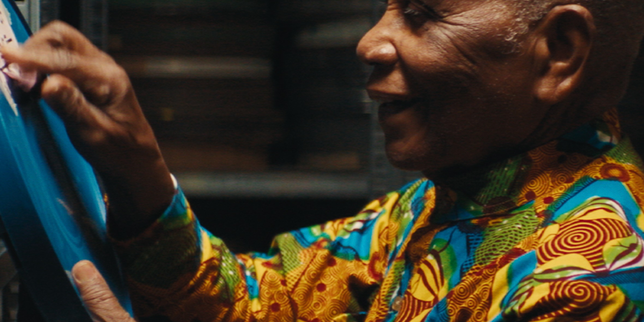
This journey culminated in the documentary feature The Eyes of Ghana, directed by Ben Proudfoot and executive produced by Barack and Michelle Obama. The film follows Hesse, now in his nineties, as he races against time to ensure his life’s work isn't lost to blindness or decay.
The Power of Archival Reclamation
What makes this archival rescue mission so compelling isn't just the nostalgia of old film stock. It’s a fierce reminder that owning your images is a political act. Colonial propaganda relied on a singular gaze—white, European, and deeply biased. Nkrumah's vision flipped the lens. He empowered African artists and cinematographers to capture their own leaders, infrastructure projects, and cultural celebrations with dignity and pride.
When you watch the surviving footage today, you see a nation breathing on its own terms. You see leaders negotiating sovereignty, crowds cheering in independence squares, and ordinary citizens stepping into modernity without a script written in London.
Preserving these films isn't an academic exercise. It's about reclamation. Nations that lose their archives lose their anchor. By digitizing these reels and screening them publicly, modern filmmakers are giving Ghanaians back a piece of themselves that was nearly burned away.
Watch the archival footage if you get the chance. Look past the grain and the age of the tape. You are watching the exact moment an empire lost its monopoly on reality.