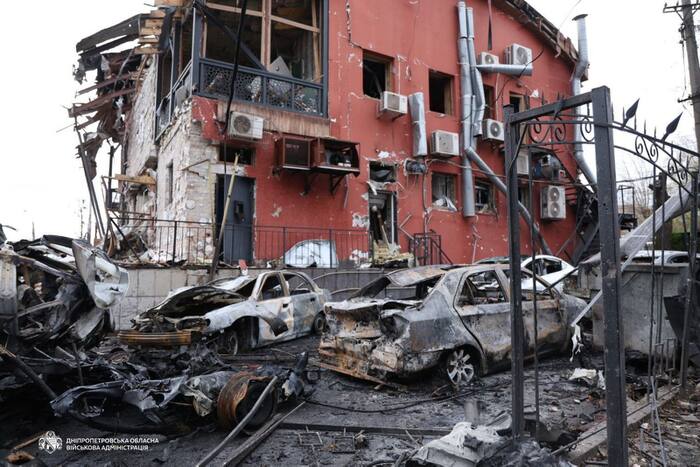
War doesn't care about hometowns, but strategy certainly does. When Russian ballistic missiles smashed into the center of Kryvyi Rih, they didn't just target random infrastructure. They struck the industrial heart and birthplace of Ukrainian President Volodymyr Zelenskyy, turning an ordinary evening into a disaster that claimed the lives of a 7-year-old boy and a young paramedic.
If you're wondering why this specific central Ukrainian city keeps absorbing
Why the Deadly Strike on Kryvyi Rih Changes the Calculus in Ukraine
news
War doesn't care about hometowns, but targeting them sends a chilling, calculated message. When a ballistic missile slams into a residential area in central Ukraine, the human cost is immediate and devastating. Two lives vanished instantly. Scores of others woke up to shattered glass, smoke, and injuries that will alter their bodies and minds forever. This wasn't a distant battlefield engagement. This hit Kryvyi Rih, the central Ukrainian city where President Volodymyr Zelenskyy was born and raised.
When you look at the mechanics of these strikes, the brutality is the point. Ballistic missiles give air defense systems very little time to react. They fall from the upper atmosphere at terrifying speeds, leaving civilians seconds to find shelter. In Kryvyi Rih, those precious seconds ran out too fast. Entire neighborhoods woke up to sirens and the thunderous roar of impact, turning ordinary streets into trauma zones. Emergency services rushed into burning wreckage, pulling the wounded from rubble while smoke choked the morning air.
The Symbolic Weight of Kryvyi Rih
Geography matters in this conflict. Striking Kryvyi Rih carries a heavy symbolic load. It’s an industrial hub, a sprawling city of steel and iron ore mines that keeps a battered economy breathing. But more than that, it’s personal. Hitting the birthplace of the nation's wartime leader is a psychological tactic designed to pierce armor plates of morale. It says loud and clear that no place is out of reach, no symbol is off-limits, and the civilian population remains the primary pressure point in a grinding war of attrition.
Military analysts often talk about strategic assets, supply lines, and radar cross-sections. But on the ground, a strategic asset is a apartment building where families sleep. The destruction here mirrors patterns seen across the country for years, yet each event punches a new hole in the collective endurance of the population. Hospitals flooded with casualties within minutes. Doctors and nurses, operating on precious sleep and endless adrenaline, scrambled to triage torn limbs and shrapnel wounds.
What the Headlines Miss About Local Resilience
If you only read brief news flashes, you miss the heavy lifting happening right after the dust settles. International media often treats these events as static statistics. Two dead, dozens wounded, move on to the next update. But reality on the ground operates differently. Neighbors become first responders. People who lost their own windows run across the street to dig strangers out of collapsed masonry.
You see local networks spring into action instantly. Blood donation lines form around blocks within hours. Volunteers show up with hot tea, heavy plastic sheeting to seal blown-out frames, and psychological first aid for terrified children. This grassroots response is the unsung backbone of Ukraine's survival. The state infrastructure takes a beating, but the human fabric holds tight.
The Ongoing Strain on Air Defense
Behind every one of these tragedies lies a desperate math problem. Air defense resources are stretched thin across a massive front line. Cities far from the immediate trench lines, like Kryvyi Rih, require dedicated shields to stop high-speed ballistic threats. Intercepting a ballistic missile demands advanced hardware and interceptor stocks that are constantly running low. Every time a missile gets through, it exposes the brutal gap between what is needed to secure an entire nation and what allies manage to deliver.
The human toll keeps rising, measured not just in body bags, but in the permanent anxiety carved into a generation growing up with air raid apps on school tablets. When sirens wail, classrooms empty into basements. When the all-clear sounds, children walk back out to look at the sky with eyes that have seen too much.
Staying informed means looking past the initial shock value of the news cycle and recognizing the grinding, day-to-day endurance required to live under a falling sky. Support local relief funds if you have the means, keep paying attention to the shifting logistics of international aid, and refuse to let these human losses blur into background noise.