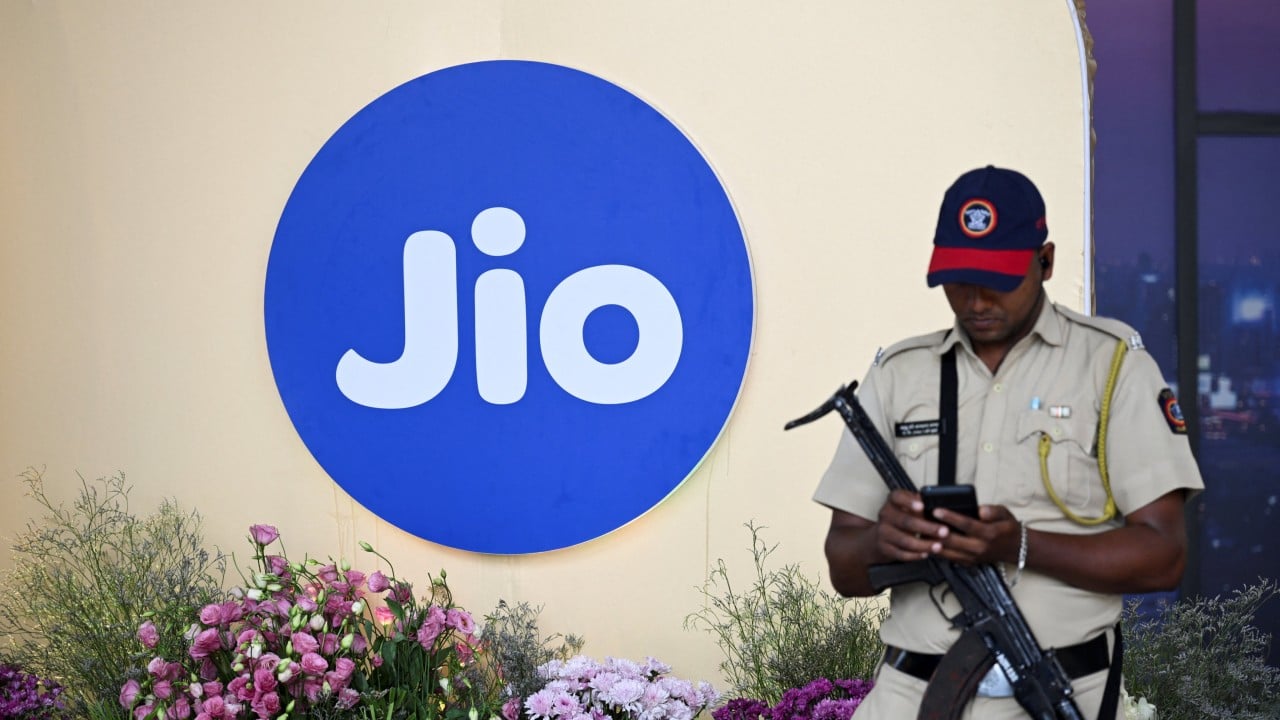
India’s tech and telecom landscape is bracing for a monumental shift. Jio Platforms is marching toward an eye-watering $108 billion valuation in what is shaping up to be the country's largest initial public offering ever. Yet, this high-stakes market debut is colliding head-on with a very public, high-profile clash. Elon Musk wants in. Mukesh Ambani is holding the fort.
If you are wondering why Wall Street and Mumbai are suddenly talking about satellite constellations alongside mobile data towers, look at the timing. The record-breaking Jio IPO isn't just about raising capital. It is a referendum on whether terrestrial telecom titans can fend off low-earth orbit challengers in a market boasting over a billion internet users.
The Collision of Two Titans
Mukesh Ambani built Jio by rewriting the rules of Indian telecom. By flooding the market with dirt-cheap 4G data, his empire amassed over 530 million customers, fundamentally altering how a billion people consume digital media. That relentless pricing power turned Reliance Industries into an economic juggernaut.
Enter Elon Musk. SpaceX’s Starlink has spent five years trying to crack the Indian market. Musk hasn't stayed quiet about the roadblocks. He has publicly accused local players and regulatory gatekeepers of setting up monopolistic chokeholds to keep satellite competitors at bay.
Reliance didn't stay silent. In a rare public pushback just days before the IPO launch, the conglomerate issued a definitive statement defending the country's regulatory framework. They noted that every player—including Jio’s own satellite venture, Jio Satcom—must go through the exact same security clearances and spectrum assignment rules. Musk surprisingly dialed back the rhetoric with a brief "Much appreciated" response, but the commercial tension remains white-hot.
What Investors Are Actually Betting On
Why does this rivalry threaten the narrative around the $108 billion Jio IPO? Public markets love monopolies or near-monopolies. Jio and its primary rival Bharti Airtel currently control over 80 percent of India's broadband and mobile subscribers. That dominance gives investors confidence in predictable, recurring cash flows.
Starlink threatens to punch a hole in that defensive moat. While Jio relies on physical fibre and cell towers, Starlink aims straight at underserved rural pockets and enterprise clients with direct-to-home satellite internet. Musk has repeatedly vowed to price services aggressively to undercut incumbents, mirroring strategies he used to disrupt traditional players in markets like Kenya.
Yet, the economics look vastly different on the ground in India. Consider the cost barrier:
- Jio prepaid unlimited plans cost a fraction of what satellite hardware demands.
- Starlink residential kits require hefty upfront hardware investments alongside significantly higher monthly subscription fees compared to standard fibre or mobile broadband.
They aren't direct substitutes for the vast majority of everyday mobile users. Even so, the psychological impact on investors is real. Wall Street wants to know if Jio's growth margins are bulletproof or vulnerable to high-tech disruption from above.
Navigating the Regulatory Maze
The regulatory battleground in New Delhi is complex. India’s Department of Telecommunications maintains a tech-agnostic stance. Communications Minister Jyotiraditya Scindia has repeatedly clarified that licenses are being evaluated fairly.
Right now, three major entities hold satellite communication licenses:
- Starlink
- Jio Satellite Communications
- Bharti-backed Eutelsat OneWeb
None of them can flip the switch commercially yet. They are all stuck waiting for final security clearances from the Ministry of Home Affairs and the ultimate green light on spectrum pricing. Amazon's Project Kuiper is also lining up under newer authorization frameworks.
This means the race is entirely about who can secure infrastructure approval first while keeping public market sentiment intact. Jio is using its massive balance sheet and anchor investor demand—pulling billions from heavyweights like BlackRock and Allianz—to prove its dominance is unshakeable.
The Broader Reality
You cannot look at this IPO through a single lens. It is a clash over spectrum, security gateways, and the future of digital distribution across the developing world. Ambani has made it clear that Reliance has never feared competition. Musk is equally insistent that open markets always benefit the end consumer.
The outcome will dictate how tech infrastructure scales across emerging economies for the next decade. Keep a close eye on spectrum auction rules and security clearances coming out of New Delhi over the coming months. That is where the real war for India's digital future will be won or lost.
Reliance Hits Back At Elon Musk Over Starlink Days Ahead Of JIO IPO
This video provides an up-to-date look at the public dispute between Reliance and Elon Musk as the massive Jio public offering approaches.
http://googleusercontent.com/youtube_content/1