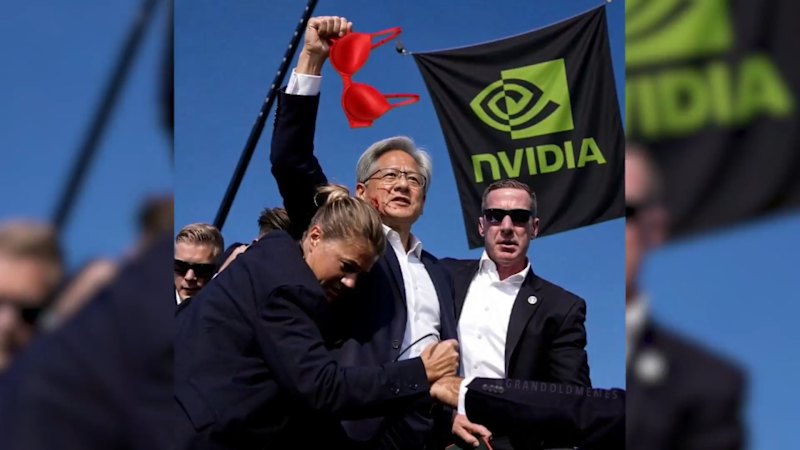
Wall Street threw a massive party when Jensen Huang walked back through Nvidia's doors. Shares rocketed, indexes erased their weekly losses, and everyone pretended the corporate governance crisis never happened. But if you look past the equity bounce, the debt market isn't popping any champagne. Beneath the surface of Nvidia's trillion-dollar valuation surge, credit default swaps and corporate bond yields are flashing warning signs that nobody wants to talk about.
The core issue isn't whether Huang can sell more chips. It's whether the house of cards financing the entire artificial intelligence infrastructure buildout can survive its own leverage. When Huang was ousted and subsequently reinstated following heavy political pressure, he didn't just resume leadership of a semiconductor giant. He stepped back onto a ticking financial bomb built on circular financing, vendor guarantees, and staggering corporate debt.
The Credit Market Reality Check
Equity investors buy dreams. Credit investors buy math. And the math right now looks terrifying.
While stock pickers cheered Huang's return, companies heavily reliant on Nvidia's ecosystem experienced a very different reality. Take CoreWeave, one of the poster children of the AI cloud boom. Its bonds took a brutal beating, with yields topping 17 percent while its five-year credit default swap spreads blew past 1,200 basis points. Oracle, Meta, Amazon, and Nvidia itself saw their credit protection costs widen.
Insurance against default costs significantly more than it did before the recent market panic. That tells you institutional lenders don't care who is wearing the leather jacket. They care about cash flow, debt service coverage ratios, and whether the data centers being built today will ever generate enough revenue to pay off the billions borrowed to construct them.
Circular Financing and the Vendor Backstop
Nvidia isn't just a chip manufacturer. It acts as the financial engine of the entire generative intelligence trade. Through equity investments and vendor guarantees totaling tens of billions of dollars, Nvidia has effectively been financing its own customers.
When a startup or a specialized cloud provider needs billions to buy H100 or Blackwell clusters, they often rely on financial engineering backed directly or indirectly by Nvidia's balance sheet. It's a closed-loop economy. Nvidia reports record revenue, the customer reports compute capacity, and Wall Street values the whole loop at a multiple of reality.
When Huang was briefly forced out, investors panicked because they realized how much of this ecosystem depends on his personal relationships and deal-making swagger. His return stops the immediate panic, but it doesn't fix the underlying structural risk. Nvidia carries massive financial commitments and guarantees. If end-user demand for AI software stalls—or if enterprise customers fail to monetize their massive capital expenditures—those guarantees are going to get called.
Why Traditional Lenders Are Growing Nervous
Commercial banks and private credit funds are starting to pull back on unhedged data center loans. Building out power-hungry server farms requires astronomical upfront capital. Historically, utility companies and telecom giants funded infrastructure against long-term, locked-in service contracts with creditworthy enterprise clients.
Today's AI infrastructure is different. Much of it is being built on speculation, powered by venture capital and corporate debt that assumes exponential demand growth for years to come. When interest rates stay elevated, servicing that debt becomes an expensive game of musical chairs.
If you're holding high-yield bonds tied to secondary cloud providers, Jensen Huang returning to Nvidia doesn't lower your interest payments or guarantee your clients will renew their compute contracts. It just means the guy running the top of the funnel is back in his chair.
What Comes Next for the Trade
The market wants a clean narrative. It wants to believe that a single charismatic CEO can wave a wand and erase macroeconomic gravity. But credit markets don't trade on charisma. They trade on solvency.
Keep an eye on secondary debt spreads rather than daily stock movements. If credit default swaps for AI infrastructure providers keep widening, the equity rally is built on sand. Huang can engineer the fastest chips on the planet, but he cannot rewrite the laws of debt amortization.
Stop looking at the tech ticker symbols for validation. Watch the bond market. That is where the actual verdict on the artificial intelligence boom will be decided.