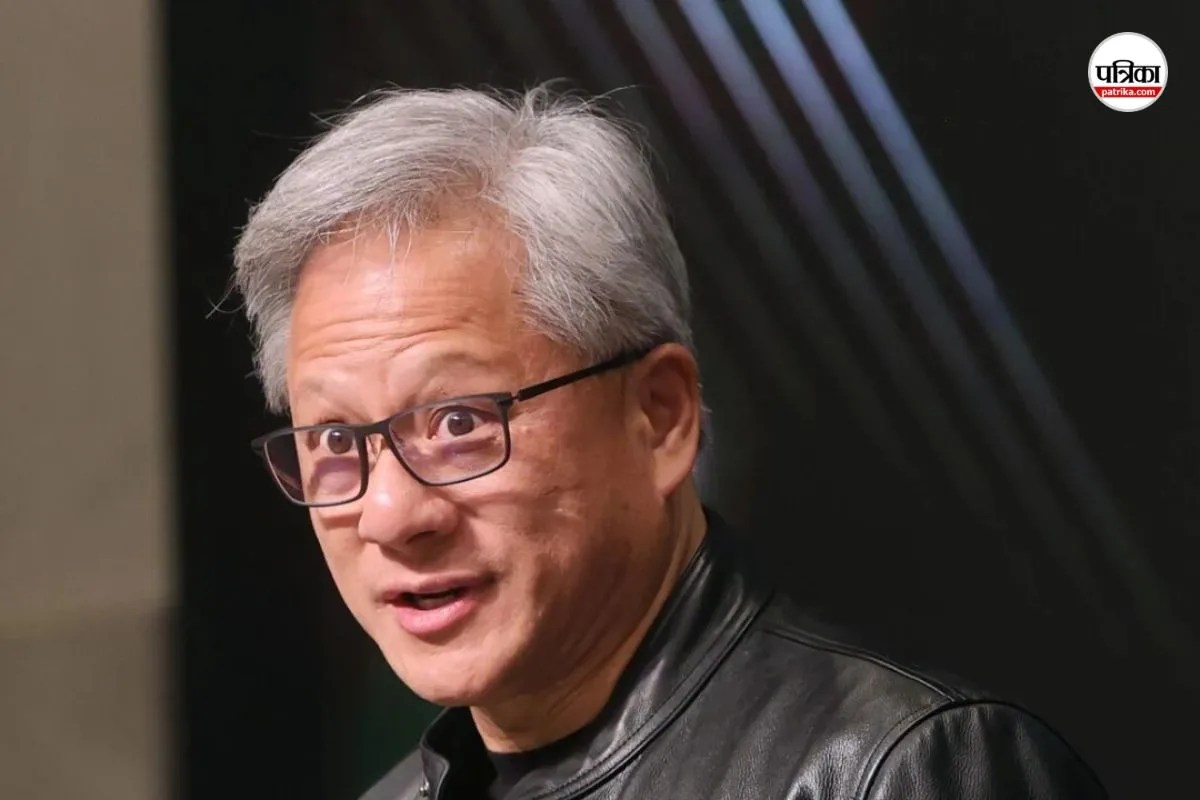
You don't build a five trillion dollar company by playing it safe. You do it by betting the entire farm on a technology nobody else takes seriously yet. Jensen Huang did exactly that, and now the entire global economy runs on his chips.
Love him or hate him, the co-founder and chief executive of Nvidia isn't just another Silicon Valley suit. He’s an immigrant kid who washed dishes in a Kentucky boarding school, wore a leather jacket long before it became a tech-billionaire uniform, and bet everything on graphic processors back when gaming was a niche basement hobby.
Let's look past the corporate PR and figure out who Jensen Huang really is, how he built this absolute monster of a corporation, and why his leadership style breaks every traditional rule in the business playbook.
From a Kentucky Reform School to Silicon Valley
Most tech origin stories sound polished and sanitized. Huang's backstory is gritty, bizarre, and entirely real.
Born in Tainan, Taiwan in 1963, his parents sent him and his brother to the United States when he was nine years old. Due to a massive misunderstanding, relatives enrolled the young boys in the Oneida Baptist Institute in rural Kentucky—thinking it was an elite prep school. It turned out to be a religious disciplinary reform school for troubled kids.
Instead of studying advanced calculus, a nine-year-old Huang cleaned toilets and watched other students carry knives. That kind of environment changes you. It builds a distinct kind of resilience that you can't learn at Stanford or Harvard.
When his parents finally rescued him and settled in Oregon, Huang picked up table tennis and developed a relentless work ethic. He worked shifts at a Denny's diner, scrubbing floors and taking orders, before earning his electrical engineering degree from Oregon State University and later a master's from Stanford. Working at AMD and LSI Logic gave him the engineering chops, but it was a greasy spoon restaurant that taught him how hard work actually feels.
Founding Nvidia Over Breakfast
In 1993, Huang sat down at a Denny's booth with fellow engineers Chris Malachowsky and Curtis Priem. They wanted to solve a problem nobody else cared about: making video games look real through 3D graphics.
They started with forty thousand dollars and a wild vision. At the time, the computing world believed that CPUs could handle everything. Huang insisted that parallel processing—using graphics processing units (GPUs)—was the future. He was laughed out of venture capital offices for years.
When Nvidia nearly went bankrupt in 1996 because of a botched product launch for Sega, Huang had to lay off most of the company. He walked into the office, faced his team, and told them the brutal truth: they had about thirty days to live. They pivoted, built the RIVA 128 chip, and saved the company by the skin of their teeth.
That near-death experience shaped his management style permanently. Huang doesn't believe in safe incremental growth. He believes in constant, existential crisis management.
Why Huang's Management Style Terrifies Traditional CEOs
If you walk into Nvidia's headquarters, you won't find a traditional corporate hierarchy. Huang famously has dozens of direct reports. Yes, you read that right. While typical CEOs manage seven to ten executives, Huang keeps around fifty to sixty direct reports.
Why? Because he hates bureaucratic layers. He wants zero filters between the frontline engineers building the hardware and the guy at the top making the calls. Information moves at lightning speed inside Nvidia because middle management isn't there to water it down or twist the narrative.
He also runs what he calls "skip-level" meetings with hundreds of employees in a room, taking raw, unfiltered questions on the spot. There are no titles in those rooms. If your idea is stupid, Huang will tell you it's stupid right to your face. If it's brilliant, you've just fast-tracked your career.
It's intense. It's exhausting. And it produces results that make legacy tech giants look like they're moving in slow motion.
The AI Gold Rush and the Trillion-Dollar Bet
Most people think Nvidia stumbled into the artificial intelligence boom by accident. They didn't.
Back in 2006—nearly two decades before ChatGPT became a household name—Huang made a decision that cost the company billions of dollars. He forced Nvidia to invest heavily in CUDA, a software platform that allowed developers to use graphics chips for general-purpose parallel computing.
Wall Street hated it. Analysts asked why a hardware company was wasting money building software languages for non-gamers. Share prices tanked. Profits took hits. But Huang refused to back down because he realized GPUs could crunch massive parallel math datasets way faster than traditional processors.
When researchers finally figured out how to train deep learning neural networks, they didn't have to invent new hardware. Nvidia's CUDA-enabled GPUs were already sitting there, waiting for them. Huang didn't predict the exact arrival of generative AI; he built the highway before anyone knew cars were coming.
The Reality Check
Nobody is invincible, and Huang's absolute dominance brings massive pressure.
Nvidia now commands an astronomical market valuation, making Huang one of the wealthiest people on the planet. But with that kind of power comes intense geopolitical crossfire. Sitting right at the intersection of US-China trade tensions over advanced semiconductors puts Huang in a perpetual high-stakes poker game. Every move he makes is scrutinized by Washington, Beijing, and anxious investors wondering if supply chains can hold up.
Furthermore, competitors like AMD, Google, and Amazon are pouring billions into custom chips to break Nvidia's monopoly. Huang knows this. His constant mantra inside the company is simple: "We are only thirty days from going out of business." That paranoia is the secret sauce keeping the giant upright.
Stop looking at Jensen Huang as just another lucky tech billionaire. He survived poverty, bullying, bankruptcy, and decades of industry mockery by betting on the future before anyone else had the stomach for it.
If you want to understand where technology is heading next, stop reading market forecasts and start watching what Jensen does when everyone else tells him he's wrong.