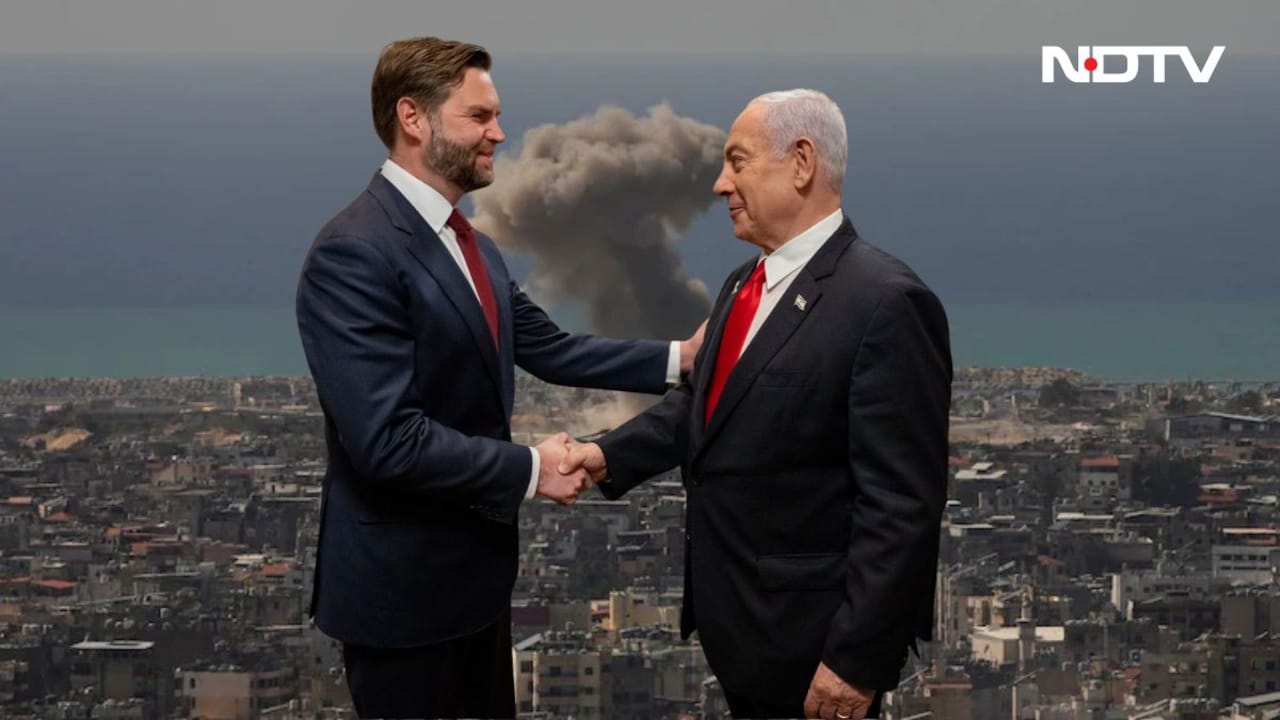
Foreign policy lines in Washington are shifting faster than most pundits care to admit. When US Vice President JD Vance sat down with Mark Halperin, he didn't hand out polite political pleasantries. Instead, he drew a hard boundary. Vance explicitly declined to endorse Israeli Prime Minister Benjamin Netanyahu for reelection, setting himself apart from Donald Trump's public backing just days prior.
You hear a lot about unwavering alliances in international relations, but reality is messier. Vance made his stance bluntly clear by telling interviewers that his focus stays squarely on American midterms and domestic candidates. Yet, this isn't just about avoiding foreign ballot boxes. It reflects a widening ideological rift inside the conservative movement regarding America's posture in the Middle East, particularly concerning ongoing conflicts with Iran and the mechanics of foreign aid.
Breaking Down the Non-Endorsement
Politicians love to dodge questions about foreign leaders, but Vance's refusal carries weight because of his direct involvement in sensitive diplomatic channels. While Trump threw his weight behind Netanyahu, Vance took a step back. He argued that his job involves backing American candidates, refusing to get tangled in Israeli domestic politics.
Of course, consistency is sometimes hard to track in modern politics. Critics quickly point out that Vance previously campaigned for Hungary's Viktor Orban ahead of their parliamentary race. So why draw the line at Netanyahu?
The answer lies in a mounting frustration within the America First wing regarding how foreign leaders interact with Washington. Vance has never hidden his skepticism toward open-ended foreign entanglements. When parts of the Israeli government publicly opposed Trump-era diplomacy with Iran, Vance didn't stay quiet. He issued a warning that foreign officials risk losing everything if they jeopardize relations with the superpower footing a massive chunk of their defense bill.
The Tension Behind Closed Doors
This public friction didn't appear overnight. Behind the scenes, diplomatic conversations have grown increasingly sharp. Reports surfaced detailing a tense phone call between Vance and Netanyahu earlier in the year. Vance reportedly challenged the Israeli premier's optimistic projections regarding regime change in Iran, calling out assumptions that the conflict would be quick or easy.
For an administration trying to navigate fragile ceasefire talks alongside envoys like Steve Witkoff and Jared Kushner, competing narratives create real friction. White House insiders have even whispered about strategic leaks designed to paint Vance in a specific light during high-stakes negotiations with Tehran. When intelligence and political survival collide, allies can start looking remarkably like adversaries.
Domestic Politics and Republican Schisms
You can't separate these foreign policy debates from the domestic electoral calendar. Back home, the Republican coalition isn't monolithic. Within the Republican Jewish community, questions linger about Vance's long-term commitment to traditional bipartisan ties with Israel. Concerns over rising antisemitism and intra-party associations have kept political operatives on high alert as midterm races heat up.
Republicans are eager to frame political opponents as hostile toward Israel, but internal debates over figures like Tucker Carlson and foreign policy realism keep things complicated. Vance represents a generation of conservatives who believe that unconditional alignment without strategic accountability harms American interests. He has repeatedly reminded critics that the defensive infrastructure protecting Israel relies heavily on American taxpayers and hardware. That is an economic and political reality, not a blank check.
What Comes Next for US-Israel Relations
The friction between Washington and Jerusalem highlights a broader transition. The old playbook of unconditional political alignment is facing serious stress tests. Vance's refusal to endorse Netanyahu isn't an isolated diplomatic snub. It's a calculated signal that future US support comes with explicit boundaries and strategic expectations.
If you're watching international diplomacy, pay attention to how these negotiations unfold. The days of silent compliance are gone. Expect more friction, sharper public warnings, and a relentless focus on American leverage as leaders in Washington redefine what partnership actually requires.