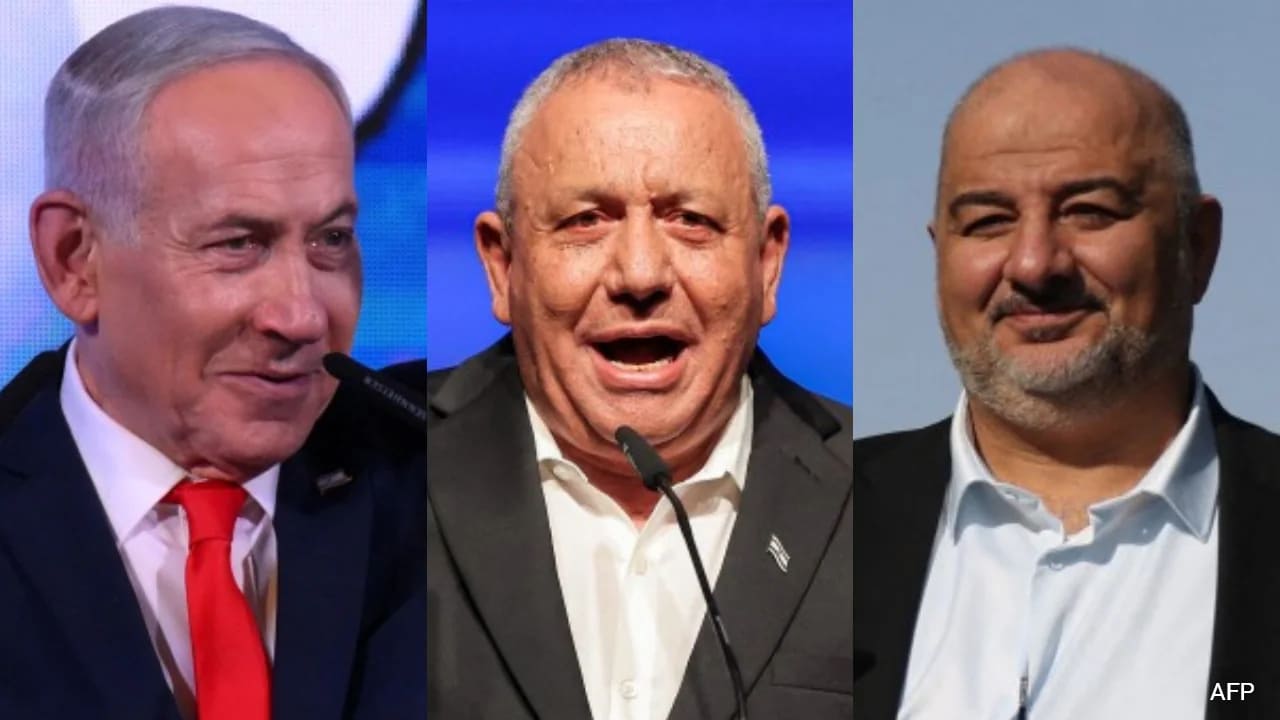
Israel finds itself trapped once again in a familiar, exhausting loop. Another election has come and gone, leaving the Knesset fractured and neither the right-wing bloc nor the opposition holding the magical 61 seats required to form a governing majority. Commentators love to frame these deadlocks as existential crises for Benjamin Netanyahu. They treat every vote count like a suspense thriller where his political demise is just around the corner.
They are usually wrong.
If you look past the superficial drama of exit polls and coalition arithmetic, the structural realities of Israeli politics heavily favor the longest-serving prime minister. Deadlocks don't hurt him; they buy him time, exhaust his rivals, and preserve his grip on power as caretaker leader. Let's break down how this political gridlock actually functions and why the system keeps tilting back into Netanyahu's favor.
The Mirage of the Opposition Majority
Every time a tight election cycle wraps up, the anti-Netanyahu camp celebrates if their combined seat count equals or slightly edges out the right-wing bloc. They look at the numbers and assume a coalition is waiting to happen. It never works that way.
The fundamental roadblock for the opposition isn't just winning numbers; it's ideological incompatibility. Figures like Gadi Eisenkot or Avigdor Lieberman sit miles apart from Arab-majority parties like Ra'am or the Joint List. While a minority government backed externally by Arab lawmakers is mathematically possible on paper, crossing that line in reality causes immediate political suicide for mainstream Jewish politicians. Voters on the center-right view cooperation with Arab parties as an absolute betrayal.
Netanyahu understands this hesitation better than anyone. He weaponizes these divisions during every campaign, painting any alternative coalition as illegitimate. Because the opposition is paralyzed by its own internal contradictions and fear of alienating nationalist voters, Netanyahu remains the only political operator flexible enough to stitch together extreme factions when push comes to shove.
The Power of the Caretaker Status
When coalition talks fail and a government cannot be formed, the country doesn't simply stop functioning. Israel enters a transitional phase. Netanyahu stays on as caretaker prime minister, a position that grants him immense institutional inertia.
People forget that being in charge during a deadlock gives a sitting leader control over day-to-day governance, security updates, and public messaging. While his rivals argue in television studios about who should lead negotiations, Netanyahu projects stability. He frames ongoing security challenges involving Iran or regional proxies as reasons why a seasoned hand cannot be discarded.
This dynamic stretches out timelines. By the time the legal 100-day window for government formation expires and everyone realizes a fresh round of elections is inevitable, months have passed. During those months, public fatigue sets in. Voters grow tired of the bickering, and Netanyahu's core base hardens around him.
Poaching and Fracturing the Opposition
If the math leaves Netanyahu just two or three seats short of a 61-seat majority, outsiders expect him to simply give up. That ignores decades of political history.
Defecting from the opposition to join a right-wing government carries a heavy social cost in Israel's polarized environment, but desperation changes behavior. Politicians whose parties are sliding in polls or who are promised high-profile ministerial portfolios frequently find reasons to cross the aisle. Netanyahu has pulled off these legislative rescue acts before by targeting vulnerable lawmakers in rival factions.
Even the threat of defections forces opposition parties into defensive postures. Instead of plotting how to depose him, centrist leaders spend half their energy keeping their own ranks from splintering. That defensive crouch is a massive win for Netanyahu, who thrives when his opponents are looking inward rather than attacking him directly.
The Endless Cycle of Repeat Elections
Suppose worst-case scenarios materialize and nobody can build a coalition at all. The Knesset dissolves, and the country heads toward yet another election. Between 2019 and 2021, Israelis went to the polls four times in rapid succession.
Conventional political science suggests that repeated elections punish the incumbent for failing to govern. In Israel, the opposite often happens. Repeat elections exhaust the moderate middle class while mobilizing highly committed ideological bases. Netanyahu's core supporters turn out reliably, come rain or shine, because they view politics as an existential struggle.
Meanwhile, donor fatigue, campaign burnout, and internal factional fighting degrade the opposition's infrastructure. Every new election cycle resets the board, giving Netanyahu another roll of the dice while his challengers struggle to maintain funding and enthusiasm.
What This Means Moving Forward
If you are waiting for a clean political breakthrough to sweep Israel's current leadership landscape away, you are likely looking at the wrong playbook. Parliamentary deadlocks are not glitches in the system; for Netanyahu, they are a managed environment.
To break this cycle, the opposition cannot simply run on a platform of removing one man. They have to resolve their own deep internal fractures, accept the messy reality of coalition compromise, and offer a coherent alternative that appeals beyond the Tel Aviv bubble. Until they do that, every political deadlock will continue to serve the same master.
Stop expecting the system to fix itself. Pay attention to how the cards are stacked.