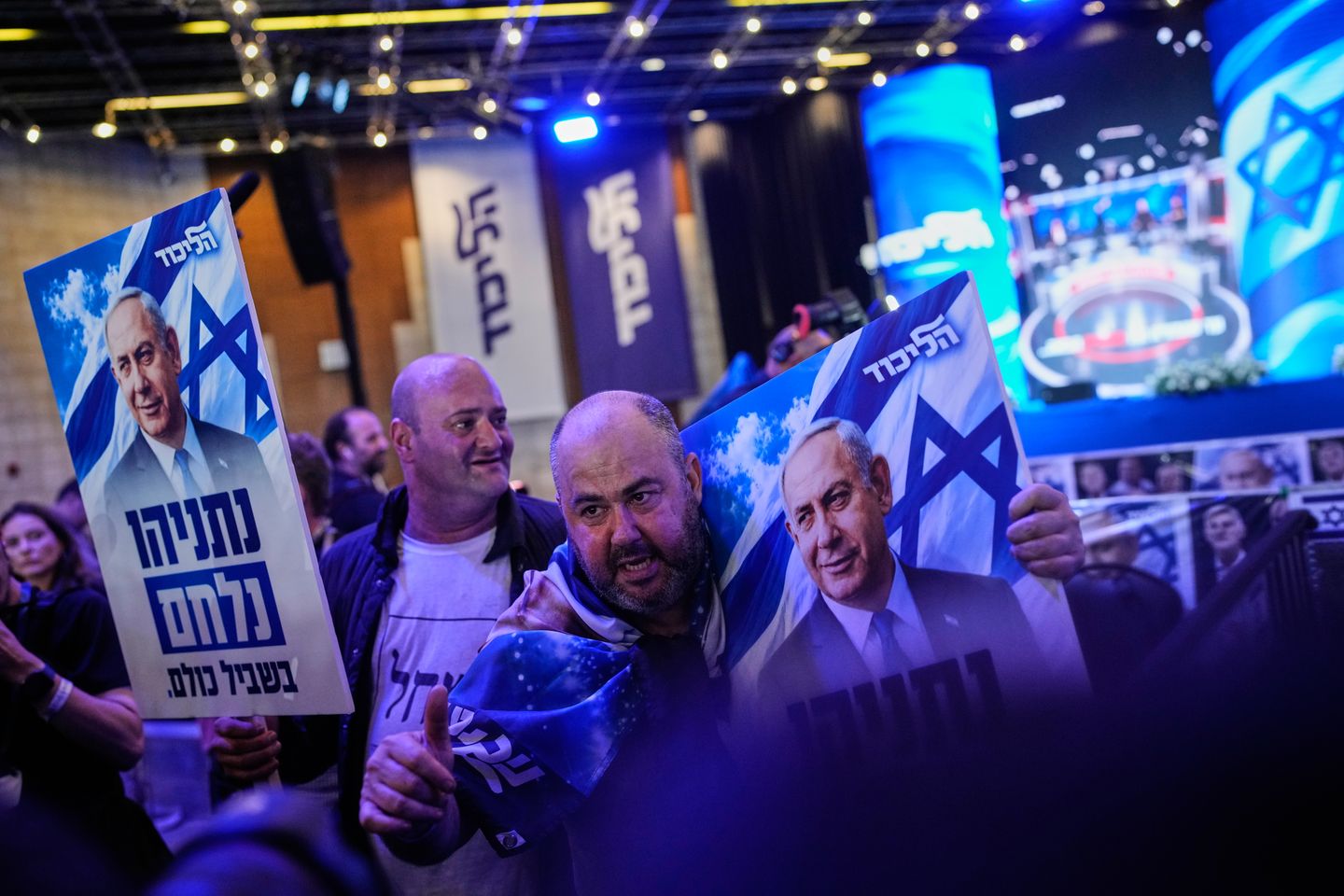
Israel's political landscape is staring down another deep crisis. Following the country's first parliamentary election since the outbreak of war, neither Prime Minister Benjamin Netanyahu's right-wing bloc nor the opposition alliance spearheaded by former military chief Gadi Eisenkot has managed to secure the vital 61-seat majority required to form a stable government in the 120-member Knesset.
With the vast majority of votes counted, Netanyahu's bloc hovers in the mid-fifties, while Eisenkot's camp trails closely behind. Meanwhile, predominantly Arab parties have surged, capturing a historic block of seats. The math is brutal: neither side can govern alone, and the path to a functioning coalition looks narrow, messy, and entirely unpredictable.
If you are trying to understand why this vote matters and what happens next, you have to look past the top-line numbers. Israel isn't just dealing with ordinary coalition arithmetic. The country is navigating a deeply polarized post-war reality where every single seat dictates national security strategy, judicial policy, and the immediate political survival of its longest-serving leader.
The Brutal Math of the Knesset
Israel's proportional representation system is famous for producing fractured parliaments. You need 61 seats out of 120 to pass a confidence vote and form a government. That has never been easy, but this election has turned coalition-building into an impossible puzzle.
Netanyahu's traditional right-wing and religious allies fell short of the magic number, projecting into the mid-50s depending on the final tallies. On the other side, Eisenkot's centrist and opposition parties also failed to cross the threshold on their own strength.
This leaves Israel caught between bad options:
- A minority administration that could collapse at any moment.
- An awkward national unity government combining bitter rivals.
- A grueling slide toward yet another snap election that nobody actually wants.
When neither side can win outright, the kingmakers dictate terms. In this case, those kingmakers include factions that neither Netanyahu nor Eisenkot can comfortably embrace without fracturing their own bases.
Why This Election Felt Different
This wasn't just another routine trip to the ballot box. Voter turnout surged to historic highs, reflecting a population emotionally and physically exhausted by years of regional conflict, domestic protests, and intense international pressure.
For Netanyahu, the campaign served as a high-stakes referendum on his wartime leadership. Facing intense legal battles at home and international arrest warrants tied to the Gaza campaign, his political survival depends entirely on holding his base together. Yet, cracks in his coalition have widened. Far-right figures within his orbit have loudly warned against any backroom deals that might cut them out of power in favor of a broader, more moderate alignment.
On the flip side, Eisenkot built his campaign around a simple premise: that Netanyahu's approach has compromised national security and isolated the country internationally. Eisenkot positioned himself as the steady, pragmatic hand capable of restoring stability. But convincing voters to eject a veteran leader is very different from convincing fractured political parties to sit together in a room and agree on a cabinet.
The Wildcard Factor
The real shocker of the count is the performance of predominantly Arab parties, which surged past expectations to claim nearly twenty seats. For years, major Zionist parties on both the right and center have treated Arab political factions as untouchable coalition partners.
Now, with both major blocs falling short of a majority, the political taboo faces a massive stress test. Some opposition voices have floated the idea of relying on outside support from Arab lawmakers to block Netanyahu from returning to power. Doing so, however, carries immense domestic political risk for centrist figures like Eisenkot, who must balance anti-Netanyahu momentum with the hawkish sensibilities of Jewish voters.
What Happens Next
President Isaac Herzog now holds the constitutional cards. He will summon parliamentary faction leaders for consultations before formally tasking a lawmaker with the initial 28-day window to assemble a coalition.
History shows that these negotiations can drag on for weeks or months. If the designated leader fails, the mandate shifts, and the clock ticks down toward the ultimate constitutional cliff: dissolving the Knesset and forcing the country back into another election cycle.
The markets have already reacted with anxiety, signaling that investors hate political paralysis just as much as citizens do. Until a compromise emerges, Israel's government remains in limbo, paralyzed by a parliament split right down the middle.