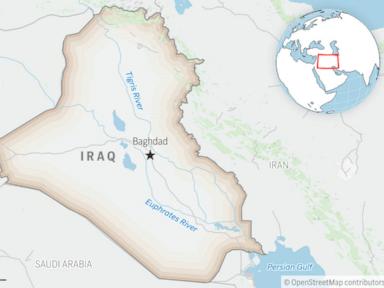
Corruption has long felt like an unbreakable cycle in Iraqi politics, but a series of recent court judgments suggests real accountability might finally be taking root. An Iraqi central anti-corruption criminal court just handed down serious prison sentences to two prominent political figures and a high-ranking oil sector executive, turning up the heat on systemic graft.
If you have watched Baghdad's political scene over the last decade, you know that state funds vanishing into private pockets is nothing new. Yet, the scale and speed of these current prosecutions signal a distinct shift under Prime Minister Ali Al-Zaidi's administration.
Breaking Down the Sentences
The verdicts target individuals who held significant institutional leverage. Muthana Al-Samarrai, head of the Azm Alliance and a major figure within Iraq's political ecosystem, received a six-year prison sentence. Alongside that prison term, the court ordered him to repay 30 billion Iraqi dinars, which amounts to roughly 20 million US dollars.
Lawmaker Ziad Al-Janabi also felt the heavy hand of the judiciary, drawing a five-year prison term and a mandate to return 4 billion Iraqi dinars, or about 2.6 million US dollars.
On the energy front, Hussein Talib—the former Director General of the Oil Products Distribution Company—drew an even harsher penalty. The court sentenced him to eight years behind bars for manipulating contract awards for personal enrichment. His financial penalty dwarfs the politicians': he must repay a staggering 55 billion Iraqi dinars, roughly 36.3 million US dollars.
Operation Dawn Crackdown and the Political Aftermath
These rulings do not happen in a vacuum. They stem directly from high-profile summer arrests launched under the government's sweeping anti-corruption initiative, often referred to as Operation Dawn Crackdown.
When security forces raided properties linked to suspects during the initial sweeps in June, they seized immense quantities of cash, gold jewelry, and precious bullion. Prime Minister Al-Zaidi staked his administration’s credibility on rooting out institutional theft, targeting figures across multiple political factions—including members connected to former Prime Minister Mohammed Shia Al-Sudani's bloc as well as rival alliances.
Skeptics have long argued that anti-corruption campaigns in Iraq are little more than political theater used to sideline opponents. But the tangible asset recovery orders—forcing convicted officials to cough up tens of millions of dollars—add a different financial weight to the proceedings. When leaders have to hand back billions in dinars, the cost of corruption spikes dramatically.
What This Means for Iraq's Economic Future
Iraq sits on immense oil wealth, yet basic public infrastructure, electricity grids, and employment opportunities frequently lag behind public expectations. Every dinar siphoned off through rigged oil contracts or state procurement scams directly starves public services of necessary capital.
Recovering 55 billion dinars from an oil official or tens of billions from political leaders won't fix the entire budget overnight. It does, however, establish a crucial precedent. For years, elite immunity was an unwritten rule of governance. Now, courtroom convictions and steep restitution orders are chipping away at that untouchable status.
Citizens and international investors alike are watching closely to see if these rulings survive the inevitable appeals process. If the judiciary maintains this momentum as upcoming parliamentary elections approach, Iraq might finally redefine what happens when public trust is abused.