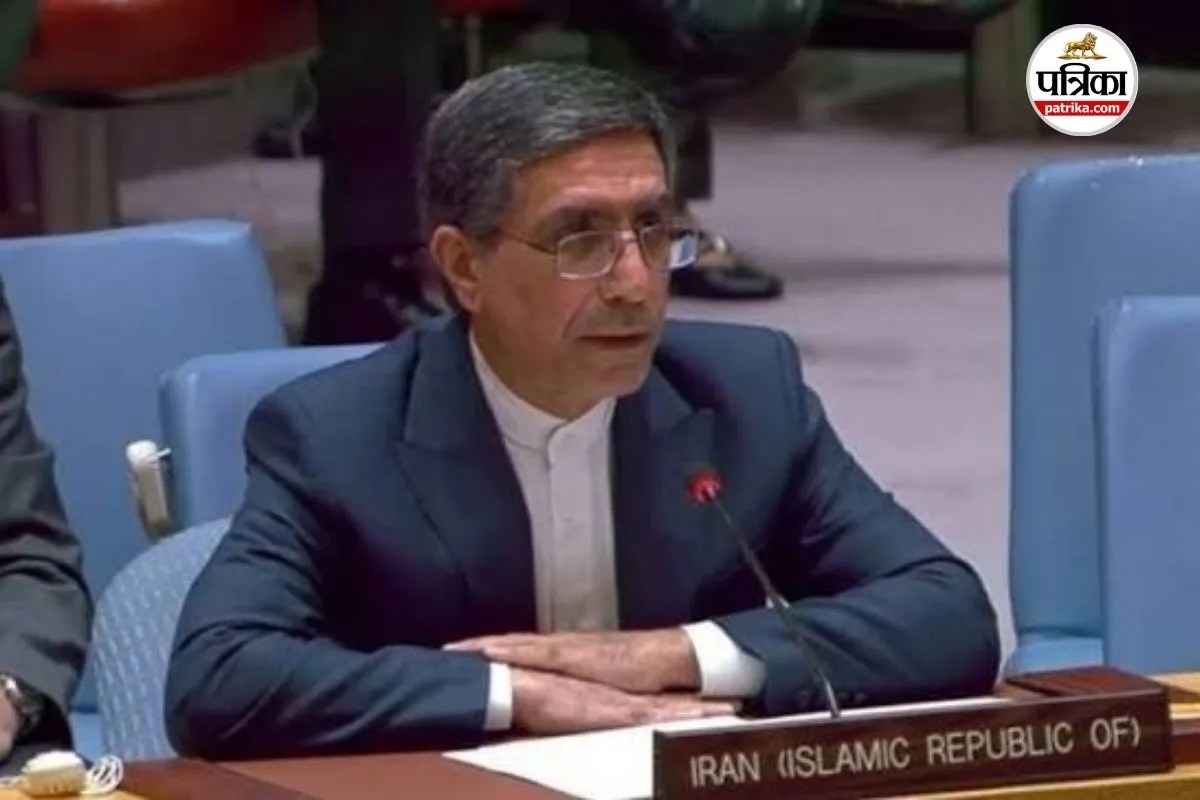
Diplomatic showdowns at the United Nations rarely change ground realities overnight, but every once in a while, a single session alters how the entire world talks about a conflict. That happened when Iran's deputy permanent representative stepped up to the podium at the United Nations Security Council and laid bare a grim ledger of casualties.
If you've been following the tense modern chessboard of West Asia, you know the rhetoric is always fierce. But bringing photographic evidence of 254 dead children directly into the chamber pushes past ordinary political posturing. It forces a direct confrontation over what counts as a war crime and who gets to define international justice when superpowers clash.
The Core Accusation and the Evidence Displayed
Let's look past the standard diplomatic soundbites. Tehran's envoy, Gholamhossein Darzi, didn't just stand up and read a generic statement. He brought visual proof—photographs of children killed in recent airstrikes—and slammed the council with a specific figure: 254 young lives lost in attacks orchestrated by the United States and Israel.
That number isn't just a statistic thrown around for shock value. It represents the brutal human cost of a conflict that has steadily swallowed civilian infrastructure. According to the Iranian presentation at the UN Security Council, the military campaigns haven't stopped at military barracks or missile silos. They've hit residential neighborhoods, hospitals, schools, and essential energy grids.
When you target schools, you aren't fighting a clean war. You're terrorizing a population. And that's precisely the argument Iran pushed forward, pointing directly to international humanitarian law and the Geneva Conventions to back up their claims.
Shifting the Narrative on Who Started the Cycle
Washington and its allies have spent months framing their military actions as defensive measures, meant to curb regional aggression and protect democratic partners. Tehran's strategy at this UNSC meeting was simple: flip that script entirely.
The Iranian delegation argued that you cannot launch devastating military campaigns, rack up hundreds of civilian casualties, and then stand before the global community playing the victim. Darzi labeled this stance pure hypocrisy. In his view, Iran isn't the primary aggressor in this escalating spiral; rather, it's absorbing the brunt of a calculated strategy designed to break civilian morale.
This brings up a massive uncomfortable truth for global governance. When permanent members of the Security Council are implicated in systematic civilian harm, the very body designed to maintain international peace becomes paralyzed. Who investigates the investigators? Who holds a superpower accountable when its military footprint expands across foreign borders?
The Accountability Problem in Modern Warfare
We live in an era where high-tech weaponry makes destruction instantaneous, yet accountability feels further away than ever. The international legal framework is supposed to protect non-combatants, regardless of which flag flies over the warplanes overhead. Yet, every time allegations of war crimes reach the UN, they hit a brick wall of vetoes, political alliances, and strategic denials.
Displaying photographs of dead children in the highest security chamber of the world is an act of desperation as much as it is an act of defiance. It forces diplomats who are thousands of miles away from the smoke and rubble to look at the real consequences of distant policy decisions.
Whether these accusations lead to independent investigations or get buried under layers of geopolitical maneuvering remains to be seen. But one thing is clear. The humanitarian toll can no longer be swept under the rug as mere collateral damage. When 254 children become footnotes in a broader geopolitical struggle, the entire concept of global justice faces a profound crisis.
The debate at the UN isn't just about who fired the first missile anymore. It's about whether international law applies equally to everyone, or if power still grants complete immunity.