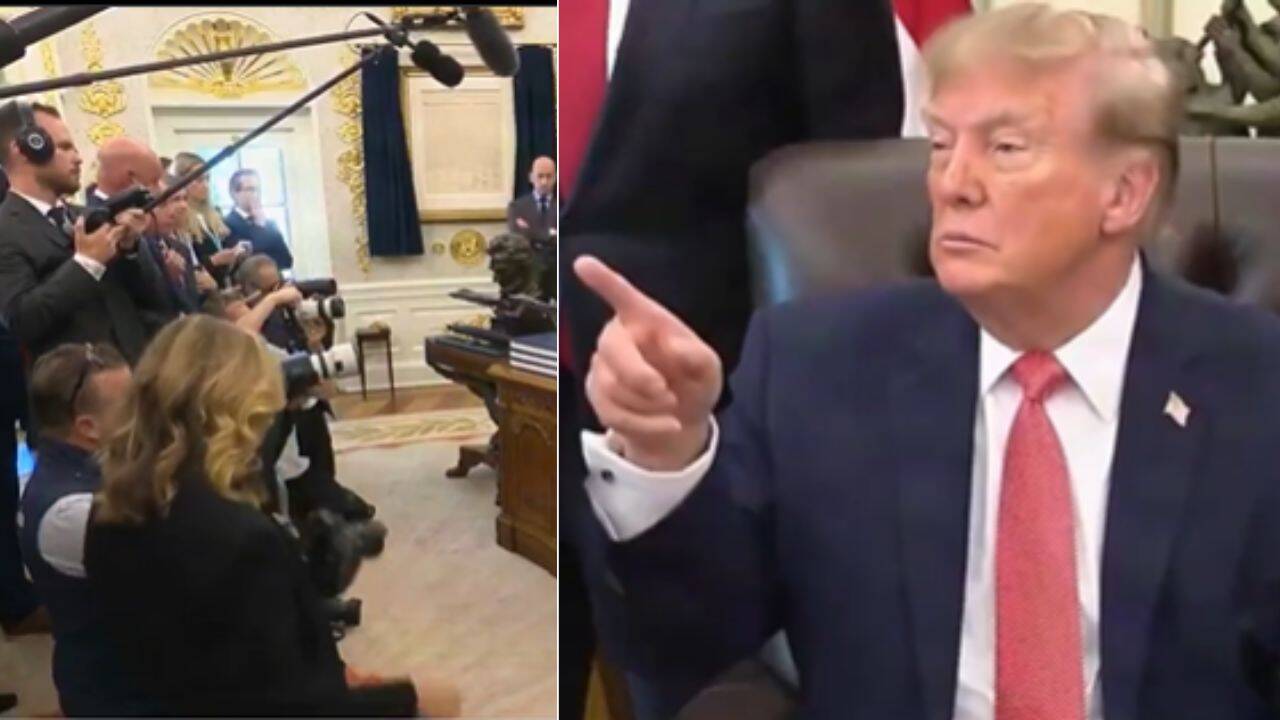
Tensions in the Oval Office routinely spill into public view, but few exchanges match the sharp, unfiltered friction of Donald Trump turning directly on a member of the press pool to demand, "Quiet, quiet, are you a sick person?"
The verbal clash erupted during an official White House event where Trump and Vice President JD Vance introduced a new whistleblower rewards program. The policy offered financial payouts of up to $30,000 for reporting alleged government fraud.
The Spark That Lit the Room
Independent reporter Andrew Feinberg challenged the rationale behind the newly proposed whistleblower program. Feinberg pointed out a fundamental redundancy: existing federal law already empowers whistleblowers to secure a share of funds recovered by the government through legal channels like the False Claims Act.
Trump offered a blunt justification for the fresh program. "Because it's a lot of money," he responded.
As Feinberg attempted to pivot his questioning toward unrelated administrative changes involving East Potomac Park and local golf course management, the interaction deteriorated rapidly. Trump cut him off mid-sentence, repeating demands for silence before launching into a personal attack.
"Wait, wait, wait, wait," Trump interrupted, telling the reporter to stay quiet. "What's wrong with you? Are you a sick person?"
"Not that I know of, sir," Feinberg replied on the spot.
Vice President JD Vance Steps In
The confrontation didn't end with Trump's remarks. Vice President JD Vance quickly stepped into the verbal fray, labeling Feinberg's line of questioning "dishonest." Vance argued that specific classifications of fraud fell outside the operational scope of existing statutes, attempting to defend the administration's new incentive framework.
Trump then questioned the reporter's identity directly, asking, "Who are you?" even though Feinberg had already stated his credentials earlier in the briefing.
The fallout extended beyond the physical confines of the West Wing. Vance took to social media platform X to share footage of the confrontation, captioning the clip with a harsh critique accusing the journalist of misbehaving during an official presidential event. Feinberg fired back online, calling out the Vice President for posting insults without tagging his official handle directly.
The Broader Reality of Press Relations
Cllashes between Donald Trump and the White House press corps are nothing new. Throughout his political career, Trump has frequently used press briefings and impromptu Q&A sessions to single out reporters, challenge their credibility, and control the narrative of the room.
Administrations across parties always spar with journalists, but the dynamic under Trump relies heavily on direct, unscripted confrontation. When a reporter digs into policy redundancies or challenges administrative initiatives, the response is rarely standard political spin. Instead, it turns into a test of authority right in front of the cameras.
Whistleblower programs remain politically sensitive territory. While proponents argue that immediate cash rewards incentivize faster reporting, critics often worry about administrative bloat, frivolous tips, and overlapping legal frameworks. By bypassing policy nuance and turning the microphone back on the questioner, the administration effectively shifted media coverage away from the mechanics of the $30,000 payout and straight back onto the theater of the Oval Office.
Watch the full exchange and evaluate how media interactions continue to reshape modern political communication.