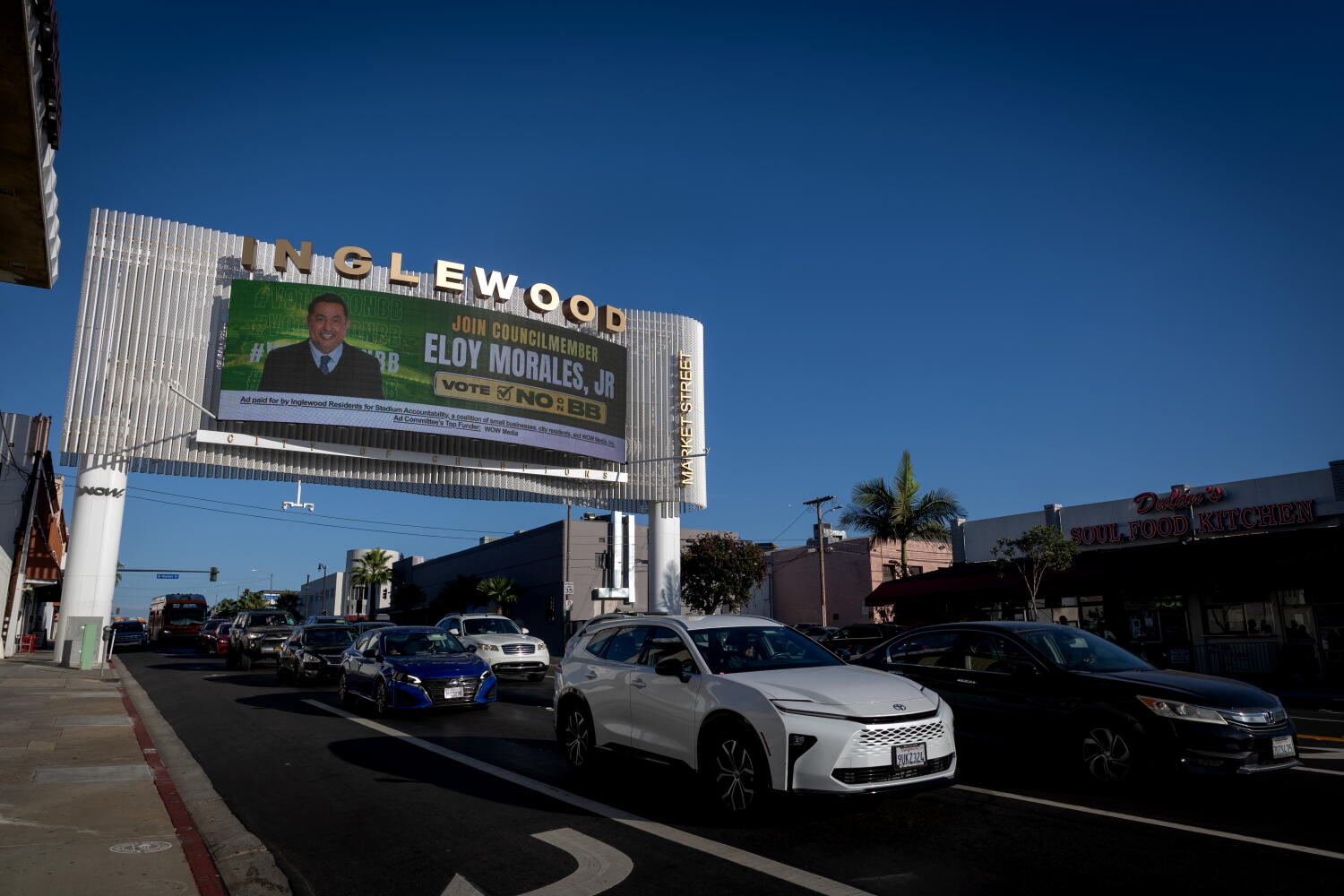
Money usually wins in Inglewood. But when a city government and a multi-billion-dollar sports empire lock horns over digital real estate, the outcome gets messy.
If you've driven down Prairie Avenue lately, you can't miss them. Massive digital billboards and glowing kiosks flash advertisements to thousands of commuters daily. To Inglewood's leadership, those screens represent a goldmine of municipal revenue. To stadium operators and Rams owner Stan Kroenke, they are an aggressive intrusion that undercuts corporate sponsorships and ruins the neighborhood aesthetic. That tension spilled onto the November 3 ballot, creating a high-stakes political showdown that shows how fragile public-private partnerships really are once the stadium construction dust settles.
The Roots of the Inglewood Billboard Battle
A decade ago, Inglewood rolled out the red carpet for sports. City leaders championed the return of professional football, helping push SoFi Stadium from a wild blueprint into a shimmering reality. Everyone patted each other on the back. Tax revenues were supposed to soar, local businesses were supposed to boom, and a harmonious partnership was born.
Reality turned out differently.
Municipalities need continuous cash flow long after the ribbon-cutting ceremony ends. To fill budget gaps, Inglewood partnered with digital media companies like WOW Media and Kevani to erect towering digital displays across major thoroughfares. The city loved the checks rolling in. The stadium operators—representing SoFi Stadium, the Forum, and the Intuit Dome—did not. They argued that these bright, flashing commercial screens directly violated sponsorship exclusivity zones promised during the initial development agreements.
When boardroom negotiations failed, the fight migrated to the courtroom and, ultimately, directly to local voters via ballot measures like Measure BB. Millions of dollars flooded into political campaign coffers, turning local neighborhood politics into a proxy war between municipal survival and corporate control.
Why Stadium Owners Care So Much About Outdoor Ads
You might wonder why a billionaire sports tycoon cares about a few roadside screens. It comes down to corporate control and massive sponsorship dollars.
Modern stadiums don't just make money selling hot dogs and tickets. They thrive on lucrative, multi-million-dollar corporate partnerships with brands that demand exclusivity. If a fan drives past a glowing billboard advertising a competing brand right outside the stadium gates, the value of that stadium sponsorship drops.
Stadium executives argued that these digital signs created visual clutter, distracted drivers, and breached legal pacts designed to protect the immediate perimeter of the sports complex. On the other side, Inglewood Mayor James T. Butts Jr. and city officials pushed back hard, defending the revenue streams that fund essential city services and local infrastructure. When a city relies on millions of dollars from public property advertising, telling local leaders to tear down the signs sounds like a fast track to service cuts.
The Split Decision Reality
Elections rarely offer clean solutions to complex urban disputes, and this local battle proved that rule. Voters found themselves caught in a multi-million-dollar crossfire of competing mailers, attack ads, and competing visions for Inglewood's future.
The campaign finance numbers tell a wild story. Millions poured into local committees, proving that corporate heavyweights weren't willing to leave the fate of their neighborhood to chance. Yet, legal victories in local courts kept the city's commercial programs alive while leaving broader contract dispute questions hanging in mid-air.
When the dust settles on election results, nobody gets a total victory. The city still needs creative ways to pay its bills, and sports franchises still want total dominance over their local horizon.
What This Means for Urban Development Moving Forward
The Inglewood clash serves as a cautionary tale for any city entering bedfellow agreements with mega-sports franchises.
- Write airtight contracts early: Vague clauses regarding surrounding property rights and advertising zones are ticking time bombs.
- Anticipate municipal budget shifts: Cities will always look for secondary revenue streams once initial tax windfalls normalize.
- Never underestimate ballot box politics: When elite legal teams stall out in court, both sides will gladly spend millions trying to sway everyday voters who just want a clear commute.
Look past the flashy screens and sports headlines, and you see the core struggle of modern American cities. Growth brings wealth, but wealth brings a brutal tug-of-war over who actually controls the streets we drive on every day.