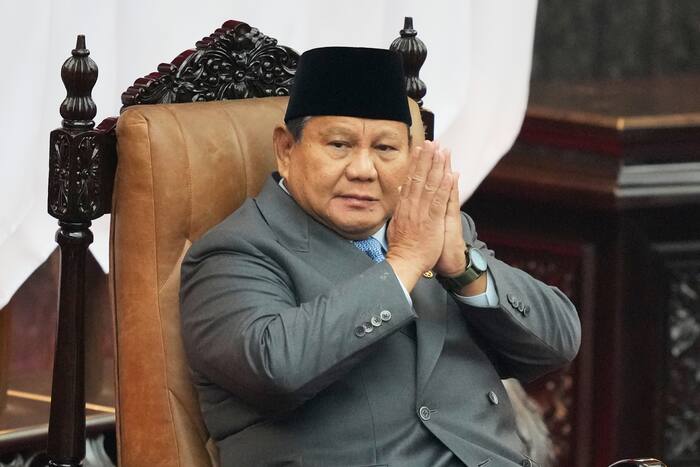
When law enforcement starts spying on the head of state, you know a political earthquake is underway. Indonesia is currently watching its national security apparatus tear itself apart from the inside out. A sprawling, unauthorized wiretapping operation has caught top officials red-handed, and the fallout is rewriting the nation's political future.
The crisis deepened when a National Police ethics tribunal ordered the dishonorable dismissal of Inspector General Eko Hadi Santoso. He is now the second high-ranking police general to be thrown out of the force in connection with a clandestine surveillance scheme targeting President Prabowo Subianto, cabinet ministers, journalists, and civil society leaders.
If you think this is just a routine internal affairs cleanup, look closer. This is a brutal factional war at the highest levels of Southeast Asia's largest democracy.
The Anatomy of a Surveillance Breach
The scandal broke wide open when authorities detained three senior police generals suspected of running illegal wiretaps between 2025 and 2026. Among them was Ahrie Sonta Nasution, head of the National Police Legal Division, who faced the same swift dishonorable discharge as Santoso. Another high-profile figure, Slamet Uliandi, was heavily implicated but avoided immediate custody due to ongoing health issues.
Investigators are trying to answer a terrifying question. Who ordered the monitoring of President Prabowo Subianto?
Unauthorized surveillance of a sitting president isn't a rogue operation carried out by low-level officers. It requires institutional cover, deep technical resources, and immense political motivation. Critics and human rights groups, including Amnesty International, have pointed out that this vast wiretap network wasn't just collecting gossip. It was built to monitor political rivals, silence dissent, and exert leverage over key decision-makers.
Cracks in the Elite Alliance
To understand why this wiretapping scandal matters, you have to look at the shifting alliances in Jakarta. President Prabowo took office following a massive political realignment. He previously served as defense minister under popular former President Joko Widodo, commonly known as Jokowi. To secure victory, Prabowo chose Jokowi's son, Gibran Rakabuming Raka, as his vice president.
That partnership, designed to ensure continuity, is now fracturing under the weight of these security revelations. Former National Police Chief Listyo Sigit Prabowo—who served under Jokowi and later became Prabowo's chief of staff—was abruptly dismissed just as the scandal broke.
Political analysts in Jakarta are calling this the beginning of a messy, painful political divorce between the current administration and the remnants of the Jokowi camp. When power shifts in Indonesia, the transition is rarely quiet. But utilizing state intelligence apparatuses to spy on the commander-in-chief crosses a line that forces immediate, drastic purges.
Street Protests and Public Outrage
The political elite aren't the only ones reacting. Ordinary citizens and university students have taken to the streets in major urban centers, demanding total transparency and a complete overhaul of police powers.
In cities like Yogyakarta, protests quickly boiled over into clashes with security forces, resulting in more than a hundred arrests. Demonstrators are tying the wiretapping crisis directly to broader grievances about corruption, political dynasties, and the erosion of civil liberties. Lawmakers on Parliament's Commission III have summoned police leadership for intense grillings, vowing to trace every wiretap back to its source.
Yet, answers remain scarce. The suspects dismissed or detained have largely remained silent, offering no public explanations for their actions. This silence only fuels public suspicion that a wider network of conspirators remains protected behind institutional walls.
What Happens Next
Indonesia is standing at a dangerous crossroads. The rapid dismissal of police generals shows that President Prabowo is moving quickly to neutralize internal threats within the security sector. However, purging rogue officers is only step one.
Restoring public trust in institutions built to protect citizens—rather than spy on them—will take years. As parliamentary investigations grind forward and street demonstrations continue, the wiretapping scandal will continue to dictate the survival and stability of Prabowo's government. The cleanup of the police force has only just begun, and the political tremors are still gathering strength.