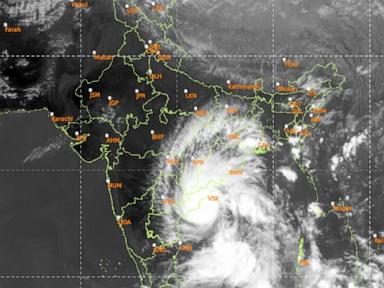
The Bay of Bengal doesn't forgive hesitation. Right now, authorities across eastern India are scrambling to move nearly 100,000 residents out of harm's way before Cyclone Arnab makes violent landfall.
If you're watching the updates unfold, you know this isn't just another routine weather advisory. It's a massive, high-stakes race against time. Over 12 million people live directly along the projected inland path of the storm, forcing state disaster management teams to activate emergency protocols at a staggering scale.
Inside the Massive Evacuation Effort
Heavy rain and rising sea waves are already battering coastal cities like Kakinada in Andhra Pradesh. Ground zero requires immediate, aggressive action. Nearly 50,000 people have already been pulled from vulnerable low-lying districts into secure state shelters, though officials note that total numbers needing safe relocation could climb toward 400,000.
Neighboring Odisha is matching the urgency. Local administrations mapped out plans to move an additional 48,000 residents away from the coastline. Schools and colleges across multiple districts are locked down, shuttered tight while the storm brews overhead.
Logistics are messy on the ground. Railway networks took an immediate hit. At least 12 major train runs were completely canceled in eastern zones, and regional transport boards suspended service across 53 separate southern routes to prevent commuters from getting stranded in dangerous flash floods or high winds.
The Broader Regional Threat
Weather alerts don't stop at the shoreline. The atmospheric pressure drops and heavy moisture plumes associated with Cyclone Arnab are stretching far inland and across international borders.
Nepal's disaster management authorities issued urgent travel warnings for anyone planning high-altitude excursions in the Himalayas. The concern is real. Forecasters predict heavy rainfall and severe snowstorms from Thursday night through Saturday, carrying a brutal reminder of the deadly flash floods that struck the region earlier this year. When massive tropical systems collide with mountain terrain, the resulting avalanches and mudslides turn catastrophic very quickly.
Sri Lanka is feeling the fringe pressure too. Schools shuttered early as authorities prepared for intense downpours capable of triggering sudden landslides across rural valleys.
Why the Bay of Bengal Generates Monsters
We've seen this script play out before. The Bay of Bengal functions as one of the most active tropical cyclone incubators on the planet. Warm waters, shallow continental shelves, and seasonal wind patterns combine to turn ordinary depressions into severe storms with terrifying speed.
When Cyclone Arnab crosses the warm surface waters, it draws energy rapidly. That's why the India Meteorological Department classified it as a very severe weather event, forcing regional emergency services to pre-position nearly 1,100 medical teams and secure more than 30,000 fishing boats along vulnerable docks.
Preparation saves lives. But managing millions of residents in the direct crosshairs of a major intensifying cyclone remains an exhausting, chaotic endeavor for local governments.
Check your local disaster updates, avoid unnecessary travel near coastal or high-altitude mountain zones, and heed local evacuation orders immediately if you're in the impact corridor.