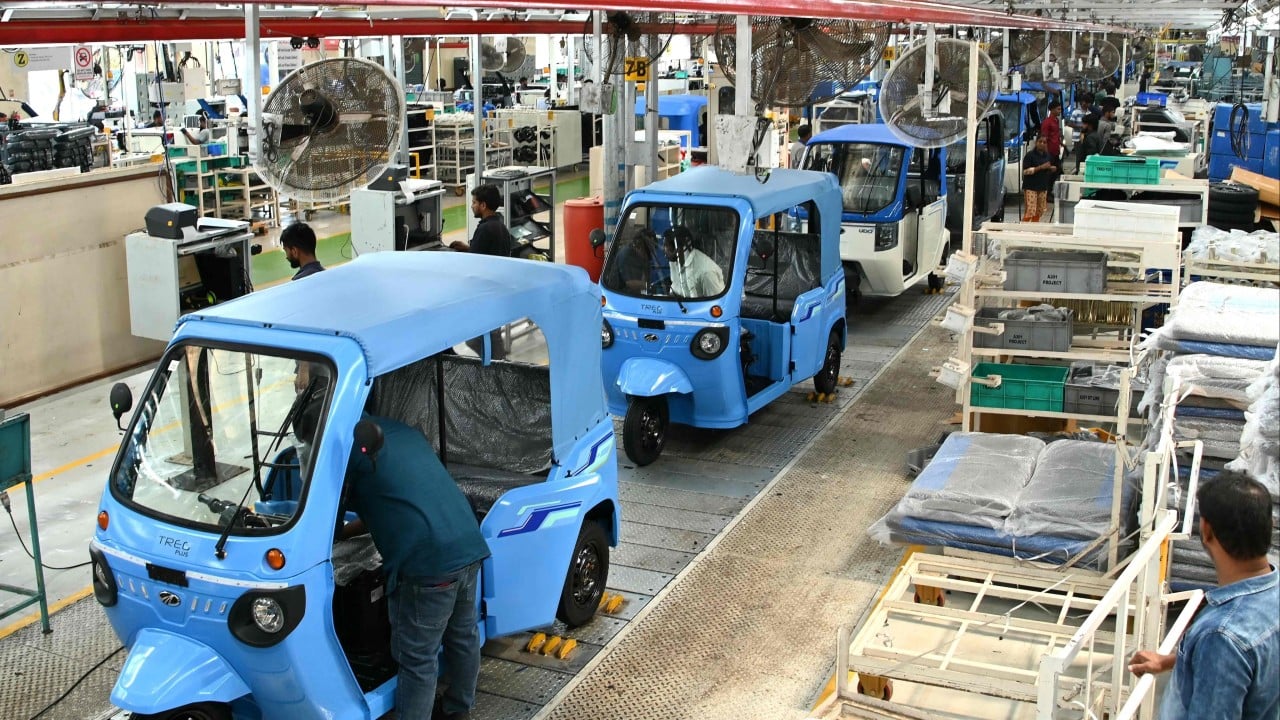
India missed the bus on manufacturing in the 1980s. That's not just a catchy line from recent policy debates or political speeches. It's a stark economic reality that still shapes factory floors, port queues, and boardroom budgets across Asia.
Back in the late 1980s, India and China sat at roughly comparable starting lines in total economic size. Then China hit the gas on export-driven industrialization, special economic zones, and port infrastructure. India moved in fits and starts. Partial deregulation helped a bit, sure, yet deep structural bottlenecks kept heavy export manufacturing small.
So can India catch up with China now? Honestly, it depends on what you mean by catching up. If you mean replacing China as the world's all-purpose factory floor over the next few years, no chance. If you mean carving out major, high-growth manufacturing niches—smartphones, pharmaceuticals, specialty chemicals, auto parts, and select consumer appliances—India is already making real noise.
I've watched plenty of supply-chain teams treat "China+1" like a magic switch you flip overnight. You don't. Moving production isn't like switching cloud hosting providers; it's pouring concrete, training technicians, clearing customs rules, and praying your screws, connectors, and resin pellets show up on time.
Why India Missed the Bus in the 1980s
When people talk about India missing the 1980s manufacturing wave, they sometimes assume nothing changed in New Delhi during that decade. That's inaccurate. India did ease certain import controls and industrial licensing rules in the 1980s, sparking modest growth compared to the sluggish decades before.
Still, compared to Beijing's push toward modernization and export-oriented factories, India's pace looked cautious and fragmented. Small-scale industry reservations, complex labor rules, power reliability issues, and slow trade logistics made large-scale, export-focused factories harder to scale. Meanwhile, China built coastal industrial clusters designed from day one to move containers fast and plug foreign capital into global supply chains.
There's also a human-capital angle people love to argue about. Broad literacy, basic health outcomes, and disciplined vocational pipelines gave early industrial clusters a huge head start. By the time India pushed broader market reforms in the early 1990s, China already had years of compound learning—learning how to stamp metal cheaper, run tighter factory shifts, and build supplier neighborhoods around single ports.
Where India Is Actually Gaining Ground Right Now
If you only read headlines, you might think India's manufacturing push is all slogans. Look closer at the numbers, and the picture gets more nuanced.
Under the Production-Linked Incentive (PLI) scheme across strategic sectors—with total outlays around INR 1.97 lakh crore (roughly USD 26 billion)—policy has tried to lower the cost handicap of starting up in India. According to India's Ministry of Commerce & Industry and iMARC engineering analysis, approved PLI applications have driven hundreds of thousands of crore rupees in committed investment, substantial cumulative sales, and meaningful export growth.
Smartphones are the poster child here. Apple's pivot to diversify production has pushed India's share of global iPhone assembly to roughly 25% by 2025, with iPhone exports climbing to around INR 2 trillion (roughly USD 23 billion) in calendar year 2025, as reported in Economic Times manufacturing coverage. Samsung has likewise expanded heavily around Noida, and contract manufacturers like Foxconn and domestic players have built real assembly muscle.
And it isn't just phones. India already holds serious global standing in pharmaceuticals—backed by plants meeting US FDA, UK MHRA, and EU GMP standards—as well as certain auto components, forgings, castings, and natural stone. Plus, having a massive domestic consumer market means companies don't have to rely purely on overseas demand to keep lines running.
The Catch Assembly Alone Doesn't Solve
Here's the mistake I see newcomers make all the time: confusing final assembly with a deep component ecosystem.
Assembling a smartphone or appliance inside a shiny new plant looks great on ribbon-cutting day. Yet if half the sub-assemblies, printed circuit boards, camera modules, displays, or specialty chemicals still get flown or shipped in from abroad, your cost base and lead times stay exposed. That exact gap is why India rolled out targeted component support like the Electronics Component Manufacturing Scheme (ECMS) to push deeper localization.
In China, a buyer or engineer can often source dozens of specialized sub-suppliers within a tight geographic radius. In India, supply chains are still knitting together. A reorder that might take four weeks in China can easily stretch to six or eight weeks in India depending on the category, customs clearance, and inland freight.
Subsidies can offset early cost gaps, but dense supplier ecosystems are built year by year—not bought with a single policy check.
Power stability, state-level administrative speed, skilled mid-level technicians, and port-to-factory transit times still vary wildly from state to state. A great incentive on paper doesn't fix a late shipment of precision parts.
What Supply Chain Buyers Should Watch Next
If you're evaluating India alongside China or Vietnam, skip the tribal debates and look at the friction points that actually hit margins.
- Audit component localization, not just final assembly. Ask suppliers what percentage of value is truly made locally versus imported kits, and check what happens if an import bottleneck hits.
- Price total landed cost, not sticker price. Factor in duties, freight, working capital tied up in longer transit cycles, and tariff shifts across target export markets.
- Run a dual-track pilot before going all-in. Start with one product line or secondary region, test quality consistency across high-volume runs, and verify local tooling and testing support.
- Pick states by operational fit. Industrial readiness differs sharply across Indian states; match your sector to clusters that already have port access, power reliability, and trained talent.
India didn't catch the 1980s bus, and catching China's full industrial scale will take years of steady execution rather than shortcuts. Still, for companies willing to do the unglamorous ground work—and stay realistic about timelines—India is no longer an afterthought.
How China Left India Behind in the 1980s
This clip highlights the 1980s turning point where China's industrialization push pulled ahead of India's slower economic pace.