When a supreme pontiff enters a hospital operating room unconscious or unable to speak, you might assume a constitutional crisis grips Vatican City. You would be completely wrong. Legally speaking, the pope remains the absolute monarch of the Catholic Church whether he is sitting upright in the Apostolic Palace or hooked up to medical monitors under general anesthesia.
Church governance does not pause, nor does power shift to an interim committee when a pontiff faces sudden medical emergencies. Canon law outlines exact protocols for what happens when a local diocesan bishop falls gravely ill, yet it offers a glaring vacuum when it comes to the universal leader of over one billion Catholics.
The Canon Law Loophole That Leaves the Papacy Unshakable
Look closely at church legislation and you will find a peculiar reality. Canon 412 states that a diocese can be declared "impeded" if a bishop cannot fulfill pastoral functions due to imprisonment, exile, or profound physical incapacity. In those instances, daily administration flows downward to auxiliary bishops or vicars general.
Yet, when looking at the Holy See itself, Canon 335 notes simply that the office remains unaltered when the seat is "vacant or entirely impeded." It never defines what an "entirely impeded" papal state actually means in practice, nor does it establish a reliable mechanism to temporarily strip power from a living, breathing pope who happens to be incapacitated.
Because the papal office is universal by design, carrying the full weight of the successor of Saint Peter, authority cannot be easily portioned out or delegated downward by committee vote. Power transfers under strict church custom only through two absolute events: death or a formally manifested resignation.
How the Vatican Bureaucracy Keeps Moving
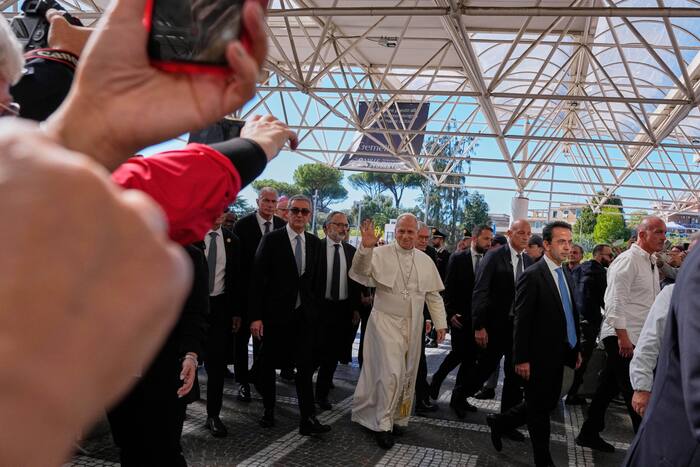
Even though legal power stays entirely with the pontiff during a medical crisis, the daily machinery of the Catholic Church doesn't grind to a halt. Pope Leo XIV's recent hospitalization for lung surgery serves as a prime example. While public audiences get canceled or postponed, career bureaucrats maintain operations.
Cardinal Pietro Parolin, serving as the Vatican Secretary of State, continues directing foreign affairs and administrative departments without needing a temporary constitutional mandate. The Curia operates as a massive corporate apparatus. It runs on established workflows that function whether the CEO is at his desk or recovering in a hospital bed.
Cardinals do not scramble to form a regency council. The Camerlengo, Cardinal Kevin Farrell, who manages financial affairs during a papal vacancy or interregnum, stays completely sidelined during a living pope's medical emergency. His duties only activate once a death certificate is signed or an official resignation takes effect.
Precedents Set by Past Popes
History shows that pontiffs recognize this constitutional gray area and occasionally attempt to solve it privately. In 1965, Pope Paul VI wrote a confidential letter to the dean of the College of Cardinals outlining that if he suffered a debilitating long-term illness like severe stroke or advanced dementia, the cardinals should treat his inability to function as an implicit resignation. He never had to trigger it, living out his pontificate until his death.
Pope Francis took a similar route early in his own tenure, signing a pre-emptive letter of resignation and handing it to top Vatican administrators to be used if severe medical incapacitation ever stripped him of his mental faculties.
These documents highlight a persistent anxiety among modern pontiffs who live longer lives under intense global scrutiny. Medicine advances, keeping aging leaders alive through complex procedures, but church law struggles to catch up with the realities of modern healthcare.
What Happens Next
If you are waiting for a constitutional amendment or a clear succession flowchart for a medical emergency in Vatican City, don't hold your breath. The church moves slowly by design, preferring tradition and centralized papal authority over rapid bureaucratic rewrites.
For now, expect the Vatican to rely on its existing bureaucratic machinery whenever a pope faces health hurdles. The administrative departments will keep processing paperwork, the Secretary of State will manage diplomatic channels, and the supreme pontiff will retain every ounce of his legal authority—resting in a hospital bed, trusting his inner circle, and waiting to heal.