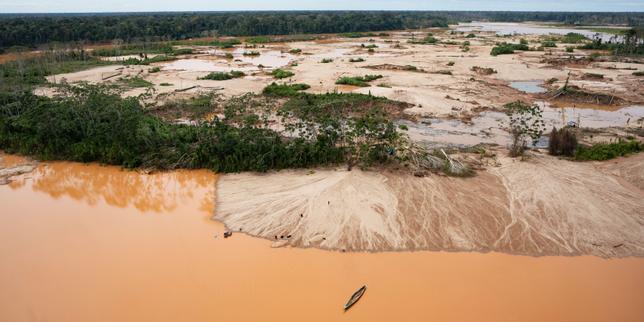
Walk through the southeastern Peruvian Amazon today, and you won't hear the natural symphony of the rainforest. You'll hear the deafening drone of diesel suction pumps. Wildcat miners are tearing apart riverbanks, hunting for gold while indigenous populations watch their ancestral homes turn into toxic moonscapes.
For years, illegal gold mining—known locally as orpaillage illégal—has tightened its grip on Peru. Regions like Madre de Dios bear the brunt of this ecological catastrophe. While global markets demand raw precious metals for tech and finance, remote communities pay the ultimate price with polluted water and collapsing health systems.
The Human and Environmental Cost on the Ground
If you visit communities living along the rivers affected by wildcat mining, the reality hits fast. Mercury is standard tool-of-the-trade for separating gold from sediment. Miners dump tons of toxic liquid straight into the waterways.
Fish absorb the poison. Families eat the fish. Within years, whole villages show alarming levels of mercury contamination in their bloodstreams. Kids suffer neurological damage. Adults experience chronic fatigue and muscle tremors.
At the same time, massive swaths of virgin rainforest are clear-cut or dredged into muddy craters. Satellite data shows thousands of hectares stripped bare annually in the Amazon foothills. Once the topsoil is washed away, nothing grows back. It's an irreversible scar left behind by transient operators who pack up and leave as soon as the gold runs dry.
Why State Intervention Keeps Failing
You'd think the government would step in and shut down operations operating in broad daylight. The truth is much messier.
Corruption runs deep through local administrative channels. Small-scale miners often operate under informal permits that mask entirely illegal industrial-scale dredging operations. Law enforcement raids happen occasionally, but they're short-lived PR stunts. The moment police pull back, the heavy machinery rolls right back in.
Security risks make matters worse. Indigenous leaders who speak out against criminal networks face constant death threats and violence. Protection is virtually nonexistent in remote jungle sectors where criminal syndicates run wild alongside drug traffickers and illegal loggers.
What Actually Needs to Happen Now
Stopping this destruction requires more than empty political promises. Real solutions start from the ground up:
- Grant formal land titles immediately to indigenous communities so they hold legal authority to evict trespassers.
- Cut off the supply chain by aggressively tracking where raw gold is refined and exported internationally.
- Invest heavily in alternative sustainable economies, giving local populations viable ways to make a living without destroying their environment.
Ignoring this crisis won't make it go away. Every month of delay pushes indigenous groups closer to irreversible cultural and physical erasure.