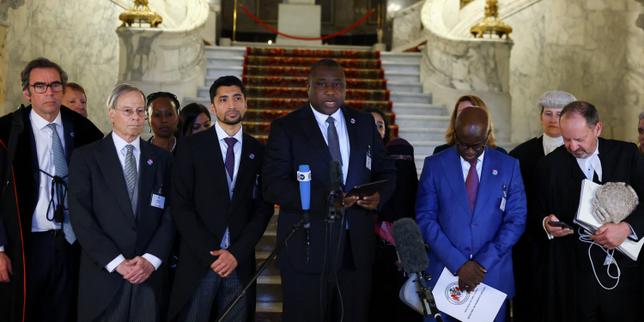
When the International Court of Justice ruled on November 19, 2026, that Myanmar committed genocide against the Rohingya, legal scholars across the globe immediately looked past Rakhine State toward Gaza. For Tel Aviv University international law professor Eliav Lieblich, the takeaway in his November 23, 2026 interview with Le Monde is blunt: the judgment complicates Israel's legal defense and makes a condemnation over Gaza much more probable.
That isn't a fringe hot take. It's a sober reading of how precedent moves through The Hague.
For the first time in its history, the world's highest court held a state responsible for violating the 1948 Genocide Convention on the merits. Not provisional measures. Not preliminary plausibility. Actual state responsibility for genocide.
Once a court crosses that Rubicon, every subsequent case has to navigate the new geometry it creates.
How the Rohingya Ruling Reshapes the Gaza Case
People tend to treat ICJ cases as sealed-off boxes. One country, one conflict, one set of facts. In practice, international judges borrow reasoning, evidentiary standards, and doctrinal definitions from prior judgments whenever they tackle similar legal questions.
In The Gambia v. Myanmar, brought in 2019 and backed by eleven intervening states, the Court examined the 2017 military "clearance operations" in northern Rakhine State. Presiding Judge Yuji Iwasawa and the bench found that Myanmar's security forces and state organs committed prohibited acts under Article II of the Genocide Convention—specifically killing members of the group, causing serious bodily or mental harm, and imposing measures intended to prevent births—while also failing to prevent or punish genocidal acts and breaching earlier provisional orders.
Why does that matter for South Africa v. Israel, filed in December 2023? Because both cases turn on how the ICJ reads the 1948 Genocide Convention when military campaigns devastate a civilian population while belligerents claim security or counter-insurgency objectives.
Lieblich points out that the Court's reasoning in the Rohingya decision clarifies and shapes genocide jurisprudence in ways that make Israel's arguments harder to sustain. When a state argues that harsh military measures, mass displacement, or severe restrictions are driven by military necessity rather than genocidal intent (dolus specialis), the Court's analytical framework for inferring intent from patterns of conduct becomes decisive.
Honestly, that's where most casual observers get tripped up. They think genocide law requires a smoking-gun memo saying "we intend to commit genocide." Courts almost never get a memo like that. Instead, they look at patterns—scale, repetition, warnings ignored, humanitarian conditions, rhetoric, and how state organs behave over time.
What Actually Changes in Legal Strategy
If you've followed international courts for years, you know judges rarely announce, "This ruling dooms Respondent X in Case Y." They don't talk like pundits. They talk in elements, thresholds, and inferences.
Still, a merits ruling against Myanmar shifts the baseline in three practical ways:
- Proof of genocidal intent gets sharper scrutiny: When a bench spells out how systematic destruction, displacement, and harm support a finding of genocidal intent despite a state's security framing, defending against similar inferences in Gaza gets steeper.
- Breaches of provisional orders carry heavier weight: In the Myanmar judgment, the Court found Myanmar breached its 2020 provisional measures, including duties to prevent genocidal acts and preserve evidence. Israel has faced repeated provisional measures orders and requests since January 2024, and a firm merits precedent shows the Court takes non-compliance seriously at the final stage.
- Third-party interventions gain momentum: States intervening under Article 63 of the ICJ Statute—including countries that have weighed in on South Africa v. Israel—pay close attention to how the Court construes treaty obligations. Precedent stiffens the legal arguments of applicants and intervenors alike.
None of this means the ICJ will simply copy-paste its Myanmar findings onto Gaza. Facts differ. Context differs. Legal teams on both sides will fight tooth and nail over every distinction.
Why Genocidal Intent Is the Real Battleground
Let's get real about the hardest part of any Genocide Convention case: proving specific intent.
Under international law, war crimes and crimes against humanity are one thing; genocide requires proving an intent to destroy, in whole or in part, a national, ethnical, racial, or religious group as such. That high threshold has long been the shield governments reach for first.
During armed conflict, a defending state almost always says: We were fighting militants. Civilians were harmed in urban warfare or counter-insurgency operations. That is tragedy or perhaps a violation of humanitarian law, not genocide.
That argument has real traction in military doctrine. Urban warfare is brutal. Fighters embed in civilian areas. Supply routes get tangled with humanitarian corridors.
Where that defense starts to fray is when the pattern of conduct—combined with official statements, blockades, destruction of essential civilian life support, and disregard for prior judicial warnings—leads a majority of judges to conclude that destruction of the group itself was sought or accepted as a genocidal goal. In The Gambia v. Myanmar, where the Court found Myanmar responsible after years of litigation and extensive UN investigative evidence, the judgment showed the ICJ is willing to cross that line when the evidentiary record stacks up.
For an Israeli legal scholar like Lieblich to tell Le Monde that a condemnation of Israel over Gaza is now "highly probable" is a striking signal. It reflects an assessment from inside the legal community that the doctrinal wind is blowing hard against purely defensive framing.
Common Misconceptions About ICJ Rulings
Whenever a major ICJ decision hits the headlines, myths spread faster than court summaries. Let's clear up a few that keep popping up.
First, the ICJ doesn't put individual leaders in prison. That's the International Criminal Court (ICC), which deals with individual criminal liability. The ICJ resolves disputes between states under international law. When the ICJ found Myanmar responsible, it ruled on state responsibility and ordered remedies such as cessation, non-repetition, investigation, prosecution, and restitution or compensation—not prison sentences for individual officials.
Second, a ruling doesn't come with a global police force. Enforcement in international law is notoriously messy. Compliance depends on diplomatic pressure, domestic politics, UN dynamics, and whether states care about their legal standing and international legitimacy. Some governments ignore orders; others feel real constraint over time.
Third, slow doesn't mean irrelevant. People get impatient watching multi-year ICJ proceedings. South Africa filed its case in late December 2023, submitted its memorial in October 2024, and Israel filed its counter-memorial in March 2026 after extensions, alongside multiple state interventions. The Rohingya case itself started in 2019 and reached final judgment in November 2026. International justice moves at a glacial pace, yet its legal labels stick for decades.
What This Means Beyond the Courtroom
Even if a final judgment in the Gaza case is still months or years away, legal rulings ripple outward almost immediately.
Diplomats read them. Foreign ministries update their risk memos. Arms-export lawyers check liability exposure. Journalists and historians cite them as reference points long after news cycles move on.
Look at how the Rohingya judgment already echoes beyond Southeast Asia. Legal commentators are asking how the ICJ's reasoning on state responsibility and genocidal intent might affect other disputes, from Gaza to Ukraine. Once the Court proves it will actually reach a genocide finding against a state rather than dodging the hardest question, every government party to the 1948 Convention has to reckon with that reality.
At the same time, it's worth staying clear-eyed about what remains contested. In South Africa v. Israel, Israel has consistently rejected the genocide accusation, emphasized its right and duty to defend its citizens and secure the release of hostages taken on October 7, 2023, and disputed how facts and intent should be weighed. Other states have taken sharply conflicting positions in their court filings and interventions.
Acknowledging that sharp divide doesn't water down the legal analysis. It makes it honest. Law in The Hague isn't decided by public opinion polls or cable news panels; it's argued line by line before fifteen-plus judges who write dense, contested opinions.
How to Follow the Case Without Getting Lost
If you want to track where this goes next without getting dragged into partisan spin, skip the outrage threads and go straight to primary records and serious legal analysis.
- Read the official ICJ case docket directly: Check the International Court of Justice case page for South Africa v. Israel to see actual filings, orders, and intervention declarations rather than second-hand summaries.
- Track the Myanmar judgment's legal reasoning: Look up coverage and analysis of the November 19, 2026 The Gambia v. Myanmar ruling from outlets like Council on Foreign Relations or JusticeInfo.net to see which specific provisions of the Genocide Convention and evidentiary rules the Court emphasized.
- Compare multiple legal perspectives: Read scholars across different viewpoints—such as legal commentary on Just Security or international law blogs—so you see where jurists agree on doctrine and where they disagree on how facts apply.
- Watch the next procedural milestones: Pay attention to upcoming written rounds, oral hearings, and any new provisional measures requests or state interventions, because procedural shifts often signal how close the Court is to the merits phase.
International law rarely delivers instant answers, and its verdicts rarely settle every political argument. Yet when the world's top court finds a state guilty of genocide for the first time, the ground under every pending case shifts—and for Gaza, that shift just made the road ahead much harder.