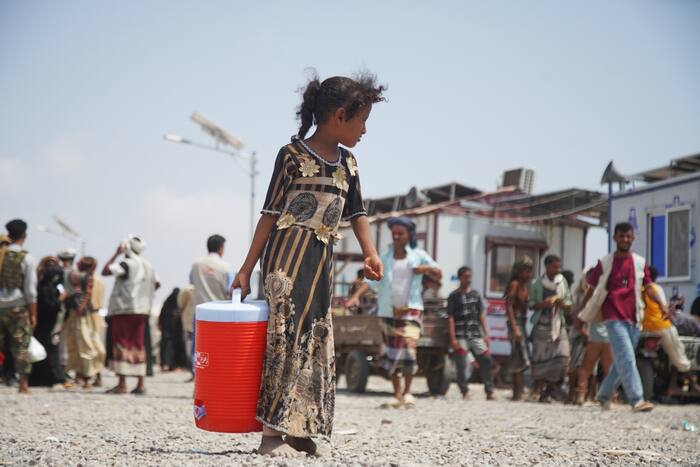
Yemen's grinding war has never truly stopped, but the current escalation around the city of Taiz marks a terrifying new low. Houthi rebels have tightened their grip on Yemen's third-largest city, choking off supply lines and launching direct attacks that leave civilians trapped in the crossfire. When the United Nations sounds the alarm about a city facing a 'grave risk' from a rebel siege, you know the humanitarian cost is catastrophic.
Let's look past the surface headlines. The real story isn't just about localized skirmishes—it's about a multi-front regional escalation that is tearing apart what little stability remained after the broken 2022 ceasefire.
The Human Toll Inside Taiz
Taiz has endured years of isolation, but recent assaults have accelerated humanitarian suffering to critical levels. The Houthi siege has restricted the flow of basic goods, sending food and medicine prices soaring beyond what ordinary families can afford. When a residential area in Taiz was struck recently, two teenage girls were killed and several others wounded, highlighting the brutal reality of urban warfare where explosive weapons are deployed near civilian neighborhoods.
United Nations human rights chief Volker Türk has demanded immediate humanitarian access, insisting that civilians must be allowed to leave and enter freely. Yet those pleas routinely fall on deaf ears. The strategy is clear: use deprivation and constant bombardment as leverage.
Beyond the City Walls The Wider Regional Conflict
The violence in Taiz doesn't happen in a vacuum. It is tied directly to a wider regional chessboard that expanded rapidly earlier this year. Following strikes on Sanaa International Airport in July that shattered the fragile 2022 truce, the conflict sucked in international actors on a broader scale.
Consider the sequence of events that pushed tensions to a boiling point:
- A devastating ballistic missile strike hit the alAlam military camp in Shabwa province during a morning training session, killing dozens of young recruits and wounding over 200.
- Local officials confirmed the victims were security trainees aged 18 to 20, proving the strike targeted non-combat infrastructure rather than front-line positions.
- Houthi drones and missiles have increasingly targeted Saudi Arabia in retaliation for its support of Yemen's internationally recognized government, forcing disruptions at major infrastructure hubs like Riyadh's King Khalid International Airport.
International Responses and Military Postures
The international community is scrambling to contain the fallout. Britain has announced plans to expand its military support for Saudi Arabia, deploying Royal Air Force jets for defensive air patrols to intercept incoming drones and missiles. However, London drew a firm line, stating its forces will not execute offensive strikes on Houthi positions on the ground.
Meanwhile, Egypt is deploying air defense systems to help Riyadh repel aerial attacks, while Washington maintains a strictly logistical support role. U.S. officials have made it clear that committing ground troops to a kinetic battle in Yemen is entirely off the table.
This leaves the fractured Yemeni government and local forces to bear the brunt of the ground war while trying to protect vital economic assets. Shabwa, Marib, and Hadramawt form the country's economic "triangle of power," holding the oil and gas infrastructure that keeps the state functioning. If those regions fall under sustained Houthi pressure, the economic collapse will be absolute.
The crisis in Taiz and the wider missile campaigns prove that the root causes of Yemen's decade-long civil war remain entirely unresolved. Without genuine diplomatic pressure and unhindered humanitarian corridors, the civilian population will continue to pay the ultimate price for a war they didn't start.