Public adoration has a short shelf life when an independent inquiry drops its final verdict. Almost a year after the catastrophic Wang Fuk Court fire in Tai Po claimed 168 lives, the official investigation report landed with a heavy thud. It laid bare a tangled web of systemic failures, administrative buck-passing, and human negligence. Amid the political fallout, public apologies, and the resignation of the housing secretary, a quiet storm is brewing within the ranks of the Fire Services Department.
The men and women who sprinted into an inferno wrapped in blazing scaffolding are suddenly finding themselves caught between enduring public gratitude and sharp, retroactive scrutiny. How did local heroes become targets of criticism? The answer lies in the painful gap between immediate bravery on the front lines and the systemic loopholes exposed by a judge-led inquiry.
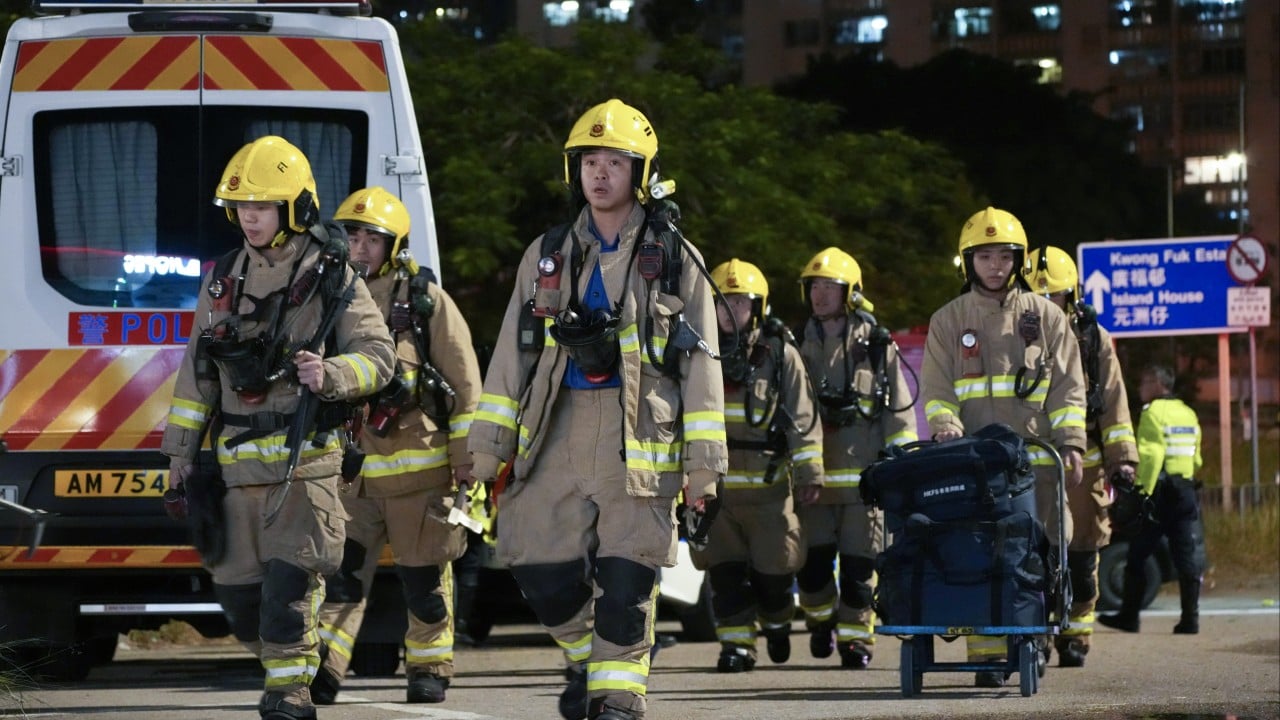
When the fire broke out across seven residential towers at Wang Fuk Court, frontline firefighters faced an impossible nightmare. Shrouded in dense renovation dust netting and choked by hazardous combustible materials, the estate turned into a vertical furnace within minutes. Rescuers dragged heavy equipment up pitch-black stairs, pushed through toxic smoke, and pulled trapped residents from upper floors. One firefighter lost his life in the line of duty alongside dozens of civilians. Hong Kong rightly hailed them as heroes who put everything on the line to save strangers.
Yet, the recently published independent committee report changed the conversational tone. While the heavy blame fell squarely on contractors, project consultants, and government oversight bodies like the now-disgraced Independent Checking Unit, the report also scrutinized emergency response protocols, communication delays, and pre-incident hazard checks. Residents who spent months warning authorities about blocked exits and dangerous renovation practices feel let down by a regulatory apparatus that ignored their pleas.
Critics are now asking tough questions about whether inspection units flagged safety hazards aggressively enough before the spark was ever struck. For firefighters who bled at the scene, hearing institutional protocols questioned feels like an unfair pivot. They executed orders under catastrophic conditions, yet they are now forced to navigate an environment where public trust is fractured. You're dealing with a workforce that gave blood and sweat, only to find themselves standing in the crossfire of institutional accountability.
The psychological toll on these rescue workers is immense. Firefighters are wired to absorb pressure, push past exhaustion, and keep moving when buildings collapse around them. They aren't trained to be political scapegoats or bureaucratic lightning rods. When investigation findings highlight institutional blind spots, frontline personnel often feel the backlash personally, even when the failures belong higher up the chain in ministerial offices and unchecked administrative boards.
Chief Executive John Lee offered a rare public apology and acknowledged decades of systemic failure, leading to the departure of Housing Secretary Winnie Ho and the overhaul of building safety frameworks. But administrative restructuring doesn't instantly heal the friction between a grieving public and the emergency services tasked with protecting them.
Transparency remains the only way forward. If Hong Kong wants to restore confidence in its public safety infrastructure, leadership must clearly separate frontline sacrifice from systemic administrative decay. Firefighters deserve better than being caught in the political crosswinds of a tragedy they tried desperately to stop.
Fix the regulatory gaps, hold negligent contractors accountable, and let the rescuers do their jobs without second-guessing their commitment.