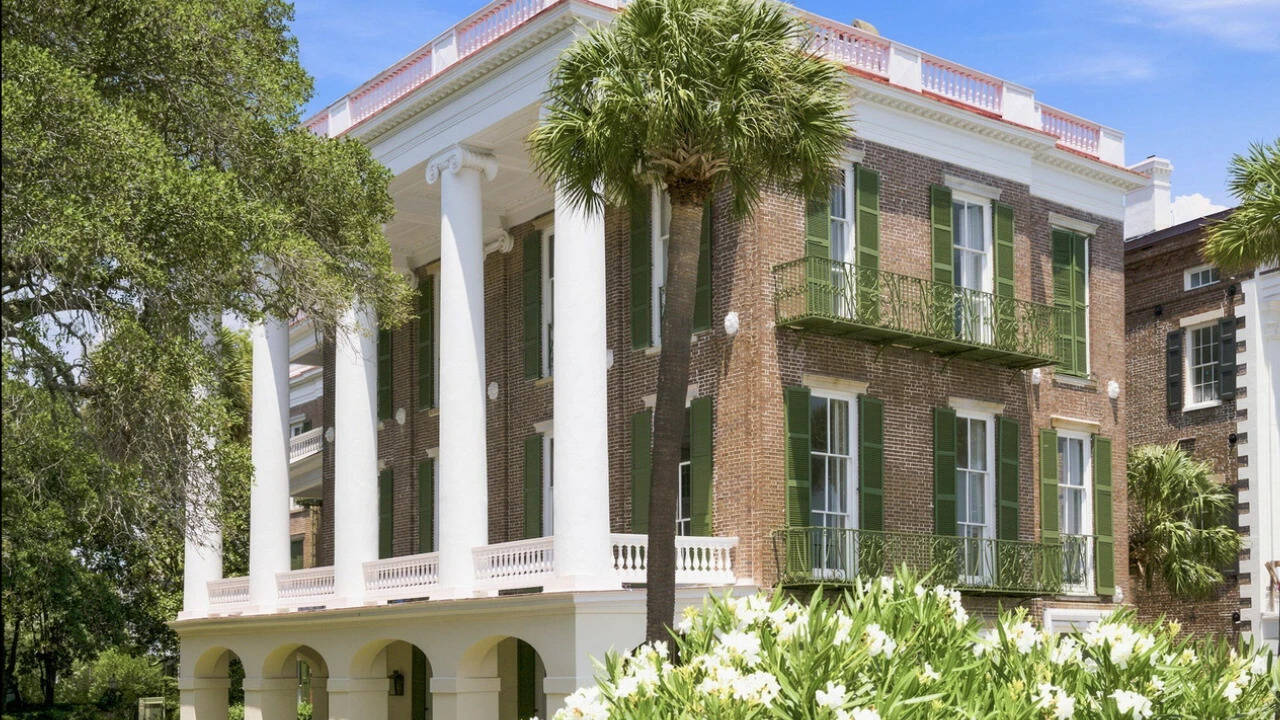
Owning a piece of American architectural history sounds romantic until the maintenance bills arrive. When Wall Street financier Richard Jenrette bought the iconic Roper House at 9 East Battery in Charleston back in 1968, he kicked off a decades-long personal crusade to rescue historic American properties. He filled them with fine antiques, hosted elites, and lived out his passion as a self-described house-aholic. But when Jenrette passed away in 2018, he left behind a massive logistical headache for the foundation tasked with his legacy.
Recently, the famed antebellum mansion traded hands in an all-cash deal for $13.3 million to an entity called The Glass Key LLC. The real story isn't just about a luxury property changing hands South of Broad. It is a cautionary tale about why turning centuries-old historic landmarks into public house museums is financially unsustainable.
If you've ever toured a historic home and wondered why ticket sales never seem to cover the roof repairs, you're missing the brutal economics of preservation. Foundations are learning the hard way that heritage real estate eats cash faster than it can generate it.
The Crushing Reality of Running a Historic House Museum
Most people assume that gifting a historic estate to a preservation trust guarantees its survival as a public museum. It doesn't. Running a National Historic Landmark requires millions in structural upkeep, specialized labor, climate control, and insurance against coastal storms.
When the Richard Hampton Jenrette Foundation inherited properties like the Roper House, its board faced a harsh financial audit. Operating a landmark built in 1838 for wealthy planter Robert William Roper as an open-door public museum wasn't just impractical. It was a fast track to insolvency.
Let's look at the math behind these properties:
- High salt air and humidity in Charleston demand constant exterior maintenance.
- Original Greek Revival architectural details require master artisans, not standard contractors.
- Security and crowd control threaten delicate 19th-century interiors featuring original plasterwork and fine woodwork.
Board leaders quietly pulled the property off public museum tracks and listed it privately. Benjamin Prosky, the foundation's president, noted that they turned away multiple buyers over a two-year period because most people simply didn't understand the relentless financial commitment required to maintain a house on Charleston's High Battery.
Why Private Buyers Are Stepping In Where Foundations Fail
Heritage trusts are starting to realize that private ownership is sometimes the best conservation strategy. Wealthy buyers with deep pockets can shoulder the multi-million dollar upkeep costs without relying on sluggish ticket sales or government grants.
This $13.3 million all-cash transaction proves that private high-net-worth buyers view these properties not as commercial investments, but as custodial duties. They want to live in living history. They have the capital to fund copper roof replacements, HVAC retrofits that won't ruin antique plaster, and storm-surge fortifications.
You can't preserve a fragile 1830s landmark on good intentions alone. You need liquidity. When foundations try to force unviable public conversions, properties deteriorate due to deferred maintenance. Selling to private hands injects fresh capital into structural rehabilitation.
The Ripple Effect Across Historic Real Estate Markets
The Roper House sale doesn't happen in a vacuum. Just a month prior, another historic heavyweight South of Broad—the legendary Sword Gate House on Legare Street—hit the market asking a staggering $35 million.
These properties share a common trait. They are architectural masterpieces that demand astronomical maintenance budgets. The Jenrette Foundation isn't abandoning preservation entirely. They still hold major estates like Millford in South Carolina, Ayr Mount in North Carolina, and Edgewater along the Hudson River in New York. They are simply triaging their portfolio. They are offloading properties where public museum conversion failed, keeping only those with sustainable operational models.
If you are looking at historic real estate as an investment or a preservation project, take notes. Buying a historic landmark is a lifestyle commitment wrapped in regulatory tape. Local historic boards dictate every paint color, window pane, and structural modification. You aren't just buying a house. You're buying a second job managing preservation architects and municipal building codes.
The era of turning every grand old mansion into a public museum is dying. Private stewards with serious capital are stepping in to keep these architectural gems standing.