Buying a historic property always sounds romantic until you actually try to fix one up. Most people underestimate the sheer amount of red tape, structural headaches, and financial strain involved in rescuing a century-old house. Yet, every once in a while, a project comes along that actually honors its past instead of just slapping modern white drywall over it.
Take the 1928 Spanish-style estate built by oilman and developer Alphonzo Bell, the man who literally founded Bel Air. Back in 2010, Maple Leaf Capital CEO Michael Wexler picked up the Chalon Road property for five and a half million dollars. He didn't rush to flip it. He lived in the sprawling 10,600-square-foot mansion for a decade before launching a rigorous five-year restoration project. Now rebranded as Maison de La Reine, the historic landmark is asking thirty-two and a half million dollars. For another perspective, check out: this related article.
The Architectural Pedigree Behind Chalon Road
Alphonzo Bell didn't just build a random house for himself; he brought in architect Mark Daniels to shape the entire neighborhood vision. Daniels mapped out Bel Air's winding streets, planted thousands of trees, and engineered underground equestrian tunnels so riders wouldn't have to dodge early automobiles.
When it came to 10772 Chalon Road, Daniels applied that exact micro-level urban planning precision to a single residential footprint. The 1920s architecture relied heavily on Mediterranean details, hand-carved stone fireplaces, and intricate millwork. Over the decades, the estate even passed through notable hands, including Queen Noor of Jordan and late film producer Steven Reuther, who carved out a private editing suite and cinema on site. Similar coverage regarding this has been provided by Apartment Therapy.
What A Five Year Restoration Actually Looks Like
Most luxury flips destroy historical context in favor of sterile minimalist trends. Wexler took the opposite route, hiring designers Kendra Sosothikul and Paula Press of Studio Berosso to preserve what made the house special in the first place.
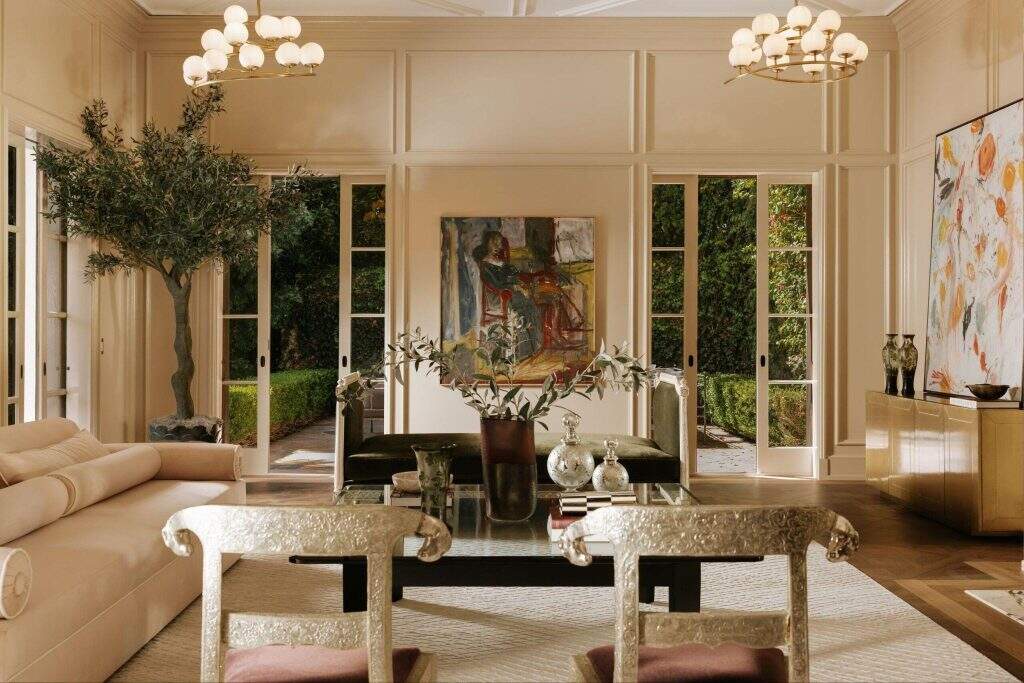
They didn't tear out the original 1920s checkerboard terrazzo foyer. They restored it right in place. The hand-painted Gracie wallpaper on the breakfast room ceiling was carefully conserved to match period specifications. At the same time, the team introduced smart contemporary accents without ruining the soul of the home. Custom Gucci wallpaper now frames the private office and theater powder room, while a heavy Calacatta Viola marble fireplace anchors the formal living room.
The old indoor pool area was converted into a climate-controlled fitness zone. Outside, expanded terraces now frame wide views stretching toward Century City and Downtown Los Angeles.
The Hidden Costs Of Selling Luxury Real Estate In Los Angeles
Listing a multi-million dollar property in California involves navigating more than just architectural heritage. Real estate agents Chris Soffer of The Beverly Hills Estates—working alongside Trenton Armitage, Rayni Williams, and Branden Williams—are handling the massive listing.
Buyers eyeing this property also need to factor in local tax penalties. Under Los Angeles Measure ULA, properties selling above ten point nine million dollars trigger a hefty five and a half percent transfer tax. For a thirty-two and a half million dollar transaction, that adds roughly one point seven eight million dollars in municipal taxes alone at closing.
If you are looking at historic high-end real estate investments, understand that the true cost isn't just the purchase price. It is the patience required to handle a multi-year structural resurrection, the regulatory hurdles of luxury markets, and the willingness to respect a property's original era rather than fighting it.