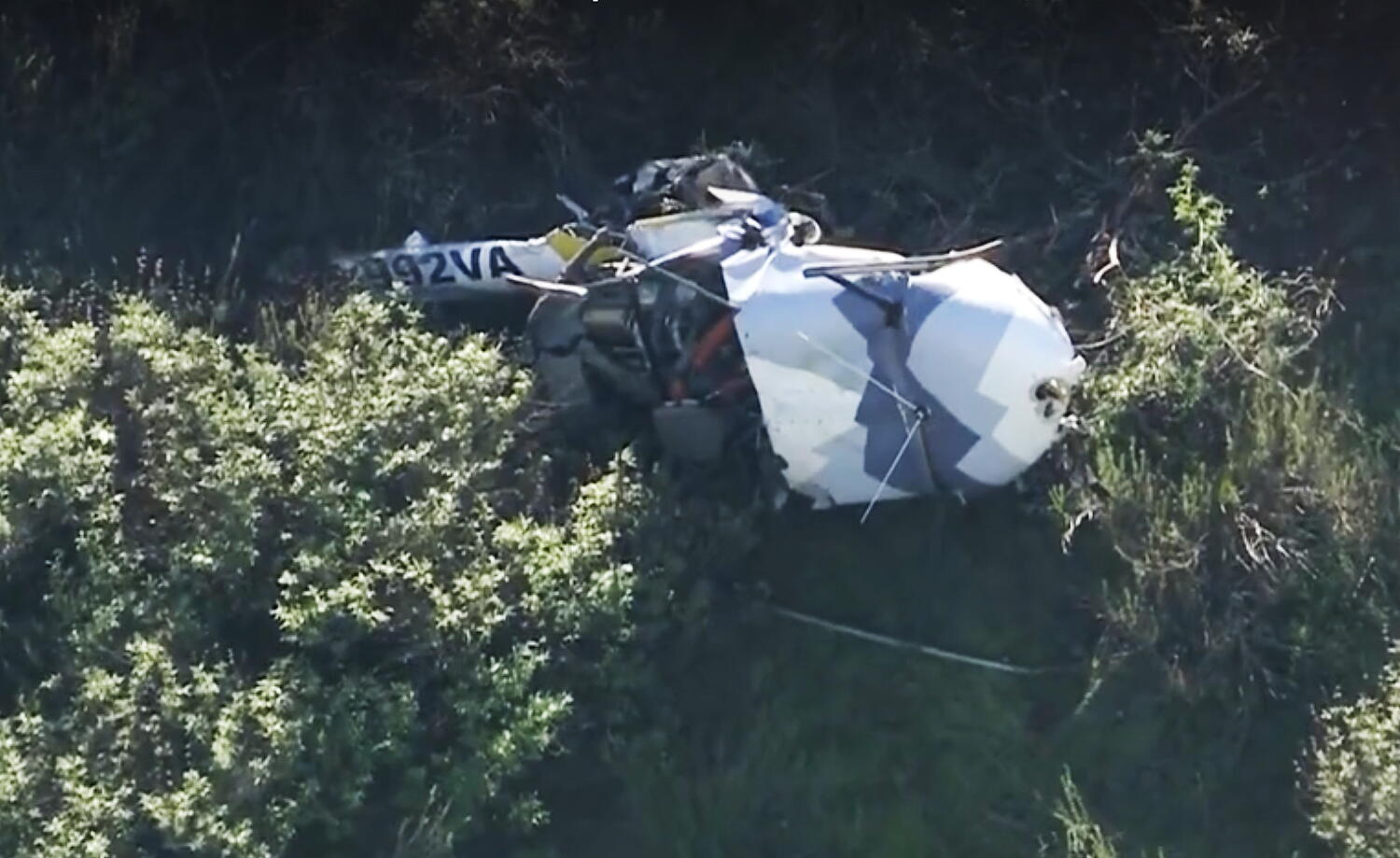
Two people were killed on Monday morning, November 23, 2026, when a Robinson R22 helicopter went down on a hillside in Temecula near De Portola Road and Oak Mountain Road.
Both occupants aboard the aircraft were pronounced dead at the scene after first responders reached the remote terrain east of the De Portola wine trail. According to officials, the helicopter had departed earlier that morning from French Valley Airport in southwestern Riverside County before the crash was reported around 9:30 a.m. Names of the two victims weren't immediately released pending family notification, and the Federal Aviation Administration and National Transportation Safety Board opened an investigation into what caused the flight to end in a fatal crash.
When a breaking news alert hits like that, people want two things right away. First, they want to know what actually happened and whether anyone survived. Second, they want to understand how a light helicopter ends up in a hillside crash and what investigators do next. Most quick wire-style updates stop at the headline facts. Honestly, that leaves out the technical context that actually explains why a two-seat Robinson R22 flight near French Valley Airport draws immediate scrutiny from aviation safety experts.
Why a Temecula Helicopter Crash Draws Fast Federal Scrutiny
The crash site sits in rugged, hilly terrain near Oak Mountain Road and De Portola Road, in the broader wine country area southeast of Temecula and not far from French Valley Airport. Local fire and sheriff's units had to navigate steep, remote ground to reach the wreckage and confirm there were no survivors on board.
From an aviation standpoint, two details jump out immediately: the aircraft type and the departure airport. The FAA identified the aircraft as a Robinson R22, a compact two-seat piston helicopter widely used across the country for flight instruction and light utility work. French Valley Airport serves general aviation and flight training operations in southwestern Riverside County, though officials hadn't confirmed whether Monday's flight was a training sortie, a local hop, or something else.
That distinction matters, even if investigators haven't announced the flight's purpose yet. Training flights and low-level local flights over rolling hills and ridges carry very different operational pressures than cross-country point-to-point travel.
What Makes the Robinson R22 Such a Demanding Aircraft
If you've never flown a light piston helicopter, it's easy to assume it behaves like a small airplane with a spinning wing on top. It doesn't. Not even close.
The Robinson R22 is a two-place helicopter powered by a single reciprocating engine and fitted with a two-bladed, teetering main rotor system. Because it's small, light, and built with a low-inertia rotor system, it responds quickly to control inputs and doesn't store as much rotational kinetic energy in the rotor blades as heavier helicopters do.
That low inertia changes the margin for error when power drops or a pilot pitches the nose aggressively. If engine power decreases or a pilot raises the collective too quickly without matching throttle or entering an autorotation promptly, rotor RPM can decay fast. If rotor RPM drops too far, the blades can stall—and once a rotor stalls, recovery becomes extraordinarily difficult, especially near terrain.
Flight instructors and safety analysts also point to low-G conditions and mast bumping as classic hazards in two-bladed semi-rigid rotor systems like the R22. Pushovers or abrupt forward cyclic inputs that unload the rotor disk can create dangerous control dynamics if a pilot isn't disciplined with smooth inputs. That's why the FAA established Special Federal Aviation Regulation No. 73 (SFAR 73), requiring specific ground instruction, flight training, and currency/endorsement rules for pilots flying Robinson R22 and R44 helicopters.
In light helicopters with low rotor inertia, timing and smooth control inputs aren't optional extras. They're the whole game.
None of this means mechanical failure or pilot error caused the Temecula crash. Right now, the cause is unknown. Still, understanding how an R22 flies explains why the NTSB treats every fatal R22 crash with close attention to powerplant health, rotor RPM management, density altitude, wind over terrain, and pilot experience.
Hillside Terrain and Wind Around Temecula
Flying near hills and ridges adds layers that flat valley airfields don't throw at you. Around Temecula's wine country and surrounding foothills, rising terrain, canyon slopes, and shifting winds can create downdrafts, updrafts, and mechanical turbulence—especially when winds blow across ridges.
Even on a clear morning, terrain near hills can trap a low-flying aircraft with fewer out-landings if something goes wrong mid-flight. A helicopter doesn't need a runway the way a Cessna does, sure, but setting down safely on steep, brush-covered slopes or uneven hillsides is still unforgiving when altitude is low or a problem develops suddenly.
How the NTSB Actually Investigates a Crash Like This
When people hear that the NTSB is leading the investigation, they often expect answers within a few days. That's rarely how aviation accident investigations work.
According to the NTSB investigative process, investigators start by documenting the wreckage site, recording physical evidence, gathering air traffic or flight-tracking data if available, checking weather conditions, and pulling maintenance logs and pilot records. If the wreckage sits on steep or remote ground, simply recovering components safely can take time.
Next comes the slower analytical work. Specialists examine engine and drivetrain components—often tearing down engines or inspecting rotor components to see if power was being produced at impact or if rotor RPM was high or low when the aircraft struck the ground. They also review pilot logbooks, medical and training history, and recent maintenance entries.
A preliminary report usually appears within a few weeks of an accident, laying out initial factual details without assigning blame. The full investigation and probable cause determination commonly take 12 to 24 months. It's frustrating when you want closure right away, yet taking that long is how investigators avoid guessing.
Common Misconceptions After a Fatal Helicopter Crash
Rumors spread fast after a local crash, especially when social media fills the silence before officials release details. A few myths show up almost every time:
- Assuming a quick cause means investigators know everything. Early statements from fire or sheriff's officials confirm facts on the ground—location, time, aircraft type, fatalities. They don't establish probable cause.
- Treating every helicopter like a heavy twin-engine aircraft. A two-seat R22 piston helicopter has very different weight, power, and rotor characteristics than a twin-turbine medevac or executive helicopter.
- Blaming either the pilot or the machine before evidence is tested. Plenty of fatal crashes involve a chain of factors—weather, terrain, mechanical issues, or human decision-making—that only physical inspection and data analysis untangle.
Practical Next Steps for Readers and Local Flyers
If you're following this story from the community or you fly out of Southern California airports, a few practical steps make sense right now:
- Rely on official agencies for updates. Watch for releases from the Riverside County Sheriff's Office/Coroner for victim identification and next-of-kin notifications, and track the FAA and NTSB for preliminary and final accident findings rather than unverified social posts.
- Respect local terrain and wind briefings. If you're a student or rated pilot operating around French Valley or surrounding hills, review mountain/hilly terrain flying practices, check density altitude and ridge winds carefully, and brief escape routes before flying low over rising ground.
- Keep SFAR 73 and currency sharp. If you train or fly in Robinson helicopters, stay current on endorsements, flight reviews, and abnormal/emergency procedures—especially low-RPM recognition and recovery—so muscle memory stays sharp when unexpected events happen.