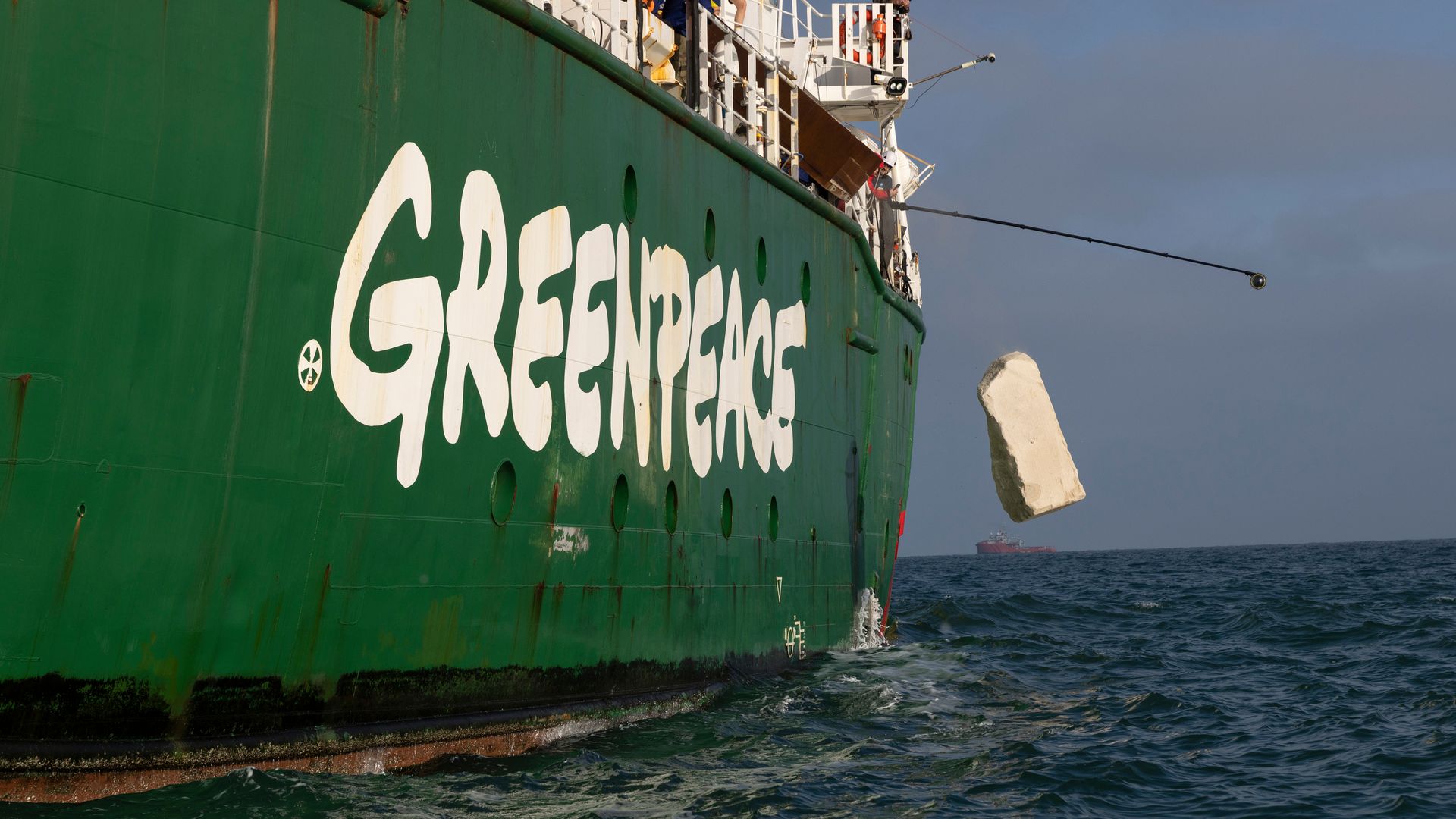
Imagine a heavy bulldozer tearing up a protected national park while regulators simply look the other way. That destruction happens every single day beneath the waves, hidden from plain sight in supposedly safe ocean zones. Greenpeace just escalated its fight by dropping massive two-tonne stones onto the seabed to stop industrial bottom trawlers in the North Sea.
If you've followed marine conservation for a while, you know that government designations often look great on paper while offering zero real protection in practice. This latest direct action targets the Southern North Sea Marine Protected Area, a zone specifically created to safeguard vulnerable harbour porpoises. Instead of a sanctuary, it has turned into a highway for heavy fishing gear.
The Reality Behind Marine Protected Areas
The Southern North Sea supports nearly 20 percent of the UK's harbour porpoise population. It needs quiet waters and abundant prey to thrive. Yet, data from Global Fishing Watch reveals that bottom trawlers logged at least 37,200 hours of fishing there in 2025 alone. That dwarfs activity in any other UK offshore marine reserve.
Critics and activists point out the glaring loophole in current maritime policy. While these zones carry official protection titles, industrial fishing remains completely legal across most of them. Trawlers and dredgers drag heavy nets and metal plates across the seabed, crushing fragile habitats, wiping out fish stocks, and leaving marine life with nowhere to hide. Greenpeace analysis shows that bottom trawlers scraped across a cumulative 55,600 square kilometres of marine protected seabeds in 2025. That footprint is roughly 58 times the size of Dartmoor National Park.
How the Underwater Boulder Barrier Works
Activists onboard the Greenpeace vessel Arctic Sunrise spent the weekend deploying multi-tonne stones off England's east coast. These heavy boulders form an underwater obstacle course designed to snag the heavy gear of industrial bottom trawlers. By placing these stones, the group effectively closed 116 square kilometres of the protected area to destructive fishing methods.
The strategy is direct, confrontational, and historically effective. Greenpeace has used similar stone barriers in past campaigns, such as at Dogger Bank and off the coast of Sussex, forcing officials to eventually tighten restrictions in select regions. Following this new deployment, the crew plans to patrol the area, which they have dubbed an ocean park, to deter other forms of harmful industrial fishing.
Politicians are starting to feel the heat as public pressure mounts. Former climate minister and Labour MP Kerry McCarthy backed the latest action, noting that less than one percent of UK seas are genuinely shielded from industrial extraction. She argues that a nationwide ban on bottom trawling is long overdue.
What Happens Next for North Sea Conservation
Placing rocks on the seabed won't solve the global overfishing crisis overnight, but it forces an uncomfortable conversation about enforcement and political willpower. Ministries face mounting demands to turn paper parks into true sanctuaries. Until officials ban heavy trawling across all designated waters, groups like Greenpeace will keep taking matters into their own hands.
Protecting marine ecosystems requires more than bureaucratic labels and empty promises. Real conservation demands enforcement, accountability, and the courage to tell commercial fleets to stay out.