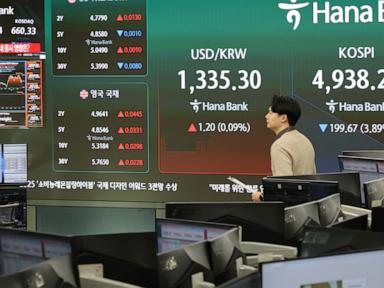
Gold just slid below $3,700 an ounce. A year ago, anyone chasing the yellow metal would've laughed at that idea.
After peaking near $5,600 in late January 2026, gold prices have shed roughly a third of their value, hitting multi-month lows in mid-November as traders scramble to price in tighter Federal Reserve policy. If you bought gold thinking inflation automatically equals higher bullion prices, this stretch has been brutal.
Here's the simple truth behind the sell-off. Stubborn inflation has pushed Federal Reserve officials back toward hawkish talk, lifting Treasury yields and strengthening the U.S. dollar. Because gold pays zero interest or dividends, rising yields make cash and government bonds look way more attractive by comparison.
How Gold Prices Got Crushed After January's Record High
Chasing parabolic rallies usually ends in pain, and 2026 gave gold bugs a textbook lesson. Early in the year, gold surged past $5,500 an ounce amid geopolitical tension and heavy momentum buying. Once that euphoria cooled, gravity took over fast.
By mid-November 2026, spot gold slipped under $3,700, marking roughly a 14-month low and dragging down year-to-date performance. What looked like an unstoppable bull run turned into a grinding repricing story.
Why did the momentum flip so hard? Markets don't trade headlines in a vacuum; they discount future cash flows and relative yields. When inflation refuses to cool cleanly toward the Fed's 2% target, expectations shift from rate cuts to another hike. Suddenly, parking money in short-term bills or money market funds paying around 4% to 5% carries a clear reward that bullion simply can't match.
I've watched plenty of retail traders get burned by treating gold as a one-way ticket. When a commodity runs up that fast, any shift in real yields triggers stop-losses and profit-taking almost immediately.
Why Fed Rate Expectations And The U.S. Dollar Hurt Gold
Two forces are doing most of the heavy lifting right now: interest rate expectations and dollar strength. They feed into each other constantly.
The Opportunity Cost Trap
Gold doesn't generate yield. You buy it hoping someone else pays more later, or hoping currency debasement erodes rival assets.
When October's Federal Reserve minutes highlighted inflation risks and officials like Governors Christopher Waller and Michael Barr signaled openness to firmer policy if price pressures persist, traders quickly priced in high odds of a December rate hike. That pushed Treasury yields up—with 10-year yields moving above 5% in recent trading—and raised the opportunity cost of holding gold. Every extra basis point on a safe government bond makes sitting on dead-weight metal feel pricier.
A Stronger Dollar Makes Gold Costlier Globally
Gold is priced in U.S. dollars across global markets. When the dollar rallies on hawkish Fed bets, buyers using euros, yen, rupees, or yuan have to spend more of their home currency to buy the exact same ounce.
That dynamic cools overseas demand right when domestic interest-rate pressure is already weighing on futures and ETFs. Add technical chart breaks below prior support zones, and selling snowballs pretty easily.
What Most Investors Miss About Gold's 2026 Pullback
Most quick market recaps stop at "dollar up, gold down." Honestly, that leaves out a few nuances that actually matter if you're deciding what to do next.
First, safe-haven behavior isn't automatic. Market analysts—including Standard Chartered's Suki Cooper—have noted that during recent Middle East flare-ups, some investors treated gold as a source of liquidity to raise cash rather than a pure shelter. When liquidity tightens, people sometimes sell what they can rather than what they want.
Second, central banks haven't vanished, even if buying slowed. Data from the World Gold Council showed strong official-sector accumulation earlier in 2026, though recent central bank buying has run somewhat below prior-year pace. Central banks move slowly and strategically; they don't trade five-minute charts like hedge funds.
Third, wall street forecasts are split wide open. Some strategists, such as Bannockburn's Marc Chandler, have pointed to downside targets in the $3,500 to $3,600 area while chart momentum stays heavy. Others—including Morgan Stanley's Amy Gower and U.S. Money Reserve's Philip Diehl—still argue long-term structural reasons support keeping exposure. Nobody rings a bell at the bottom.
Practical Next Steps If You Hold Or Watch Gold
If you're staring at red numbers on a gold ETF or coin position right now, don't let panic make the call for you. Take a breath and look at your actual plan.
- Check your position sizing first. If gold grew past your target allocation after January's spike—or if it's keeping you up at night—trimming to a comfortable weight isn't admitting defeat; it's risk management.
- Watch real yields and Fed signals, not just price. Track upcoming inflation prints, Treasury yields, and December FOMC expectations on sources like Trading Economics or the Federal Reserve rather than guessing support levels blindly.
- Separate short-term trades from long-term insurance. A swing trade needs strict risk limits when momentum is down; a long-term portfolio diversifier needs patience and realistic expectations about volatility.
- Avoid going all-in on a single rebound. If you plan to average in, staggering entries over time beats trying to nail the exact penny of a bottom.