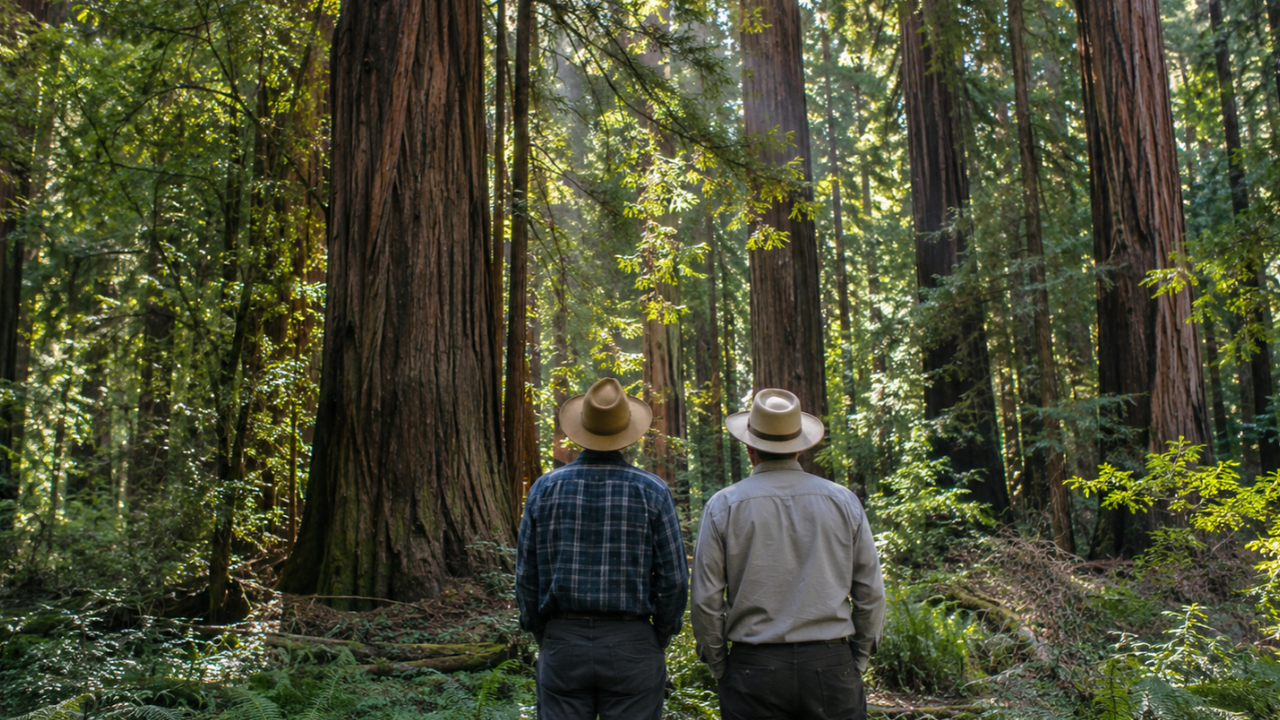
Two anonymous landowners in California handed over conservation rights valued at $680,235 to protect 120 acres of redwood forest and salmon habitat in the Upper Zayante River watershed near Felton. They kept the land. They still walk its trails. Yet commercial logging, subdivision, and new development on that property are off the table forever.
That deal—named Isabel Upani by its owners and placed under a conservation easement with Sempervirens Fund—looks quiet on paper. No flashy ribbon-cutting with the donors' names in giant letters. No billion-dollar tech grant. Just a legal agreement binding current and future owners to protect more than 67 acres of redwood forest along with oak woodlands, Douglas firs, mixed hardwoods, maritime chaparral, chamise scrubland, and riparian woodland. Learn more on a similar subject: this related article.
Honestly, people hear "land conservation" and picture a charity buying a massive parcel outright with a giant check. Buying land is expensive, slow, and often impossible when owners don't want to sell. A conservation easement flips the script. Instead of paying full retail for the dirt, trees, and views, a land trust acquires specific rights—like building subdivisions or clear-cutting timber—while the owners keep private ownership and low-impact recreation.
Why Easements Matter More Than Headlines Admit
If you've ever spent time in the Santa Cruz Mountains, you know how fragmented private parcels get. One ridge has a home site, the next has old timber access, and a small creek cuts through the bottom before draining toward the San Lorenzo River. Further journalism by Reuters delves into comparable perspectives on this issue.
When two landowners donate a conservation easement worth $680,235 to Sempervirens Fund, the financial math works in a way outright land purchases rarely do. Sempervirens Fund—founded in 1900 as California's first land trust—has protected over 36,000 acres and directly owns or stewards more than 12,000 acres. It doesn't have infinite cash to buy every 100-acre hillside in the range.
By taking on the easement rather than buying the fee title, the land trust locks in permanent restrictions on development, subdivision, and commercial timber harvesting without draining acquisition funds that can go toward other parcels or active restoration. At the same time, the landowners keep skin in the game. They retain access for low-impact recreation, and Sempervirens Fund handles long-term oversight and stewardship work.
There's a trade-off here that doesn't get talked about enough. An easement isn't a magic wand that turns a second-growth forest into an instant primeval grove overnight. Most of the 67-plus acres of redwood forest on Isabel Upani is second-growth, mixed with dozens of surviving old-growth redwoods. Restoring ecological health takes decades of patient work—reducing wildfire fuel loads, managing vegetation, and fixing past disturbances.
How Redwood Shade Keeps Salmon Alive
Why connect a redwood hillside near Felton to endangered fish? Because salmon don't care where your property line ends.
Water flowing off the Upper Zayante watershed feeds into the San Lorenzo River system. In this region, the Central California Coast population of coho salmon is federally listed as endangered, and Central California Coast steelhead trout are classified as threatened.
According to CalFish and Redwood National and State Parks ecology data, coho salmon depend on cold, clean, well-oxygenated water and stable gravel beds during critical life stages. Adults typically move into coastal streams to spawn during fall and winter rains, digging gravel nests called redds where eggs incubate until hatching and emerging as vulnerable alevins and fry.
Here's what happens when a redwood forest protects those upstream slopes:
- Shade cools the water: Dense tree canopies block direct summer sun, helping keep stream temperatures from spiking to stressful or lethal levels for cold-water fish.
- Roots hold the hillside: Deep root systems bind soil and slow runoff, cutting down on erosion and fine sediment that can suffocate salmon eggs and fill in pools.
- Wood shapes the channel: Fallen branches and large wood from forest ecosystems help create complex stream structure, cover from predators, and resting pockets when winter storm flows surge.
I've seen plenty of conservation stories treat forest protection and fish recovery like two separate hobbies. In coastal California, they're the same problem. If an upstream slope gets graded for roads or stripped bare, the mud and warm runoff don't stay polite on the hillside. They wash straight downstream into spawning and rearing habitat.
The Hidden Value of Connected Refuges
One detail that stands out in Sempervirens Fund's reporting is how Isabel Upani fits into a bigger puzzle. Together with other land owned by the organization, this 120-acre property helps form part of a 645-acre conservation and restoration refuge.
Wildlife doesn't live inside neat survey lines. A 120-acre parcel is meaningful on its own, especially with dozens of remnant old-growth redwoods and varied habitats supporting species like the San Francisco dusky-footed woodrat, pileated woodpecker, and Santa Cruz black salamander. Yet connecting it into a larger refuge gives animals more room to move, forage, and weather drought or fire.
Still, let's be real about the limits. Even a 645-acre refuge in the Santa Cruz Mountains faces tough realities: megafires, recurring droughts, invasive plants, and long recovery timelines for damaged watersheds. Donating an easement is a huge win, not a permanent guarantee against climate extremes. Without ongoing stewardship—like fuel reduction and habitat restoration—protected land can still struggle.
What Landowners Get Wrong About Easements
If you own rural or wooded land in California and start thinking about conservation easements after reading a story like this, watch out for a few common traps:
- Assuming it's a quick tax hack: Under federal tax rules, donating a qualified conservation easement in perpetuity can generate tax deductions—subject to strict IRS requirements, qualified appraisals, and adjusted gross income limits—but aggressive or poorly documented valuations invite audits and penalties. Always work with a qualified appraiser and tax advisor who know conservation law.
- Treating "low-impact" as "do whatever I want": An easement isn't a handshake deal. It's a permanent legal restriction recorded against the deed that binds future buyers too. Before signing anything, read every line about trails, structures, agricultural use, and access so you don't accidentally restrict plans your family actually cares about.
- Ignoring ongoing stewardship costs: Protecting land on paper is step one. Managing brush, reducing fire risk, and maintaining healthy woods takes real effort and money over time.
Practical Next Steps If You Care About This Work
You don't need 120 acres in the Santa Cruz Mountains to take action today:
- If you own forested or creekside land: Contact a local or regional land trust—such as Sempervirens Fund in the Santa Cruz Mountains or the Land Trust Alliance directory for other regions—to ask whether your parcel aligns with priority watersheds or wildlife corridors.
- If you visit redwood parks and streams: Stick to designated trails and viewing areas, keep dogs away from sensitive waterways, and respect seasonal stream closures so you don't disturb spawning habitat or trample fragile banks.
- If you want to back watershed protection: Look directly at local land trusts and watershed restoration groups doing on-the-ground work like fuel reduction, creek buffers, and habitat connectivity rather than donating to vague, unverified causes.
Quiet conservation doesn't grab headlines like a mega-deal. Over decades, though, permanent easements on properties like Isabel Upani are how fragmented hills slowly turn back into resilient living systems.