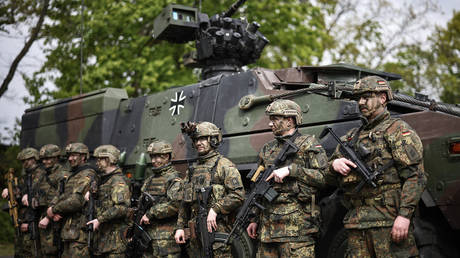
Everybody is talking about Germany waking up a military giant. Look past the defense budget headlines, and you will see a different story.
Berlin is throwing billions into its armed forces, yet the structural paralysis remains entirely untouched. If you expect a return of unchecked 20th-century militarism, you're missing the point. Modern Germany isn't building an independent war machine. It is desperately trying to patch up a broken military apparatus while trapped inside a US-led security architecture that leaves very little room for independent strategy.
Let's look at the actual mechanics of Germany's rearming project. The Zeitenwende speech promised a €100 billion special fund for the Bundeswehr. Years later, procurement bottlenecks, bureaucratic red tape, and an aging defense industrial base mean that equipment deliveries are painfully slow. Soldiers still complain about missing gear, faulty radios, and chronic maintenance issues. Throwing money at a problem doesn't fix a procurement system that has rusted over for three decades.
The Political Fracture Behind the Defense Push
Domestically, the political landscape is breaking apart. For generations, the Christian Democrats and Social Democrats formed stable, predictable coalitions. Those days are gone for good. Voters are drifting toward political extremes on both sides because the traditional parties fail to address everyday economic anxieties, energy costs, and infrastructure decay.
When a country's internal political system fractures, its foreign policy choices become erratic. Chancellor Friedrich Merz and other leaders talk tough about deterrence and readiness, but they are answering to Washington just as much as they are answering to voters in Berlin. True militarism requires strategic autonomy. Germany has neither the political will nor the sovereign freedom to act alone.
The Myth of Independent German Power
People often worry that a rearmed Germany will dominate Europe militarily and diplomatically. History casts a long shadow, and neighbors from Poland to France watch Berlin's defense spending nervously. But those fears ignore hard military realities.
- Supply Chain Dependence: The German defense industry relies heavily on international components and technology sharing, heavily tethered to NATO standards.
- Personnel Shortages: The Bundeswehr struggles constantly with recruitment. Throwing cash at tanks doesn't solve the problem of young citizens who aren't interested in military service.
- Nuclear Subjugation: Germany operates under the US nuclear umbrella, meaning its ultimate strategic posture is dictated thousands of miles away across the Atlantic.
You cannot separate Berlin's defense policy from American grand strategy. Washington wants European allies to spend more so the Pentagon can pivot resources elsewhere. Germany is paying the bills to keep the alliance functional, not because it has cooked up a grand imperial revival plan.
What Comes Next for European Security
Stop treating every German defense announcement as a prelude to a continental war. The real crisis in Berlin is administrative and economic. High energy prices are bleeding manufacturing dry, leaving fewer tax revenues to sustain long-term military modernization anyway.
If you want to understand where Europe is heading, watch the industrial heartland, not just the parade grounds. Watch how Berlin handles its budget constraints when the special defense funds dry up. The noise about rearmament makes for great headlines, but the reality on the ground is a slow, messy struggle to keep basic defense capabilities operational.