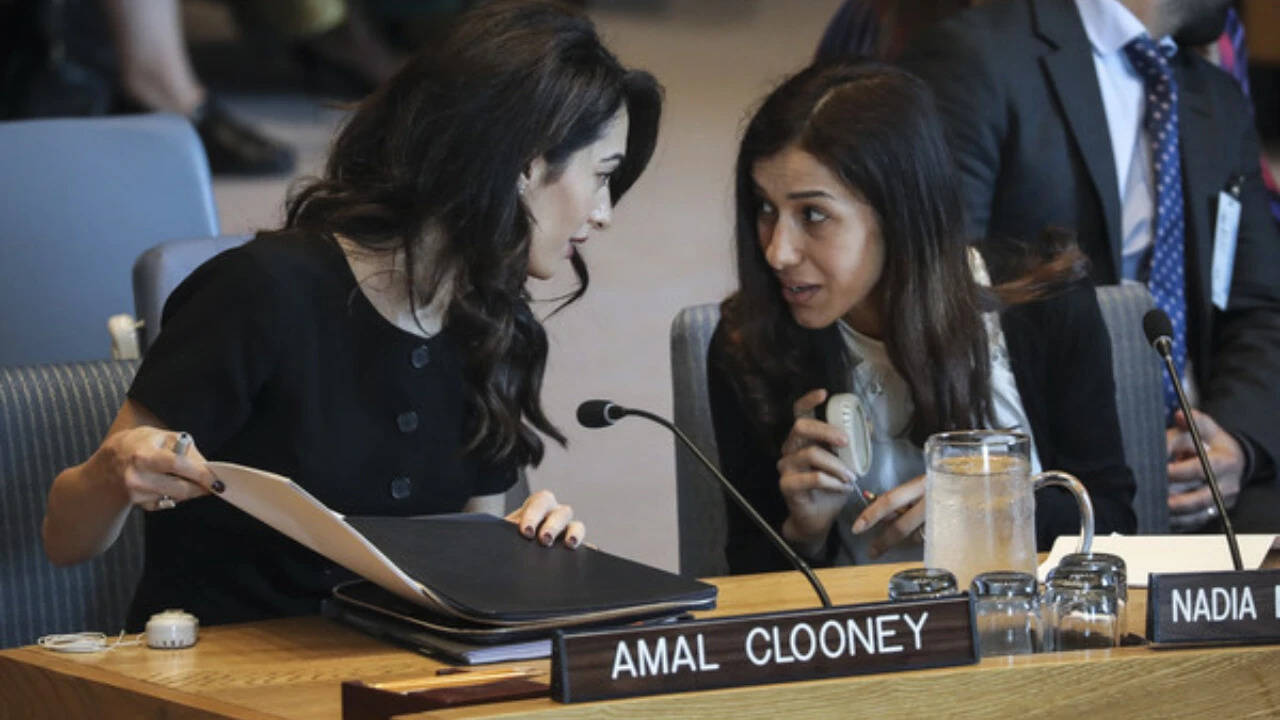
Philanthropy often looks great on red carpets, but real change happens where paperwork meets power. When George and Amal Clooney launched the Clooney Foundation for Justice (CFJ), critics wondered if it would turn into just another celebrity vanity project. It hasn't. Through targeted initiatives like the "Waging Justice for Women" program, the organization has quietly transformed the landscape of international human rights, providing vital legal assistance to thousands of vulnerable people.
If you look past the celebrity headlines, the core mission is about institutional accountability. Justice doesn't happen by accident. You have to fund it, fight for it, and take it directly to the communities that need it most.
Why Traditional Legal Aid Fails Vulnerable Communities
In many parts of the world, marginalized women and children live miles away from the nearest courthouse. Even when laws exist on paper to protect them from child marriage or gender-based violence, those laws are useless if you cannot afford a lawyer or safely travel to a city center to file a claim.
Most conventional aid organizations rely on victims coming to them. That model is broken. Real advocacy requires meeting people where they live. That is precisely why the foundation's expansion of mobile legal clinics matters so much. By dispatching lawyers and advocates directly into rural and underserved regions—such as parts of Malawi and Kenya—the foundation bridges a massive gap.
People trapped in abusive environments don't just need sympathy. They need binding court orders, child maintenance enforcement, and defense against systemic corruption.
Moving the Needle on Child Marriage and Gender Violence
Statistics surrounding child marriage remain staggering, with millions of young girls forced out of school and into unions before they turn eighteen. Cultural barriers and weak local enforcement often mean perpetrators walk free.
The foundation's strategy attacks this problem using grassroots partnerships. By working alongside local legal groups, such as the Women Lawyers Association in Malawi, CFJ's mobile clinics have advised thousands of women and girls, securing protective orders and holding abusers legally accountable. In one notable case, a partnership helped secure court-ordered maintenance and a lengthy prison sentence for a perpetrator—a rare outcome in regions where impunity is historically common.
This isn't just about winning individual lawsuits. It is about shifting local cultural norms by proving that the law can actually work for ordinary citizens.
Beyond the Courtroom: The Broader Impact of CFJ
The foundation's operational scope extends far beyond local family courts. Through initiatives like TrialWatch, the organization monitors criminal trials globally, putting corrupt judicial systems on notice. They also run "The Docket," gathering evidence to prosecute international crimes, including holding ISIS members accountable for atrocities against Yazidi women.
When sunlight hits a corrupt courtroom or a hidden abusive practice, bad actors lose room to operate. That philosophy drives everything the organization does.
If you want to support or track human rights work that moves the needle, look closely at organizations funding direct legal representation rather than passive awareness campaigns. Real reform demands resources on the ground, and the Clooney foundation has built a blueprint worth watching.


