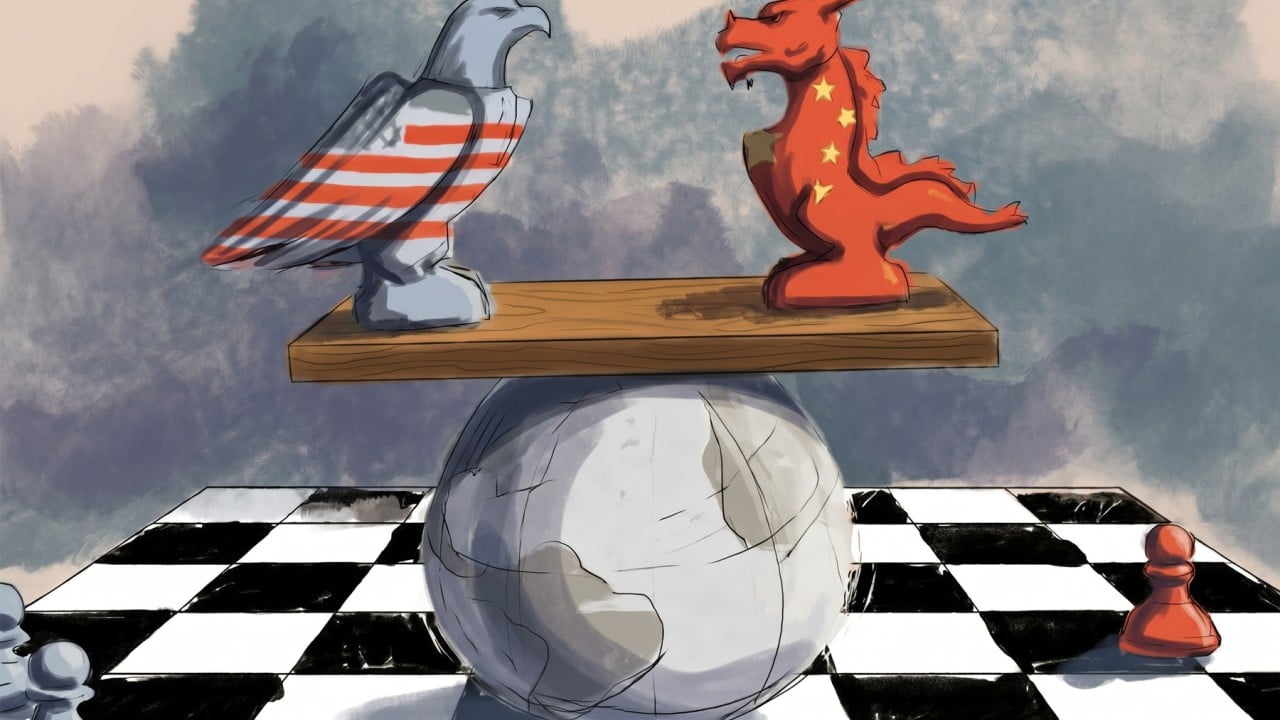
When Washington and Beijing sit down to shake hands, the rest of Asia holds its breath. That familiar nervous tension spiked again following the latest Trump-Xi summit, with capitals from Tokyo to Singapore scrambling to parse what a renewed great-power truce actually means for their regional security and supply chains. If you expected a grand geopolitical bargain that redraws the map, you missed the plot entirely.
The real story isn't about sudden friendship. It’s about a cold, pragmatic realization that total economic decoupling is an expensive illusion neither side can afford to maintain. Let's look past the diplomatic photo-ops and examine what this G2 dynamic actually means for the region, because regional governments can no longer rely on passive hedging to survive.
The Myth of Clean Economic Separation
For years, analysts warned that Asian supply chains would split cleanly down the middle into American and Chinese blocs. Factories would pack up, chips would stop flowing across borders, and everyone would pick a side. Reality proved far messier.
Years of tariff battles and export controls showed that complete economic independence is economically ruinous. Manufacturing capacity has shifted across Southeast Asia and Mexico, yes. But Beijing remains the undisputed industrial brain of the global economy. When Donald Trump and Xi Jinping talk, they are managing a messy marriage of convenience, not planning a divorce.
For middle powers in Asia, this means the luxury of fence-sitting is rapidly evaporating. ASEAN nations and regional economies must navigate a landscape where Washington demands technological compliance while Beijing anchors regional trade. If you're running a regional supply chain or investing in cross-border tech, pretending these two gravity wells will ever pull apart is a fast track to irrelevance.
Why Regional Hedging Strategy Is Broken
For decades, small and mid-sized Asian economies mastered the art of security dependence on the United States paired with economic dependence on China. It was a comfortable balancing act. You sold goods to Beijing, bought security guarantees or diplomatic backing from Washington, and slept reasonably well at night.
The Trump-Xi summit exposes the limits of that playbook. When the world's two largest superpowers establish a working détente, they tend to negotiate over the heads of smaller nations.
- Regional capitals are discovering that bilateral trade truces can alter local export markets overnight.
- Technology restrictions imposed by Washington put Asian tech firms in an impossible compliance bind.
- Alternative financial networks, such as China’s Cross-Border Interbank Payment System (CIPS), are slowly eroding the absolute dominance of the US dollar.
If Beijing's tech expansion and financial infrastructure end up crowding out local enterprise, regional partners will start asking whose prosperity these arrangements actually serve. Hedging isn't enough anymore. Nations need active middle-power coalitions to secure their economic autonomy.
Where the Real Business Opportunities Hide
While diplomats argue over trade definitions and artificial intelligence guardrails, smart operators are looking at where the money is actually moving. The G2 détente creates specific operational realities that smart strategists can exploit.
First, compliance has become a distinct asset class. Companies that know how to navigate US export controls while keeping Chinese manufacturing inputs flowing are winning market share.
Second, industrial know-how is decentralizing. Chinese firms are pushing manufacturing capacity outward into Southeast Asia to bypass direct tariffs. This isn't just about escaping trade penalties; it's about embedding Chinese technology ecosystems deeper into local economies. If you understand how to integrate local labor with imported industrial expertise, you hold a massive competitive advantage.
Stop waiting for permanent stability. The global economy is operating under a new baseline of managed friction.
Build your strategy around resilience, not predictability. Diversify your operational dependencies, master local regulatory hurdles, and stop assuming that great-power competition follows old rules. The G2 reality is here to stay, and adapting to it means dropping the wishful thinking.