You dig up a fossil, toss it in a museum drawer, and forget about it for twenty-seven years. It sounds like sloppy science, but it's actually how paleontology works most of the time.
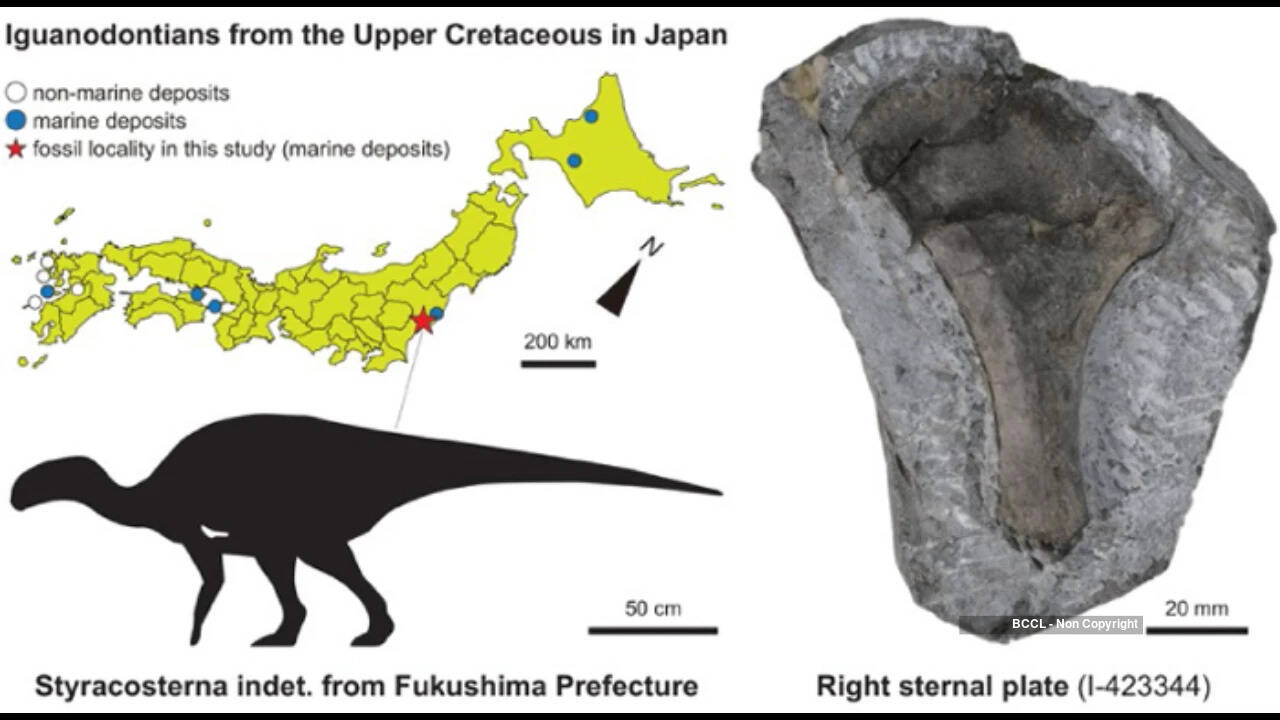
Back in 1999, someone found an isolated bone on the grounds of the Iwaki City Ammonite Center in Fukushima Prefecture, Japan. The rock layer, part of the Ashizawa Formation within the Futaba Group, dates back roughly 90 to 88 million years to the Late Cretaceous period. At the time, workers gave it a quick look, labeled it tentatively as a hadrosauroid fragment, and shelved it.
It sat there gathering dust until researchers from the University of Tsukuba and other institutions finally put it under modern analysis, publishing their findings in Paleontological Research. That neglected chunk of rock turned out to be the right sternal plate—part of the chest bone—of an indeterminate styracosternan, which is an advanced group of plant-eating iguanodontian dinosaurs.
[Image of a dinosaur skeleton structure]
Why Size Matters in the Coastal Fossil Record
Most people picture dinosaurs as massive titans shaking the earth. This find shatters that uniform view.
Based on the dimensions of the sternal plate, scientists calculated that this specific iguanodontian stretched only about 3 metres long. Compared to other regional finds, that is tiny. Previous discoveries in the same Japanese rock formations pointed to much bulkier herbivores, including an 8-metre giant.
Finding a smaller individual in a shallow marine deposit changes our picture of ancient ecosystems. It proves that prehistoric Japanese coastal habitats weren't just home to a single massive species. Instead, different sizes of plant-eaters roamed the same areas.
Did this bone belong to a naturally compact species, or was it just a young dinosaur that died too soon? Researchers admit they can't tell for sure from a single fragment. Even so, it proves that biodiversity along the ancient shores of East Asia was far more complex than isolated teeth and fragmentary remains previously indicated.
The Reality of Museum Archives
We tend to think major discoveries happen out in the field with dynamite and paintbrushes. Reality is messier.
Museums and research centers across the globe hold thousands of unstudied boxes. Analysts collected specimens decades ago using primitive tools and outdated frameworks. When new technologies arrive, those old drawers become treasure troves.
The Fukushima specimen didn't require a brand-new expedition. It just required scientists willing to look at old evidence with fresh questions.
If you want to track dinosaur research, keep an eye on museum basements. That is where half the breakthroughs happen. Check local university publications or open-access paleontology journals if you want to read the raw papers yourself. Next time you tour a regional museum archive, remember that the unlabelled rock sitting in the back corner might rewrite a chapter of prehistory.