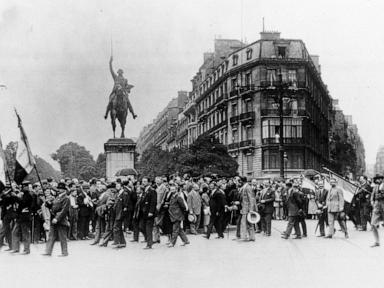
Street demonstrations are practically a national institution in France. When everyday citizens feel ignored by the powers that be, they don't just write angry emails or sign online petitions. They hit the asphalt. But what starts as a localized movement over classroom conditions or living expenses has a predictable habit of blowing up into widespread civil unrest.
You're looking at a country where public anger routinely boils over into curfews, clashes with police, and thousands of arrests. Understanding why French protests follow this explosive trajectory requires looking past the daily news headlines and examining a deep-rooted cultural playbook.
The Spark That Ignited the Streets
The current wave of demonstrations didn't appear out of thin air. It started back in September with student-led rallies over understaffed schools and crumbling classrooms. Young people took to the streets to demand better educational resources.
Pretty quickly, though, the scope shifted. As inflation bit hard and household budgets shrank, the grievances expanded into broad anger over living costs and public services. Trade unionists, transport workers, and veterans of previous anti-government movements joined the ranks. When hard-left political figures like Jean-Luc Mélenchon threw their weight behind the demonstrations, the momentum accelerated.
What began as localized frustration over dilapidated facilities transformed into a multi-faceted clash involving diverse political and ideological factions. By mid-October, the unrest had swept across multiple cities, leading authorities to clamp down with targeted curfews and ramped-up security measures. Over 2,500 people have been taken into police custody as clashes, arson, and looting damaged public buildings and shops.
Why French Dissent Hits Different
If you compare the French approach to public dissent with neighboring European nations, you'll spot a massive cultural divide. While countries like Germany or the UK often prioritize crowd containment and police de-escalation, France has long met mass demonstrations with severe physical force.
Tear gas, batons, and riot shields are standard responses from authorities who view maintaining public order as an uncompromising imperative. Naturally, protesters respond in kind. Fires get lit in the middle of thoroughfares, barricades go up, and projectiles fly through the air.
This cyclical confrontation isn't an accident. It's a feature of France's social contract. The prevailing view among many French citizens is that the government only listens when forced to look at chaos out its window. Compromise rarely happens in parliamentary committee rooms alone. It gets forged on the cobblestones of Paris and provincial cities.
The Economic and Social Toll
You can't talk about these uprisings without looking at the collateral damage. Transport disruptions leave commuters stranded, tourist attractions shut their doors, and small business owners watch their storefronts get smashed or looted. Curfews imposed in neighborhoods across Paris and elsewhere disrupt normal daily life for millions of residents who just want to go to work in peace.
Prime Minister Sébastien Lecornu and other government officials have defended the security clampdown, noting that targeted curfews successfully kept the peace during recent overnight hours. At the same time, critics accuse the ruling administration of being out of touch with the economic realities facing working-class families and students.
What Comes Next
The unrest shows signs of lingering as new demonstrations loom on the horizon. The government faces a tight rope walk. Crack down too hard, and you validate accusations of authoritarian overreach. Give in too easily, and you invite endless waves of disruption whenever a new grievance surfaces.
For travelers and observers, the takeaway is simple. If you're heading to France, keep a close eye on local news, avoid demonstration zones completely, and expect transit delays. The tradition of taking grievances to the street isn't going away anytime soon. It's woven into the very fabric of French political life, for better or worse.