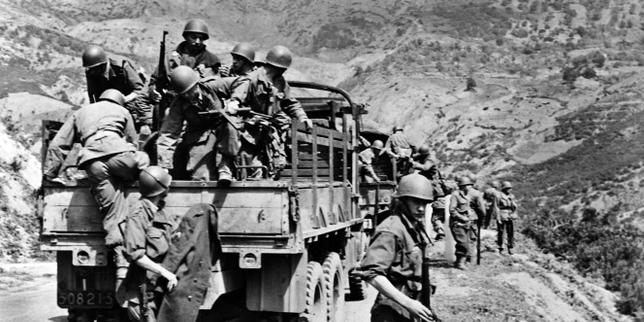
When an institution decides to lock its filing cabinets, it rarely admits it is hiding the past. Instead, it talks about national security, protection of sensitive materials, and regulatory compliance. But beneath administrative jargon lies a harsher reality. The case of Commandant Romain Choron exposes how the French state's sudden clampdown on military archives from the Algerian War has derailed rigorous academic research and crushed careers in the process.
For years, historians enjoyed relative openness within the Service historique de la Défense. Researchers could comb through files concerning counter-insurgency tactics, subterranean combat, and the brutal realities of the 1954–1962 conflict. Romain Choron, both a Saint-Cyr-trained officer and a dedicated doctoral researcher specializing in underground warfare and cave neutralization units during the Algerian War, stood at the intersection of military duty and historical scholarship. Yet, his promising trajectory hit an abrupt wall when institutional attitudes shifted toward rigid secrecy.
The Cost of Institutional Coldness
What happens when an active-duty officer chooses rigorous historical truth over institutional comfort? You get an administrative backlash. Choron’s academic work, including peer-reviewed studies on counter-subversive engineering, suddenly became a liability as the state tightened its grip on sensitive defense papers. Instead of fostering an environment where military history could be openly studied and understood, the apparatus turned inward.
The consequences weren't just theoretical. Choron found himself sidelined, his thesis blocked from public view, and his professional path disrupted. Even though subsequent legal or administrative reviews failed to result in formal charges or a public trial, the damage to his career was already done. He couldn't access his own research files to clear his name, trapped in a bureaucratic limbo that protects institutional reputation at the expense of individual integrity.
Why Archives Matter More Than Ever
States hate unvarnished history because memory is political. The Algerian War remains an open nerve in contemporary French society, touching questions of state violence, colonial legacy, and military ethics. When civilian and military researchers try to examine documents detailing the dark chapters of counter-terrorism and pacification, they run into arbitrary walls.
The tightening of access rules isn't just about protecting old secrets; it's about control. By gatekeeping who gets to read operational records from 1954 to 1962, the military establishment ensures that only sanitized, approved narratives survive. Scholars who cross this invisible line risk becoming scapegoats for a system unwilling to confront its own history.
Moving Past the Administrative Wall
We can't talk about historical transparency while simultaneously punishing the researchers who do the heavy lifting. If academic freedom means anything, it means historians—whether in uniform or civilian clothes—must be allowed to follow the paper trail wherever it leads, even into the uncomfortable corners of colonial conflicts.
Until the state dismantles these arbitrary barriers and stops treating military researchers as security threats, independent scholarship on modern conflicts will remain under siege. The story of Romain Choron isn't an isolated anomaly. It's a warning sign for anyone who believes that understanding our past is more important than protecting institutional comfort.

:max_bytes(150000):strip_icc():focal(986x183:988x185)/president-donald-trump-main-033125-5875db75918d4d92b8c319d1e26298bc.jpg)