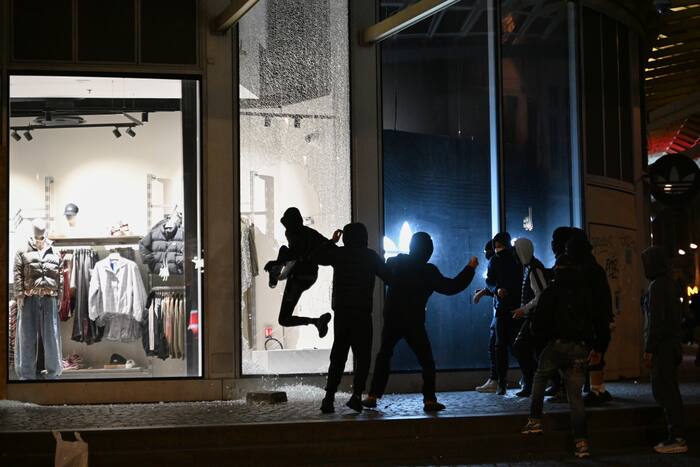
Tear gas filled the streets of Paris while historic town halls burned to the ground. France is staring down a massive domestic crisis. Prime Minister Sébastien Lecornu has instructed regional prefects to enforce limited and localized curfews to stop rampant rioting and looting.
That announcement follows a brutal weekend of nationwide demonstrations over living costs and crumbling school conditions. The unrest spiraled quickly out of control. Crowds clashed violently with police in Paris, Lyon, and Marseille. At least 2,400 people faced arrest across the country as storefronts were smashed and gutted.
What Triggered the Latest French Unrest
Protests started over everyday economic pressures. Inflation, high living costs, and neglected public schools pushed students and citizens into the streets. But peaceful demonstrations transformed into chaotic skirmishes.
Hordes of fast-moving troublemakers and far-left activists hijacked the protests. They bypassed traditional demonstration routes to target public buildings and retail stores. In Limoges, a fire engulfed the 19th-century City Hall, destroying its roof. In major cities, hundreds of shops suffered heavy looting.
Interior Minister Laurent Nuñez admitted that authorities lost control in several areas. Highly mobile groups outpaced standard police strategies. Nuñez offered his resignation over the intelligence and planning failures, but President Emmanuel Macron rejected it. Macron ordered Nuñez to stay on, fix the intelligence gaps, and overhaul ground tactics immediately.
Why Localized Curfews Are the New Response
Capping the violence requires drastic measures. Prime Minister Lecornu pointed out that no lives were lost on Saturday, calling it a miracle given the scale of destruction. Police officers stood their ground against aggressive crowds throwing projectiles and setting fires.
Now, local authorities are stepping up enforcement. In Marseille, the prefect banned all protests and gatherings entirely during peak evening hours. Other cities are preparing specific curfew ordinances to keep people off the streets after dark.
Curfews give law enforcement legal backing to clear public spaces and isolate agitators from peaceful citizens. Officials hope restrictions will starve the rioters of cover.
The Political Fallout in Paris
The unrest has put President Emmanuel Macron's administration under intense pressure. Critics argue that the government failed to anticipate the scale of the mobilization. Security forces struggled to contain fast-moving factions that splintered away from main protest marches.
Macron demands full transparency regarding intelligence failures. The focus now shifts to changing how French police handle decentralized groups. Traditional crowd control methods are proving inadequate against groups that use mobility and social media to outmaneuver authorities.
Expect tighter security measures and strict enforcement in urban centers over the coming days. Local prefects hold the power to lock down zones at the first sign of trouble. Stay informed on local transit disruptions if you are traveling in France. Watch for sudden gathering bans in major metropolitan areas.