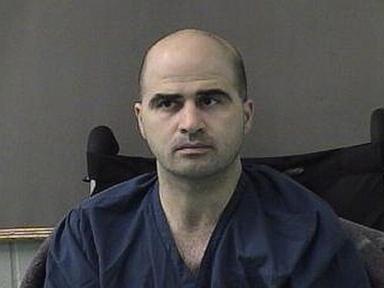
Thirteen people died inside a crowded processing center at Fort Hood, Texas, on a November afternoon in 2009. Years of legal stagnation followed. Now, the Pentagon has confirmed that the execution of convicted mass shooter Nidal Hasan will proceed by U.S. Army firing squad.
Defense Secretary Pete Hegseth recommended the execution method, and President Donald Trump approved it. Chief Pentagon spokesman Sean Parnell shared the decision publicly, stating that the Secretary of the Army will set the execution schedule. If carried out, it would mark the first military execution since 1961.
What Led to the 2009 Fort Hood Attack
Back in 2009, Nidal Malik Hasan served as a major and psychiatrist in the U.S. Army. On November 5 of that year, he walked into the Soldier Readiness Processing Center at Fort Hood. Troops inside were preparing for upcoming overseas deployments.
Armed with a semi-automatic pistol, Hasan opened fire while shouting "Allahu Akbar." He killed 13 people—12 soldiers and one civilian—and wounded 32 others. Investigators later established that Hasan had communicated online with Anwar al-Awlaki, an American-born radical cleric linked to Al-Qaeda.
Hasan was eventually shot and paralyzed from the waist down by base police officers responding to the scene.
The 2013 Military Court Martial
The legal path to this point has been long and contentious. In August 2013, a military jury convicted Hasan on 13 counts of premeditated murder and 32 counts of attempted premeditated murder.
During his court-martial, Hasan chose to represent himself. He called no witnesses, offered no testimony, and mounted virtually no defense. Prosecutors noted that his actions during the trial and his communications made it clear he sought the death penalty. The military jury deliberated and formally sentenced him to death.
Since his conviction, Hasan has been housed on death row at the United States Disciplinary Barracks at Fort Leavenworth, Kansas. His defense teams and appeals lawyers spent years navigating the military appellate courts. In 2024, the U.S. Supreme Court declined to review an appeal from Hasan, who argued that a judge had improperly cleared the public from part of his trial proceedings.
Why a Firing Squad Now
Military law permits death sentences, but executions within the armed forces are exceptionally rare. The last military prisoner executed by the United States was Army Pvt. John A. Bennett in 1961, who was hanged for rape and attempted murder.
Recent discussions across the federal and military justice systems have centered on execution protocols. The choice of a firing squad brings unique attention to how the military justice system carries out capital punishment.
While the Pentagon has green-lit the plan, legal challenges or procedural reviews in federal courts could still influence the timeline. The Secretary of the Army holds the responsibility for establishing the final time and place for the sentence to be carried out.