Federal agents operate under high-stakes conditions every single day, but power without accountability quickly curdles into something dangerous.
When a U.S. Immigration and Customs Enforcement officer chose to drive an unmarked SUV directly at a fleeing man in a Houston parking lot, it crossed the line from aggressive enforcement into alleged felony violence. Mario Alberto Morales now faces an aggravated assault indictment with a deadly weapon after striking 48-year-old Mexican construction worker Miguel Parra Hernandez. Prosecutors didn't have to guess what happened. Body camera footage and surveillance video laid out an unmistakable sequence of events that shattered official agency talking points.
The Anatomy of a Questionable Pursuit
The incident unfolded on October 10 during an operation that quickly went sideways. ICE officials initially claimed that Parra Hernandez recklessly threw himself in front of the moving vehicle. Harris County District Attorney Sean Teare publicly dismantled that narrative, pointing out that video evidence shows the exact opposite.
Surveillance angles show the Jeep Cherokee speeding over a median and cutting off a fleeing man who had jumped out of a vehicle during an attempted stop. Parra Hernandez has lived in Harris County for more than thirty years. He has no criminal record and no active deportation order hanging over his head. When federal agents closed in, fear took over. He ran.
What followed wasn't standard tactical restraint. Morales steered his vehicle straight toward the running man, striking him hard enough to fracture his leg and cause lasting nerve damage. Audio from the scene captures Morales admitting the reality of the impact moments after it happened, telling arriving personnel that he hit him with the car. Yet, on a 911 call placed immediately afterward, he downplayed the injury, telling the dispatcher the victim was fine and just complaining of pain.
When Official Agency Claims Collapse Under Scrutiny
Accountability in law enforcement collapses the moment agencies start manufacturing cover stories that video footage can easily disprove. In this case, the cracks in the official narrative multiplied rapidly.
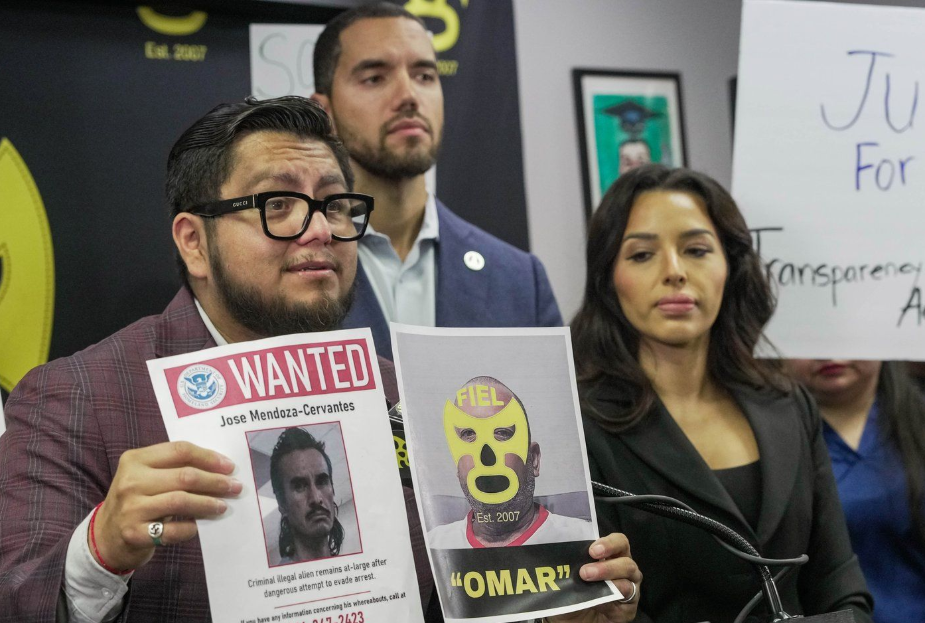
Following the arrest, ICE released a photograph of another man, Jose Mendoza-Cervantes, claiming he was the primary target of the operation and had been seen entering a vehicle with Parra Hernandez. Local immigrant rights groups and family members quickly exposed a staggering discrepancy. Relatives of Mendoza-Cervantes pointed out that he had been dead since 2017. Prosecutors confirmed that their investigation found zero evidence connecting Parra Hernandez to the deceased individual.
When federal bodies operate with a shield of absolute immunity, basic fact-checking often falls to local prosecutors and community advocates. Harris County prosecutors stepped in where internal oversight failed, securing a second-degree felony indictment against Morales. Defense attorneys argue that the crash was an unfortunate accident and that the officer was merely trying to avoid other trucks in a crowded lot. But a grand jury reviewed the steering wheel movements, the speed, and the impact, deciding that the evidence warranted a criminal trial.
What This Means for Federal Enforcement Oversight
Federal officers rarely face state-level criminal charges for actions taken while on duty. The legal hurdles to prosecuting law enforcement are massive, requiring clear proof of malicious intent or reckless disregard for human life.
When local prosecutors take on these cases, it sends a loud signal that badges don't grant immunity from local criminal laws. Parra Hernandez remains locked in federal custody at a rehabilitation facility dealing with chronic pain and broken bones, even as the officer who injured him fights the indictment outside of jail walls.
Trust requires transparency. If immigration enforcement agencies want public cooperation, they can't afford to issue statements that crumble the second a security camera or body camera is turned on. Real accountability means holding every badge to the exact same standard as ordinary citizens.


