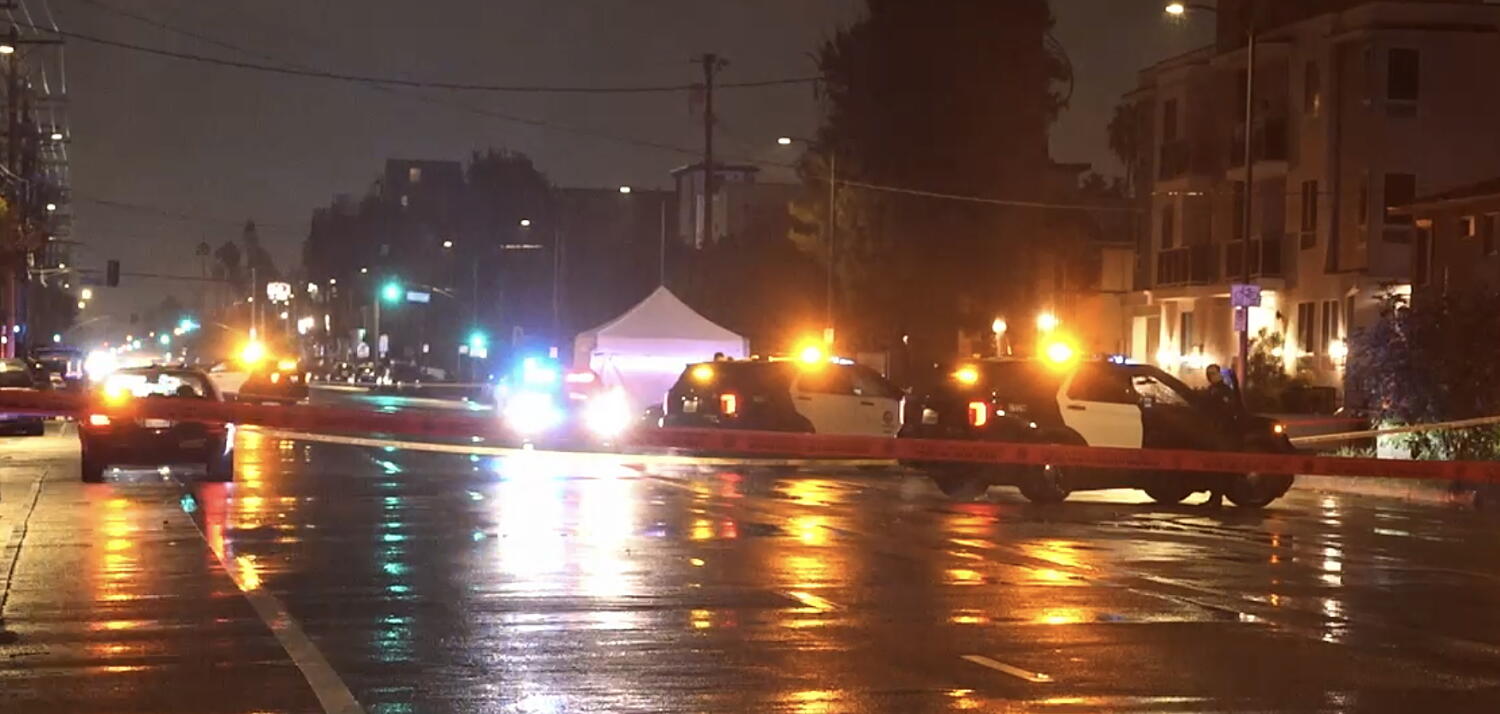
A holiday celebration turned catastrophic in the San Fernando Valley when an emergency cruiser struck and killed a pedestrian. Around 11:30 p.m. on Saturday, a Los Angeles Police Department vehicle from the North Hollywood Division plowed into a 32-year-old woman near Woodman Avenue and Bessemer Street. The unit was rushing toward a rowdy Halloween gathering in the Sherman Oaks area.
The victim, whose name remains withheld pending family notification, was reportedly in a crosswalk when the impact occurred. She was pronounced dead at the scene. This tragedy highlights a recurring, dangerous friction point in urban public safety: the high-speed response to low-priority disturbances versus pedestrian safety on wet, chaotic holiday nights.
The Anatomy of a Late-Night Emergency Response
When citizens dial emergency lines for a party disturbance or a group fight, officers face intense pressure to arrive quickly. But speed carries a heavy cost. The crash site on Woodman Avenue sits in a residential neighborhood where pedestrian foot traffic spikes during weekend holidays.
Preliminary reports note that weather conditions at the time involved moisture on the roads, creating slick asphalt. Driving code-3—using lights and sirens—demands extreme vigilance. Yet, departments across the country struggle with balancing urgent response mandates against basic traffic safety laws.
Motorists and pedestrians alike often freeze or misjudge the trajectory of a speeding police vehicle, especially when sirens echo off apartment buildings. Witnesses near the Sherman Oaks incident reported hearing a sudden, heavy thud before realizing a person had been struck.
Accountability and the Ongoing Investigation
The LAPD’s Central Traffic Division has taken over the inquiry to determine factors such as vehicle speed, lighting conditions, and whether sirens were active at the moment of impact. The involved officer remained at the location to cooperate with investigators.
Questions immediately surface regarding department policy on non-violent disturbance calls. Should patrol units risk high-speed transit through populated crosswalks for noise complaints or neighborhood disputes? Critics argue that rushing to a party call invites disaster. Department officials maintain that officers must navigate a complex matrix of public safety threats every shift, where a reported fight can rapidly escalate into severe violence if left unaddressed.
Families of victims struck by emergency vehicles frequently face long legal battles to secure transparency. Internal investigations take months, leaving community members demanding independent oversight on emergency driving protocols.
Preventing Future Tragedies on City Streets
Real reform requires looking closely at how emergency dispatch handles holiday surges. Halloween consistently ranks as one of the most volatile nights for urban law enforcement, combining heavy foot traffic, costumes that obstruct vision, and alcohol consumption.
Cities must re-evaluate standard operating procedures for cruiser deployment. Implementing strict thresholds for when a unit can travel at excessive speeds through residential zones could save lives. Training programs must emphasize defensive driving during adverse weather, ensuring that officers prioritize the safety of the very community they swore to protect.
If you witness reckless driving or unsafe emergency responses in your neighborhood, document the details and hold local authorities accountable through civilian oversight boards.