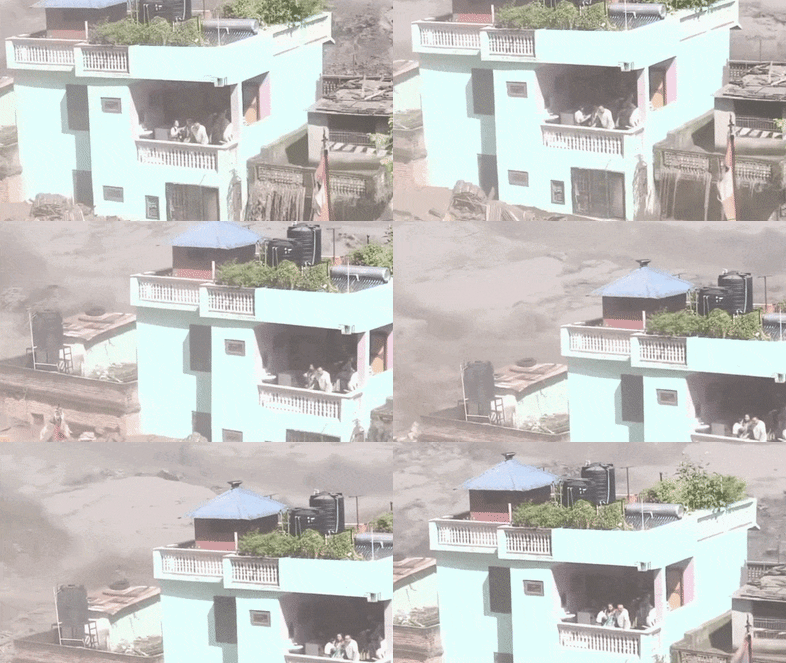
When a massive glacier collapse sent a catastrophic wall of water and debris tearing through Nepal's valleys, most structures in its path vanished in seconds. Entire bazaars were flattened, power turbines were ripped from their foundations, and communities were reduced to wastelands of soft mud. Yet, amidst total devastation in Dhunge Bazaar, one specific building stood firm. It is now known locally as the viral green house.
The structure belongs to 67-year-old Chhatra Bahadur Pyakurel. When the flash flood hit, Pyakurel had just returned from walking his grandson to the school bus. Within minutes, an angry torrent of water and debris encircled the property, turning the immediate area into a destructive whirlpool. You might also find this similar story insightful: What Happens When Legal Loopholes Let Dangerous Criminals Walk Free.
Trapped on the Balcony
For over an hour, the family had nowhere to go. They watched the mounting carnage first from their third-floor balcony, then scrambled higher to the roof as the water level climbed.
"At first we did not know what would happen or whether we would survive," Pyakurel recalled. "The only thought that kept troubling me was about my grandson, who had already left for school. I kept thinking: If we all die, who will look after him?" As reported in recent reports by The New York Times, the implications are significant.
While neighbors miles downstream estimated that anyone caught in that specific zone had virtually zero chance of survival, the family waited out the surge. Eventually, the roaring flow receded enough for neighbors to reach them using metal pipes as a makeshift ladder.
Why Did the House Survive?
Visitors and online onlookers quickly dubbed it a miracle, with some even pinning the location on Google Maps as a flood-proof attraction. But structural reality played a far bigger role than sheer luck.
Pyakurel explained that the ground floor was originally built back in 1995 when he operated a grocery store. As his business grew, the family expanded upward, anchoring pillars by drilling deep into solid rock. Local geography also played a part, as a natural ridge jutting into the path of the torrent helped deflect the worst of the direct impact.
Despite the physical shell of the house remaining intact, the aftermath remains grim. The ground floor was thoroughly gutted. Essential family documents, including passports, land registration certificates, and citizenship papers, were washed away or ruined.
The Broader Humanitarian Crisis
The survival of the Pyakurel home stands out precisely because it is an extreme anomaly. The broader disaster left a staggering toll across Nepal and Tibet. Death counts climbed past 1,200, with thousands of individuals still listed as missing.
Continuous rain, destroyed communication lines, and thick, unstable mud have severely complicated rescue operations carried out by military and local personnel. While helicopters have successfully rescued over 11,000 people, thousands more remain displaced in temporary shelters across districts like Nuwakot, where over a thousand homes were either entirely destroyed or severely damaged.
If you are tracking disaster relief efforts or looking to support humanitarian organizations working on the ground in South Asia, direct donations to established international aid groups or local Red Cross chapters provide the most immediate and accountable impact. Check local agency updates for verified channels before contributing.