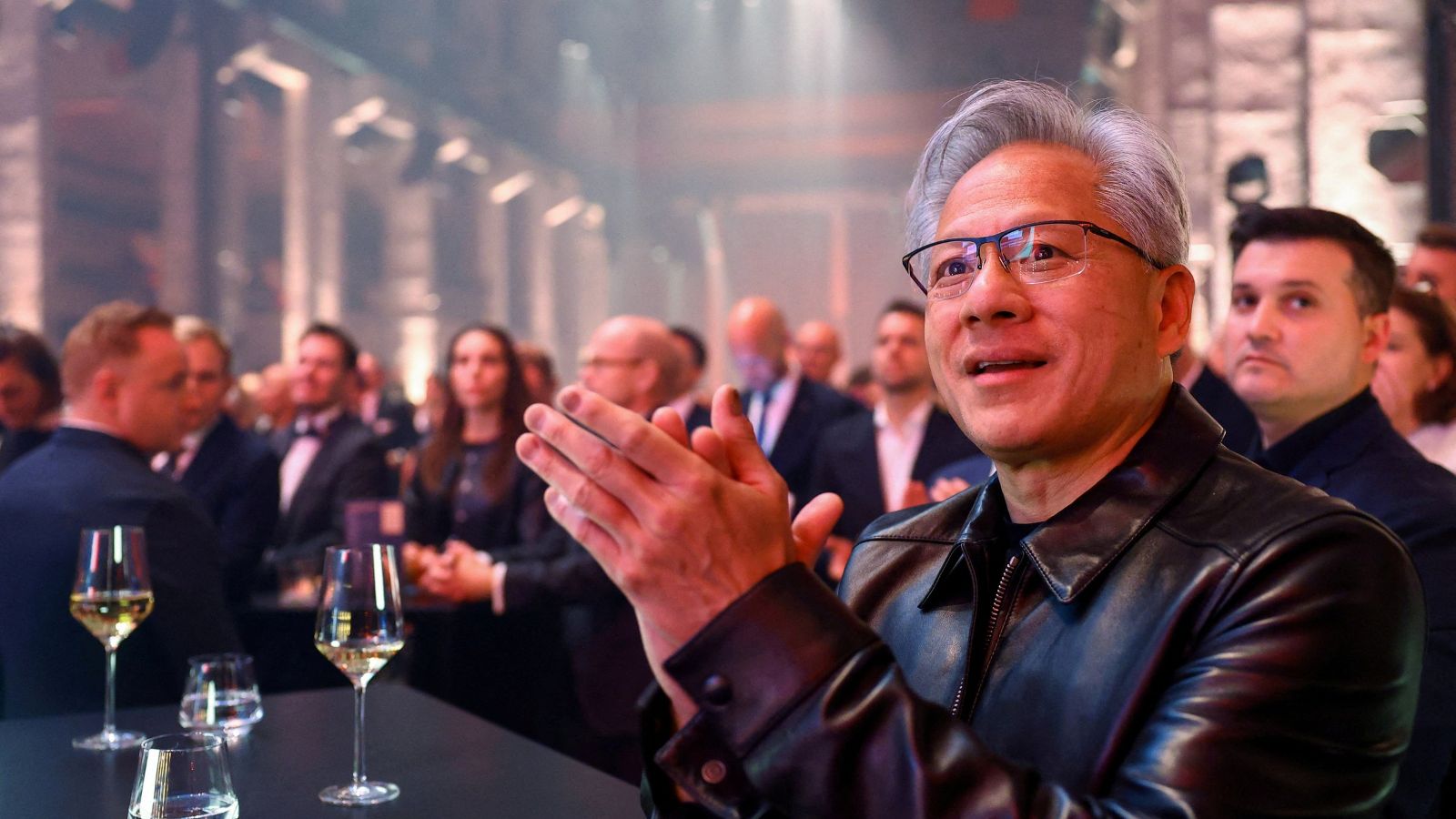
Silicon Valley loves a good corporate myth, but the foundations are shaking right now. When Nvidia CEO Jensen Huang admitted to an affair with businesswoman Alice Huang—a woman US intelligence agencies have reportedly identified as a Chinese state intelligence asset—it blew open a massive vulnerability at the absolute peak of the global tech economy.
Most mainstream coverage gets bogged down in the soap opera elements. They focus heavily on the personal betrayal, the corporate memos, or the falling stock prices. But they completely miss the structural reality of how modern geopolitics, artificial intelligence dominance, and loose export controls collided in a multi-billion dollar disaster. You need to look past the headlines to understand why this story threatens the entire semiconductor ecosystem.
Who Is Alice Huang and How Did She Enter the Orbit
To understand how high the stakes really are, you have to look at Alice Huang’s trajectory. She didn't just appear out of nowhere. Starting as a journalist at China's state broadcaster before moving through HSBC and Citic Securities, she eventually partnered with financier Kang Wei to pivot into artificial intelligence infrastructure.
By 2023, she and her associates had acquired Megaspeed, a Singapore-based data center company and an official Nvidia cloud partner. Reports indicate that a network of firms linked to her managed to secure approximately 7.5 billion dollars worth of high-end Nvidia hardware over a three-year period.
She used her personal access and photos with Jensen Huang as social proof to pitch investors and business partners, convincing them she held unique leverage over global chip distribution. When you control the hardware that powers the entire generative artificial intelligence boom, proximity to the CEO becomes a commodity itself. That proximity is precisely what US intelligence believes Beijing capitalized on.
The Real Issue Is Export Control Enforcement
The core debate isn't just about a CEO's personal conduct; it's about whether national security guardrails failed at the highest level. Megaspeed faced heavy scrutiny over allegations that it helped route restricted Nvidia processors into China, bypassing strict US trade embargoes.
While Nvidia previously maintained that its interactions with Alice Huang were standard customer relations and that every deployment was closely tracked, lawmakers are furious. Democratic senators, including Elizabeth Warren and Chris Coons, have pressed the Trump administration to secure all documentation regarding Nvidia's shipments. They want to know how a company tied to an alleged foreign intelligence asset managed to acquire hundreds of thousands of banned graphics processing units.
Jensen Huang has built deep political capital in Washington, earning public support from figures like Donald Trump and tech leaders like Elon Musk. Yet, congressional committees are demanding closed-door briefings. The bipartisan frustration stems from a simple fear: if state actors can bypass export restrictions through personal relationships and intermediary shell networks, federal trade policy is essentially toothless.
Why the Board Investigation Changes Everything
Nvidia's board hired the law firm Wachtell Lipton alongside former federal prosecutor Joon H. Kim to run an independent probe. While the company insists that no core secrets or national security assets were compromised, the internal pressure is unprecedented.
Adding fuel to the fire, subsequent reports surfaced regarding additional workplace relationships, severely complicating the board's defense strategy and triggering talks about leadership stability. When a company anchors its entire market valuation and technological roadmap to a single visionary leader, any threat to that leadership sends immediate shockwaves through global markets.
This isn't just a corporate scandal confined to a quarterly earnings report. It serves as a brutal wake-up call for the entire technology sector. As long as advanced silicon remains the most valuable geopolitical currency on earth, intelligence agencies will target the human vulnerabilities sitting at the top of the supply chain.
Audit your vendor relationships, tighten compliance checks on secondary cloud partners, and recognize that personal access is an attack vector. The era of treating hardware security as an afterthought is over.