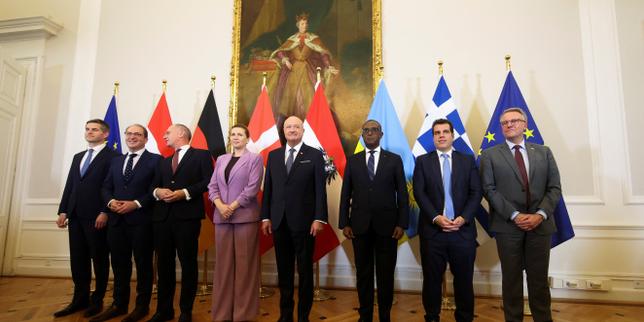
Europe just crossed a political Rubicon. In mid-November 2026, representatives from five European Union nations gathered in Vienna alongside Rwandan officials to finalize something that was once considered politically unthinkable: an official agreement to establish external return centers for rejected asylum seekers. Backed quietly by the European Commission, this initiative marks a massive structural shift in how the continent handles migration policy.
If you've been following EU politics over the last decade, you know the asylum system is fundamentally broken. Governments across Western and Northern Europe face relentless domestic pressure, strained municipal budgets, and growing voter frustration. Traditional deportation mechanisms fail constantly. Only a fraction of individuals whose asylum claims are legally rejected ever actually leave European soil. Bureaucratic gridlock, endless legal appeals, and a lack of cooperation from countries of origin turn deportations into a logistical nightmare.
Enter the 2027 pilot project. Instead of pretending the old system will somehow fix itself, these five governments decided to redraw the map entirely. They're outsourcing the physical return process to East Africa.
The Anatomy of the 2027 Pilot Project
Let's look at what's actually happening on paper. Scheduled to launch in 2027, this initial setup is deliberately small. Planners designed it as a tightly controlled pilot project to test the legal and operational waters before scaling up.
In this first phase, the center will house approximately one hundred individuals. No exemptions exist regarding nationality, meaning anyone whose asylum application has failed across the participating states could theoretically find themselves transferred. However, minors are strictly excluded from the arrangement, addressing at least one major humanitarian concern from the outset.
The physical structure itself differs sharply from traditional detention facilities. According to the architects of the agreement, these sites won't feature barbed wire or closed imprisonment cells. Rwanda prefers calling them "welcome centers," where residents will supposedly have access to vocational training, language courses, and potential pathways forward. The International Organization for Migration might even assist on the ground to monitor conditions.
Yet, beneath these clean administrative descriptions lies a harsh political calculation. The primary goal isn't just managing returns. It's deterrence.
As Danish Prime Minister Mette Frederiksen bluntly stated during the Vienna announcement, the objective is breaking the business model of human smugglers. Leaders believe that if migrants know a rejected asylum claim ends in a transfer to East Africa rather than an indefinite stay in legal limbo inside Europe, fewer people will risk their lives crossing the Mediterranean. Austrian Chancellor Christian Stocker hailed the initiative as historic, while Rwandan Interior Minister Vincent Biruta framed it as offering a second chance.
Why Traditional Deportation Failed So Miserably
To understand why European capitals are willing to take such a controversial gamble, you have to look at the numbers and the administrative paralysis plaguing national ministries.
For years, interior ministers promised crackdowns. They promised secure borders. They promised efficient removals. But reality refused to cooperate. When a court rejects an asylum seeker, the state faces a wall of obstacles. Countries of origin often refuse consular passes. Local NGOs launch endless legal challenges. Police forces lack the resources to escort every single rejected applicant back home.
The result? Hundreds of thousands of undocumented individuals remain in legal gray zones across Europe. They sleep in shelters, work in informal shadow economies, or simply disappear underground. Citizens grow cynical. Populist parties capitalize on that cynicism, winning elections across the continent by pointing out that the state has lost control of its own territory.
Governments realized they couldn't simply deport people back to unsafe countries of origin due to international human rights obligations under the non-refoulement principle. So, what did they invent? Third-country processing and return hubs. By paying a willing sovereign partner like Rwanda to host rejected claimants, European states bypass the domestic legal traps that paralyzed local deportations.
It's a cynical workaround, honestly. But in the corridors of power in Berlin, Copenhagen, and Vienna, leaders view it as the only viable escape hatch from political suicide.
The Global Precedent and the Shadow of the UK Deal
Nobody discussing this new agreement can ignore the elephant in the room: the United Kingdom's failed Rwanda scheme.
Under former British Prime Minister Rishi Sunak, London poured hundreds of millions of pounds into a unilateral deportation deal with Kigali. That initiative became a political soap opera. Plagued by endless legal challenges in British courts and European human rights tribunals, it was ultimately scrapped when Keir Starmer's Labour government took office. Not a single asylum seeker ever boarded a flight from London to Kigali under that specific UK plan.
Critics are already shouting that the new EU-backed project is just a recycled version of a failed British gimmick. But structural differences exist.
Unlike the unilateral British approach, this new initiative is a multilateral European effort developed in close coordination with the European Commission. It involves multiple countries sharing political capital and financial burden. More importantly, the European model targets rejected asylum seekers who have already exhausted all legal appeals through domestic courts, rather than attempting to deport asylum seekers off boats straight into Africa before their claims are heard.
The legal architecture underpinning this move remains fragile. Under European Union law, transferring a non-EU national to a third country requires stringent guarantees that the host nation respects fundamental human rights, prohibits refoulement, and provides adequate living conditions. Critics argue Rwanda fails these benchmarks. Proponents counter that bilateral agreements can establish bespoke monitoring mechanisms. Yet, when politicians try to bypass domestic court rulings by shifting jurisdictions abroad, constitutional clashes are practically guaranteed. National supreme courts and human rights tribunals will inevitably scrutinize every operational detail once transfer orders are issued.
Even so, international legal experts remain deeply skeptical. Human Rights Watch and the International Rescue Committee didn't mince words following the Vienna announcement. Researchers point out Rwanda's well-documented human rights record, citing concerns over political repression and arbitrary detentions. Protesters hit the streets in Vienna the same day, carrying placards condemning the deal.
What Critics Get Wrong About the Deterrence Logic
If you listen to human rights advocates, the entire project is an inhumane, illegal abdication of European moral responsibility. If you listen to interior ministers, it's the ultimate tool to save lives by stopping Mediterranean crossings before they start.
The truth, as usual, sits in an uncomfortable middle ground.
Critics often underestimate how desperate European electorates have become regarding border control. When voters feel public services are buckling and legal frameworks are toothless, moral arguments from NGOs lose traction. Governments aren't pursuing these deals out of pure malice; they're responding to systemic political pressure that threatens democratic stability.
On the flip side, politicians oversell the deterrence effect. Will a hundred spots in a Rwandan center really stop desperate people fleeing civil war, climate collapse, or crushing poverty in the Horn of Africa or the Middle East? History suggests otherwise. Deterrence policies rarely work the way politicians promise on television. Smugglers adapt. Routes shift. People take even greater risks to bypass strengthened barriers.
If the pilot project proves successful in the eyes of its creators, expansion plans are already waiting on the desk. Diplomats have hinted that if Rwanda works, similar hubs could soon appear in countries like Uganda or Uzbekistan.
Practical Next Steps for Following European Migration Policy
If you want to track how this unfolding policy actually impacts international law and border management over the next few years, don't just read press releases from interior ministries.
Watch the courts. Legal challenges will fly the moment the first transfer orders are signed. European human rights lawyers are already preparing injunctions.
Track the financial transparency. Externalization isn't cheap. Rwanda won't host these centers out of charity; billions in development aid and bilateral support will flow behind the scenes.
Pay attention to transit nations. As European borders tighten and return hubs multiply, North African and Middle Eastern partner states will demand more bargaining power, more money, and more concessions to manage their own borders.
Europe has opened a Pandora's box. The debate over outsourcing migration management will define the political arena for the next decade, whether critics like it or not.